Kejriwal pays tribute to Chhatrapati Shahu Maharaj on birth anniversary

Synopsis
AAP convenor Arvind Kejriwal marked the birth anniversary of Chhatrapati Shahu Ji Maharaj on 26 June 2026, saluting the Kolhapur ruler's pioneering work in extending education to marginalised communities and his revolutionary struggle against caste-based orthodoxy and superstition.
Key Takeaways
AAP convenor Arvind Kejriwal paid tribute to Chhatrapati Shahu Ji Maharaj on his birth anniversary, 26 June 2026 .
Shahu Maharaj (1874–1922) was Maharaja of Kolhapur from 1894 to 1922 and a pioneering social reformer.
In 1902 , he issued a decree reserving 50 per cent of Kolhapur state posts and educational seats for non-Brahmin communities — a forerunner of India's reservation policy.
Kejriwal highlighted Shahu Maharaj's commitment to ensuring education reached 'the most deprived individual in society' and his fight against orthodoxy and superstition.
The tribute aligns with AAP's stated education agenda, including Delhi's Chunauti and Mission Buniyaad programmes launched from 2016 onward for economically weaker students.
26 June commemorations across Maharashtra and Delhi often precede announcements on scholarships and school-quality schemes for marginalised communities.
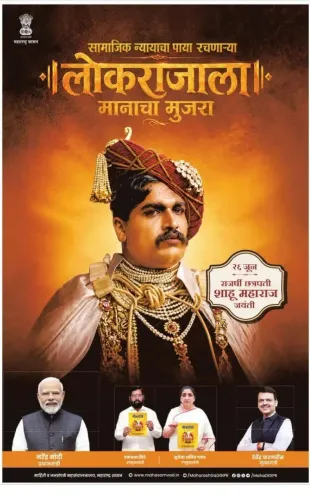
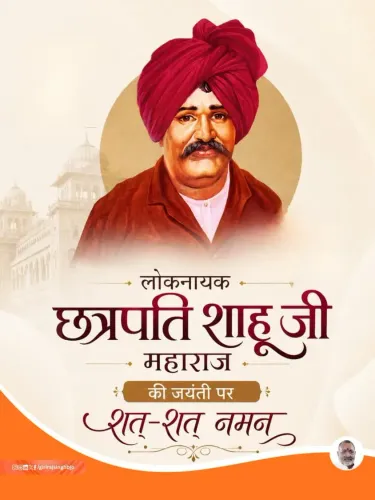
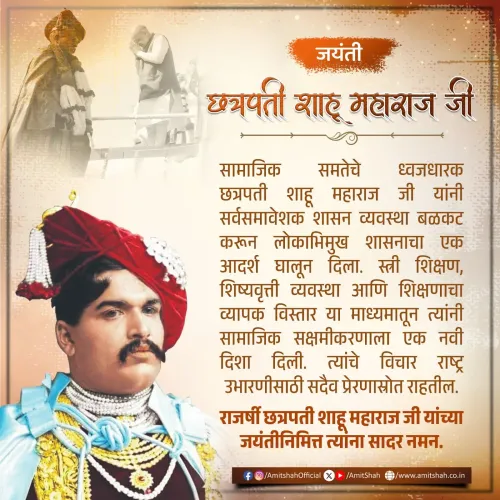
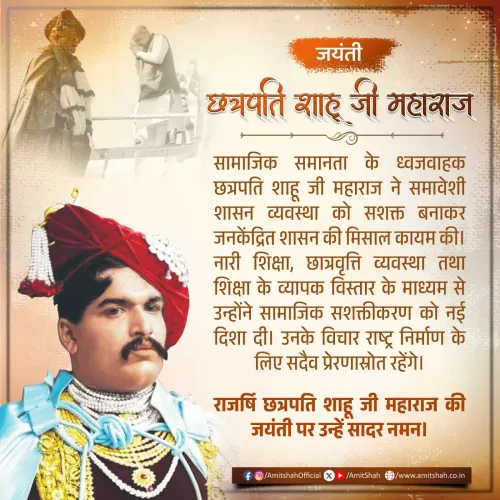
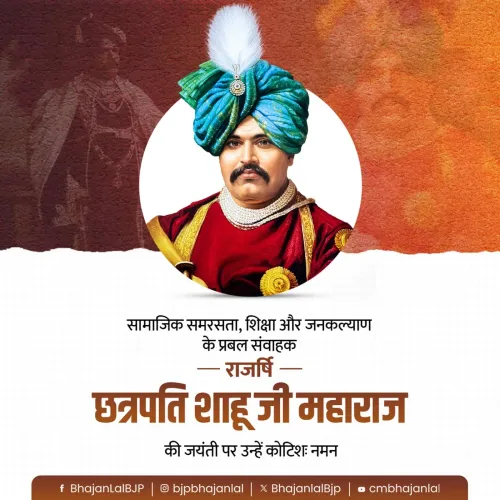
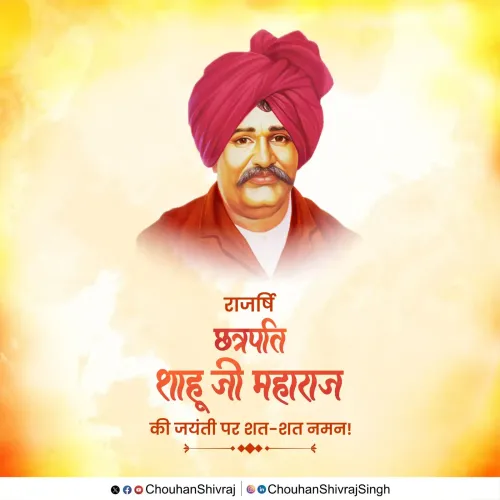
AAP convenor Arvind Kejriwal on Friday, 26 June 2026, paid tribute to Chhatrapati Shahu Ji Maharaj on the reformer's birth anniversary, honouring him as a maharaan samaj sudharak (great social reformer) who fought to extend education to the most marginalised sections of society.
Posting in Hindi on X, Kejriwal wrote: 'Mahan samaj sudharak Rajarshi Chhatrapati Shahu Ji Maharaj ki jayanti par koti-koti naman' — offering 'countless salutations on the birth anniversary of the great social reformer Rajarshi Chhatrapati Shahu Ji Maharaj.' He highlighted that Shahu Maharaj ensured education reached even the most deprived individuals in society, waged a powerful struggle against orthodoxy and superstition, and carried out 'revolutionary social reforms that remain relevant even in today's modern era.'
Context
Chhatrapati Shahu Ji Maharaj (26 June 1874 – 6 May 1922) was the Maharaja of Kolhapur from 1894 to 1922. He is remembered as one of the foremost pioneers of social justice in modern Indian history, having used the authority of a princely state to dismantle caste-based discrimination at a time when such action was rare and contested.
His reign saw the introduction of compulsory primary education and state-funded scholarships that specifically targeted students from backward castes and Dalit communities. He also patronised scholars and reformers who challenged Brahminical orthodoxy, making his court a centre of progressive thought in western India.
Policy Backdrop
Among Shahu Maharaj's most consequential acts was a 1902 decree reserving 50 per cent of posts in state services and educational institutions in Kolhapur for non-Brahmin communities — a measure widely regarded as a forerunner of India's post-Independence reservation policy enshrined in the Constitution.
His insistence that the state had a duty to fund and expand schooling for the poorest resonates with contemporary education debates. Delhi's AAP government cited a similar philosophy when it launched programmes such as Chunauti and Mission Buniyaad from 2016 onward, aimed at improving foundational learning among students from economically weaker sections in government schools.
Stakeholders and Impact
Shahu Maharaj's legacy is claimed across the political spectrum, but his birth anniversary on 26 June draws particular attention from parties and leaders who anchor their identity in social-justice and Ambedkarite politics. Tributes from senior leaders serve to reinforce those commitments to backward-class students, Dalit communities, and OBC constituencies ahead of state-level policy announcements.
In Maharashtra especially, commemorations on this date often accompany announcements of new scholarship schemes, hostel expansions, or education budget allocations targeting marginalised communities. Civil society groups working on caste-based discrimination also use the occasion to assess how far the reformer's vision has been realised.
What's Next
Political observers will watch whether Kejriwal's tribute is followed by any concrete policy announcements — particularly around scholarships, hostel infrastructure, or school-quality programmes — in states where AAP holds influence. Maharashtra and Delhi governments typically face renewed scrutiny of their education budgets and reservation implementation in the weeks surrounding the anniversary. As India's caste-based reservation debate continues to evolve, invoking Shahu Maharaj's 1902 precedent keeps the historical legitimacy of affirmative action at the centre of public discourse.
Point of View
The AAP convenor signals ideological alignment with Ambedkarite and OBC constituencies — groups that are electorally significant in both Delhi and Maharashtra. The timing on the reformer's birth anniversary, when such tributes command wider social-media reach, amplifies the message without requiring a fresh policy commitment. It is part of a broader pattern among opposition leaders of anchoring contemporary social-justice claims in the moral authority of early 20th-century reformers.
NationPress
26 Jun 2026
Frequently Asked Questions
Who was Chhatrapati Shahu Ji Maharaj?
Chhatrapati Shahu Ji Maharaj (1874–1922) was the Maharaja of Kolhapur who introduced compulsory primary education, state scholarships for Dalit and backward-caste students, and in 1902 reserved 50 per cent of state posts for non-Brahmin communities — making him one of India's earliest champions of affirmative action.
When is Chhatrapati Shahu Maharaj's birth anniversary?
Chhatrapati Shahu Maharaj was born on 26 June 1874, and his birth anniversary is observed on 26 June every year across Maharashtra and by social-justice movements nationwide.
Why did Arvind Kejriwal pay tribute to Shahu Maharaj?
Kejriwal paid tribute on the reformer's birth anniversary, praising his work in extending education to marginalised communities and his fight against caste-based orthodoxy — themes that align with AAP's stated education and social-justice agenda.
What was Shahu Maharaj's 1902 reservation decree?
In 1902, Shahu Maharaj issued an order reserving 50 per cent of posts in Kolhapur's state services and educational institutions for non-Brahmin communities, widely regarded as a direct precursor to the reservation provisions later enshrined in India's Constitution.
How does AAP's education policy connect to Shahu Maharaj's legacy?
AAP's Delhi government launched programmes such as Chunauti and Mission Buniyaad from 2016 onward to improve learning outcomes for students from economically weaker sections — an approach the party links philosophically to Shahu Maharaj's belief that the state must ensure education reaches the most deprived citizens.