CM Mohan Yadav Pays Tribute to Bankim Chandra on Birth Anniversary
Synopsis
Madhya Pradesh Chief Minister Dr. Mohan Yadav paid tribute to Bankim Chandra Chattopadhyay, composer of India's national song Vande Mataram, on his birth anniversary on 27 June 2026, calling the 19th-century writer's works a timeless source of patriotism, self-respect, and duty.
Key Takeaways
Mohan Yadav , Chief Minister of Madhya Pradesh , paid tribute to Bankim Chandra Chattopadhyay on his birth anniversary on 27 June 2026 .
Bankim Chandra Chattopadhyay , born in 1838 , authored Anandamath ( 1882 ), which contained the poem Vande Mataram .
Vande Mataram was adopted as India's national song by the Constituent Assembly on 24 January 1950 .
Yadav described Bankim Chandra's works as an enduring source of 'patriotism, self-respect, and a sense of duty.' The tribute reflects a broader BJP pattern of marking anniversaries of 19th-century literary and nationalist figures across BJP-ruled states.
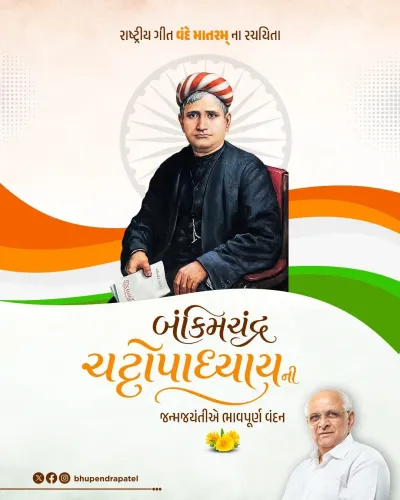
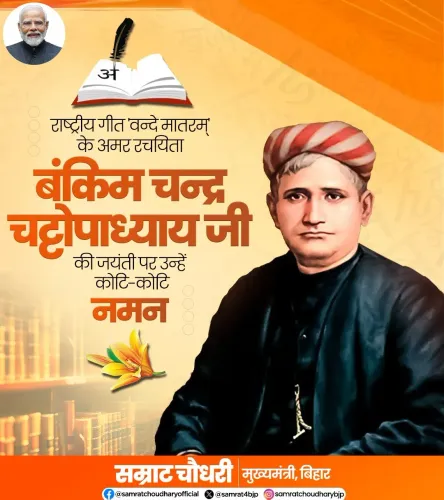
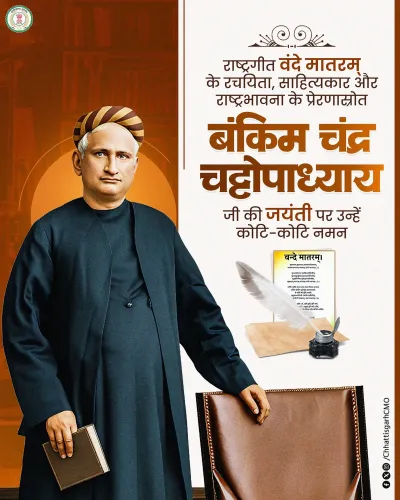
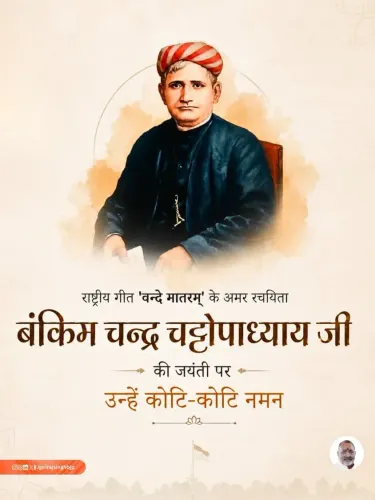
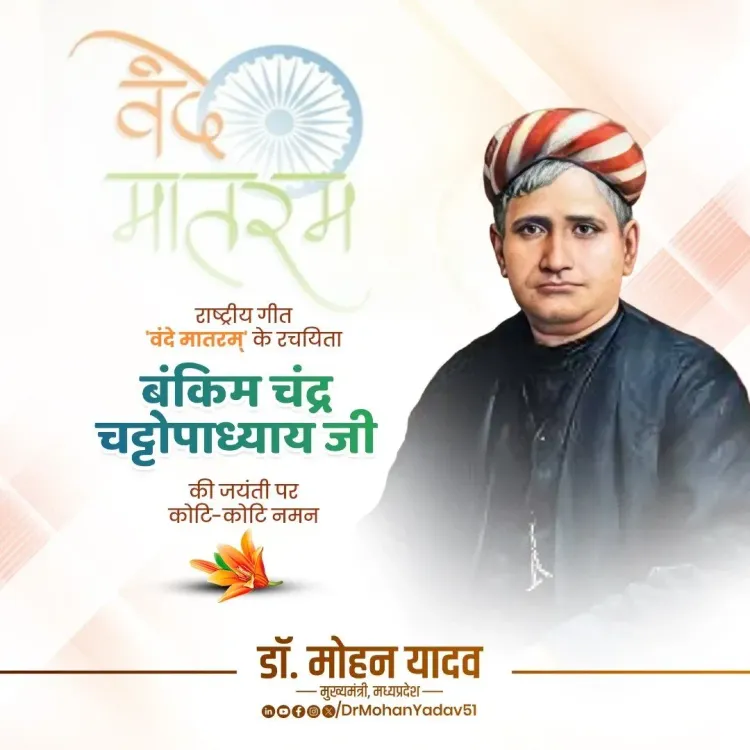
Madhya Pradesh Chief Minister Dr. Mohan Yadav on Friday, 27 June 2026, paid tribute to Bankim Chandra Chattopadhyay, the 19th-century Bengali litterateur and composer of India's national song Vande Mataram, on the occasion of the writer's birth anniversary.
Context
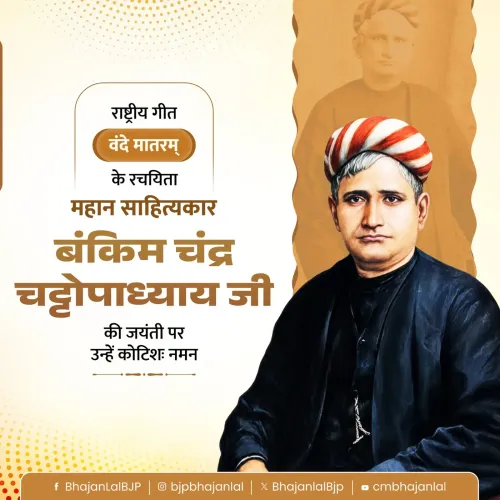
In his post on X, Dr. Yadav wrote: 'Rashtriya geet Vande Mataram ke rachayita, mahan sahityakar Bankim Chandra Chattopadhyay ji ki jayanti par koti-koti naman karta hoon' — 'I bow in salutation, crores of times, to the great literary figure and composer of the national song Vande Mataram, Bankim Chandra Chattopadhyay, on his birth anniversary.' He further noted that Bankim Chandra's 'spirited pen awakened the national spirit and spread an unbreakable love for the motherland,' and that his timeless works 'continue to inspire patriotism, self-respect, and a sense of duty.'
Policy Backdrop
Bankim Chandra Chattopadhyay, born in 1838, authored the landmark novel Anandamath in 1882, within which the poem Vande Mataram first appeared. The composition became one of the most powerful rallying cries of India's independence movement against British colonial rule. The Constituent Assembly of India formally adopted Vande Mataram as the national song on 24 January 1950, alongside Jana Gana Mana as the national anthem — a distinction that has occasionally sparked public debate over the relative status of the two compositions.
Stakeholders and Impact
Tributes of this nature are directed at a broad audience that includes students, educators, and citizens with an interest in India's cultural and literary heritage. For Madhya Pradesh's school curriculum and cultural programmes, anniversaries of figures like Bankim Chandra offer occasions to reinforce lessons on the literary roots of the independence movement. BJP-governed states have consistently used such anniversaries to foreground pre-independence icons who linked literature with anti-colonial sentiment, situating state leadership within a narrative of cultural nationalism.
The pattern is visible across BJP-ruled states, where chief ministers regularly mark birth and death anniversaries of 19th- and early 20th-century writers, reformers, and revolutionary figures. Dr. Yadav has issued similar tributes to other nationalist icons in the past, reflecting a sustained emphasis on indigenous symbols of patriotism and self-respect.
What's Next
Observers will watch for any state-level cultural events or school programmes in Madhya Pradesh organised to mark Bankim Chandra's birth anniversary, as well as whether references to Vande Mataram surface in upcoming education or cultural-policy announcements from the state government. Such tributes frequently serve as a precursor to or accompaniment of broader programmatic activity around cultural heritage at the state level.
Point of View
Who regularly invoke pre-independence literary icons to reinforce themes of indigenous patriotism. By highlighting Vande Mataram's composer, the post connects state-level leadership to a pan-India symbolic vocabulary centred on anti-colonial literature and self-respect. This approach serves to position the ruling party as the custodian of a particular strand of nationalist heritage. The recurrence of such tributes across BJP-governed states suggests a coordinated, top-down emphasis on cultural memory as a pillar of political identity.
NationPress
26 Jun 2026
Frequently Asked Questions
Who was Bankim Chandra Chattopadhyay?
Bankim Chandra Chattopadhyay was a 19th-century Bengali writer born in 1838 who authored the novel Anandamath in 1882, which contained the poem Vande Mataram that became a rallying cry of India's independence movement.
What is Vande Mataram and why is it significant?
Vande Mataram is India's national song, originally composed by Bankim Chandra Chattopadhyay in the 1870s and formally adopted by the Constituent Assembly on 24 January 1950, alongside Jana Gana Mana as the national anthem.
Why did CM Mohan Yadav post a tribute to Bankim Chandra?
Dr. Mohan Yadav posted the tribute on 27 June 2026 to mark Bankim Chandra Chattopadhyay's birth anniversary, honouring him as the composer of Vande Mataram and a figure who inspired patriotism through literature.
What did Mohan Yadav say about Bankim Chandra Chattopadhyay?
Dr. Yadav said that Bankim Chandra's 'spirited pen awakened the national spirit,' spread 'unbreakable love for the motherland,' and that his timeless works continue to inspire patriotism, self-respect, and a sense of duty.
Is Vande Mataram India's national anthem?
No. Vande Mataram is India's national song, while Jana Gana Mana is the national anthem. Both were adopted by the Constituent Assembly on 24 January 1950.