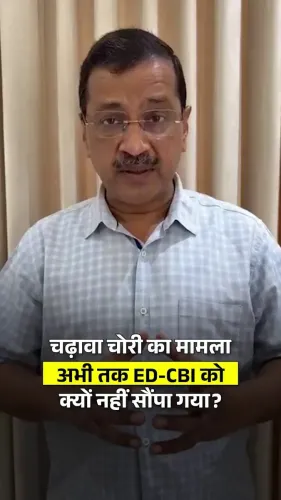
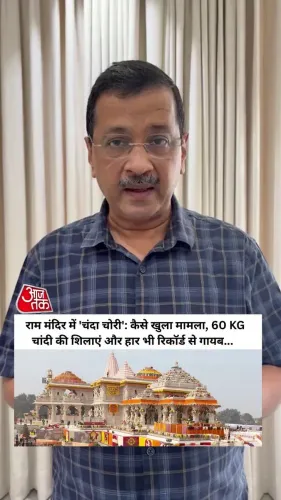
Kejriwal Calls Press Conference on Ram Mandir Offering Theft
Synopsis
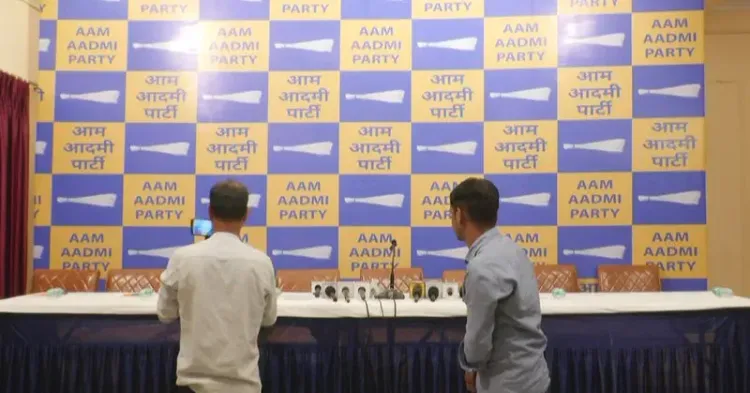
AAP convenor Arvind Kejriwal on 3 July 2026 called a live press conference to raise allegations of offering theft at Ayodhya's Ram Mandir, putting the Shri Ram Janmabhoomi Teerth Kshetra Trust and Uttar Pradesh administration under political scrutiny.
Key Takeaways
Arvind Kejriwal announced a live press conference on 3 July 2026 over alleged theft of offerings at Shri Ram Mandir, Ayodhya .
The Ram Mandir was inaugurated on 22 January 2024 following the Supreme Court's 2019 verdict on the disputed site.
The Shri Ram Janmabhoomi Teerth Kshetra Trust is the statutory body responsible for temple operations and offering collections.
AAP has positioned the press conference as a governance accountability issue targeting the Uttar Pradesh administration.
Specific details of the alleged theft are yet to be officially confirmed by the trust or state police.
The development could intensify opposition demands for independent financial auditing of the temple's offerings.
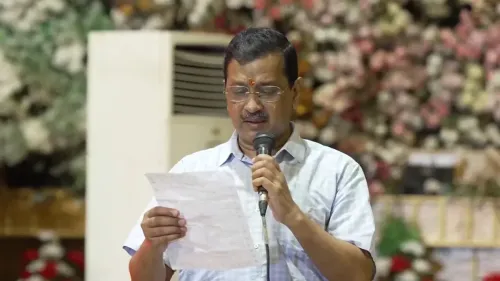
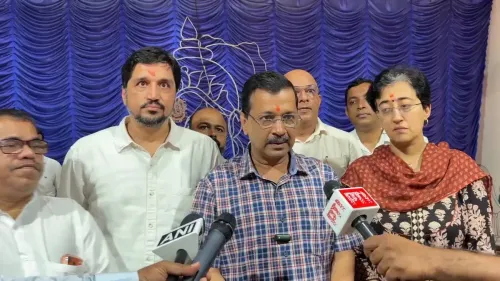
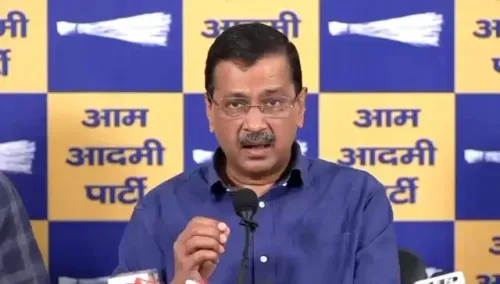
AAP convenor Arvind Kejriwal on Friday, 3 July 2026, announced a live press conference to address what he described as theft of offerings (chadhava chori) at Shri Ram Mandir in Ayodhya, signalling a sharp political attack on the administration of the country's most prominent pilgrimage site.
Kejriwal posted on X calling the matter 'important' (mahatvapurna), inviting public attention to alleged financial irregularities at the temple. The post linked to a live broadcast of the press conference, underlining the urgency with which AAP is treating the issue.
Context
The Shri Ram Mandir in Ayodhya was inaugurated on 22 January 2024 by Prime Minister Narendra Modi, following the Supreme Court of India's November 2019 verdict that directed the allocation of the disputed site for temple construction. Since its opening, the temple has attracted millions of devotees and substantial donations, making the security and transparency of its financial operations a matter of intense public interest.
The Shri Ram Janmabhoomi Teerth Kshetra Trust is the statutory body responsible for overseeing the temple's construction, maintenance, and daily operations, including the collection and safekeeping of offerings. Any alleged breach in this system carries significant religious and administrative weight.
Policy Backdrop
Opposition parties, including AAP, have periodically scrutinised the day-to-day administration of the Ram Mandir to highlight what they frame as governance failures by the Uttar Pradesh state government. Kejriwal, as national convenor of AAP, has consistently positioned his party as a watchdog on public administration issues beyond Delhi.
Allegations of theft at a site of this national stature would, if substantiated, raise serious questions about the oversight mechanisms put in place by both the temple trust and the Uttar Pradesh administration. The specific details of the alleged incident, however, remain to be verified by official sources.
Stakeholders and Impact
The primary stakeholders include millions of Hindu devotees across India who contribute offerings in good faith, the Shri Ram Janmabhoomi Teerth Kshetra Trust whose credibility is directly implicated, and the Uttar Pradesh government which is responsible for law and order at the site. A proven theft would also affect the broader ecosystem of pilgrimage tourism that has grown rapidly around Ayodhya since the temple's inauguration.
Politically, the press conference places the ruling BJP — which has closely associated itself with the Ram Mandir project — on the defensive, particularly on questions of temple governance and financial accountability.
What's Next
Attention will now turn to an official response from the Shri Ram Janmabhoomi Teerth Kshetra Trust and the Uttar Pradesh Police regarding any investigation into the alleged theft. Other opposition parties may follow AAP's lead in demanding accountability. If credible evidence of theft is presented, pressure on the Uttar Pradesh administration to tighten security protocols and financial auditing at the temple is likely to intensify significantly.
Point of View
AAP seeks to occupy moral high ground without directly attacking the temple itself. The move fits a broader opposition pattern of using the post-inauguration administrative record of Ayodhya to chip away at the BJP's narrative of flawless delivery on the Ram Mandir promise. How the Uttar Pradesh government and the temple trust respond will determine whether this press conference becomes a one-day story or the start of a sustained accountability campaign.
NationPress
2 Oct 2026
Frequently Asked Questions
What is the Ram Mandir offering theft that Kejriwal is talking about?
AAP convenor Arvind Kejriwal has called a press conference on 3 July 2026 alleging theft of devotee offerings at Shri Ram Mandir, Ayodhya . The specific details of the alleged incident are yet to be officially confirmed by the temple trust or Uttar Pradesh police.
Who manages the Ram Mandir in Ayodhya?
The Shri Ram Janmabhoomi Teerth Kshetra Trust , constituted by the central government, is responsible for overseeing construction, maintenance, and daily operations — including the collection of offerings — at the Ram Mandir in Ayodhya .
When was the Ayodhya Ram Mandir inaugurated?
The Ram Mandir in Ayodhya was inaugurated on 22 January 2024 by Prime Minister Narendra Modi , following the Supreme Court of India's landmark verdict in November 2019 .
Why is AAP holding a press conference on a UP temple issue?
AAP , as a national opposition party, regularly raises governance and corruption concerns beyond Delhi . Convenor Arvind Kejriwal has framed the alleged offering theft as a failure of the Uttar Pradesh administration to protect a site of national religious importance.
What action can be taken over theft at Ram Mandir?
If the allegations are substantiated, the Uttar Pradesh Police would be expected to register a case and investigate. There could also be calls for a financial audit of the Shri Ram Janmabhoomi Teerth Kshetra Trust 's offering-management systems and a review of security protocols at the site.