What Actions is the Kerala HC Taking on the Missing Kuwait Returnee Investigation?
Synopsis
The Kerala High Court has taken a stern stance on the investigation of a missing Kuwait returnee, Suraj Lama, after an unidentified body was found. The court has mandated the DGP to provide detailed reports while expressing serious concerns about police negligence and city surveillance. This case raises critical questions about law enforcement's role in missing person investigations.
Key Takeaways
The Kerala High Court is demanding accountability from law enforcement in the case of Suraj Lama.
Concerns have been raised regarding police negligence and city surveillance.
The court is focused on ensuring thorough investigation processes.
Ongoing investigations include DNA profiling and postmortem examinations.
This case highlights the importance of swift action in missing person cases.
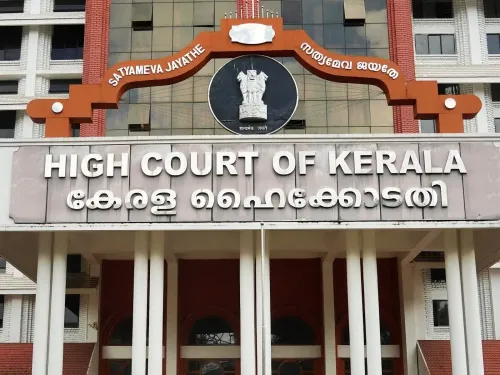
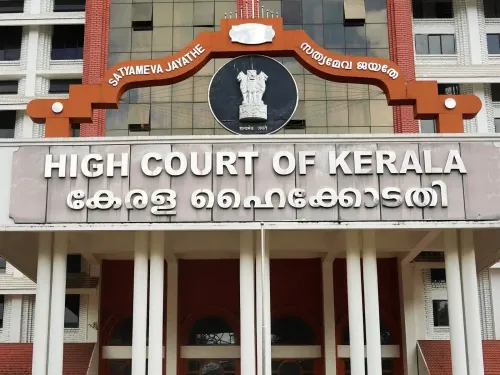
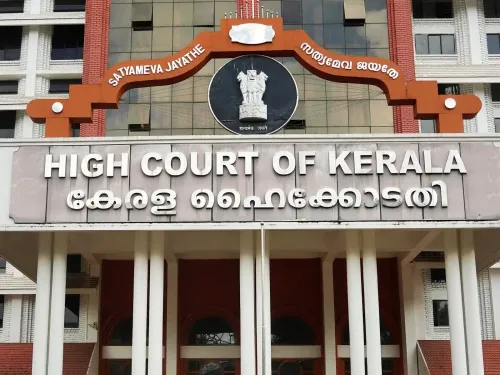
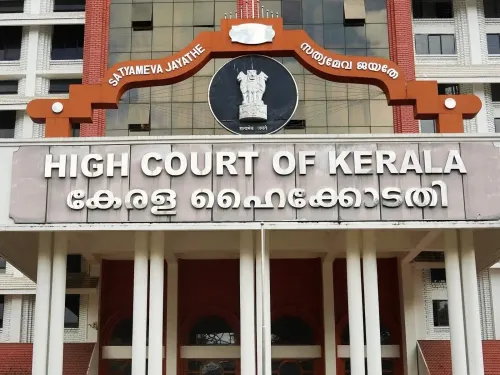
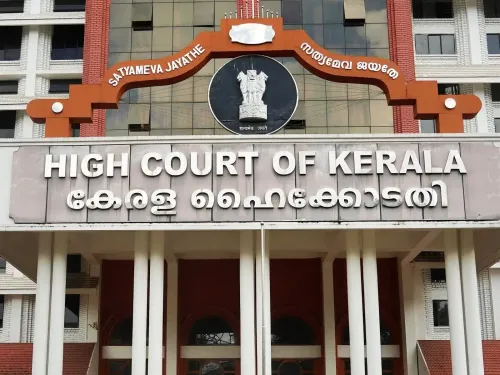
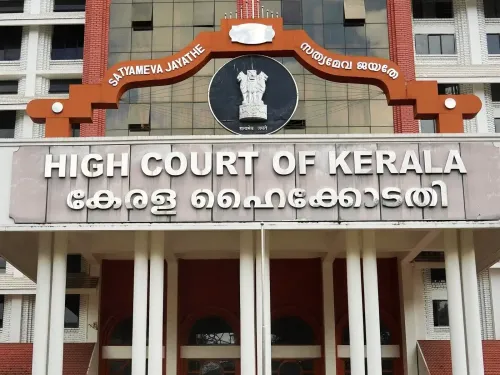
Kochi, Dec 1 (NationPress) The Kerala High Court, in a recent ruling, has mandated the Director General of Police (DGP) to present full details concerning a body discovered in a marshy region of Kalamassery, which is suspected to belong to Suraj Lama, a 50-year-old individual who vanished on October 5 following his arrival in Kochi from Kuwait.
During the hearing of a habeas corpus petition submitted by Lama's son, claiming police negligence and inaction, a Division Bench comprising Justice Devan Ramachandran and Justice M.B. Snehalatha instructed the Superintendent of the Medical College Hospital—where the missing man was allegedly taken by law enforcement—to submit all medical documentation and reports by Thursday, December 4.
The bench voiced its apprehension regarding the police's handling of this case.
"We require comprehensive details immediately. We need to understand how this individual was admitted to the hospital, the events that transpired there, and a minute-by-minute account. We are genuinely hoping this is not his body," it stated.
The court acknowledged that the petitioner had informed that his father suffered from cognitive issues due to an accident overseas, which led to his return to India.
The court demanded clarification on the process of the alleged detainee's admission to and discharge from the Medical College.
Upon learning about a body found in the marshland of the HMT area, Kalamassery, the bench noted that postmortem, scientific examinations, and DNA profiling were being conducted to verify the identity, observing that the body might have remained unnoticed for over a month and sharply questioned the effectiveness of city surveillance.
"What type of city surveillance is this? How can a body remain in a marshy area within a municipality for such an extended period without detection? This is profoundly troubling," it commented, highlighting that the location is part of the proposed Judicial City.
The court criticized the police for their failure to act during the crucial 'golden period' typical in missing person cases and sought explanations as to why such areas remain unsupervised.
It mandated the Special Investigation Team (SIT), previously appointed by the court, to persist in its investigation, including tracking down the missing man's belongings sent from Kuwait.
The court emphasized that the investigation team, rather than local police, must present all findings at the subsequent hearing.
Point of View
It is imperative to acknowledge the gravity of the Kerala High Court's directives in this case. The court's demand for thorough investigations reflects a commitment to justice and accountability in law enforcement. This incident underscores the critical need for effective city surveillance and timely action in missing person cases. The safety and well-being of citizens, especially vulnerable individuals, must remain a top priority.
NationPress
30 Sept 2026
Frequently Asked Questions
What did the Kerala High Court direct the police to do?
The Kerala High Court directed the Director General of Police to submit comprehensive details regarding the case, including medical records and police actions.
Why is the investigation significant?
The investigation is significant due to concerns about police negligence and the effectiveness of city surveillance in missing person cases.
What actions are being taken regarding the unidentified body?
Postmortem and DNA profiling are underway to confirm the identity of the unidentified body discovered in Kalamassery.
What concerns did the court express?
The court expressed concerns over the police's handling of the case and the lack of city surveillance that allowed a body to remain undiscovered for an extended period.