Kudumbashree women to be trained as rubber tappers in Kerala's plantation push
Synopsis
Kerala is turning a chronic rubber-tapping labour shortage into an employment opportunity — by training Kudumbashree women to manage entire rubber estates, from planting to marketing. Backed by a ₹250-per-kg support price and technical support from the Rubber Board, the model could become a blueprint for solving plantation labour crises across the state.
Key Takeaways
Kerala will train Kudumbashree women as rubber tappers and plantation managers in partnership with Kerala Rubber Limited .
The pilot was launched in Melukavu panchayat , Kottayam district , and will expand to Kottayam and Pathanamthitta districts.
Kudumbashree CDSs will manage rubber estates end-to-end — planting, tapping, processing, and marketing — with plantation owners receiving an agreed income share.
The Rubber Board , Rubber Producers' Societies , and Kerala Rubber Limited will provide training, toolkits, and financial support.
Satheesan government recently raised the natural rubber minimum support price from ₹200 to ₹250 per kg .
Thousands of acres of Kerala plantation land have been underutilised due to an acute shortage of skilled rubber tappers.
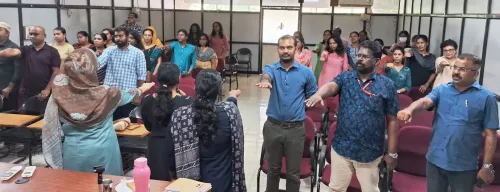
The Kerala government has launched a structured programme to train women members of the Kudumbashree mission as professional rubber tappers and plantation managers, addressing a long-standing labour shortage in the state's rubber sector while creating sustainable livelihoods for rural women. The initiative, implemented in partnership with Kerala Rubber Limited, is set to expand across major rubber-growing districts following a successful pilot.
What the Programme Involves
Piloted in Melukavu panchayat in Kottayam district, the scheme will now be extended to Community Development Societies (CDSs) in Kottayam and Pathanamthitta, with further expansion planned to other rubber-growing districts. Under the arrangement, Kudumbashree CDSs will operate as professional plantation management agencies, taking on the full lifecycle of rubber estate management — from planting and maintenance to tapping, processing, and marketing.
Plantation owners who opt in will receive an agreed share of annual income, while participating women will earn regular wages and acquire specialised skills. The Rubber Board, Rubber Producers' Societies, and Kerala Rubber Limited will provide technical training, toolkits, and financial support.
The Labour Crisis Behind the Move
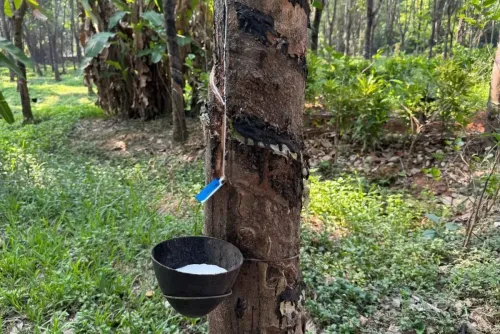
Kerala's rubber sector has faced an acute shortage of skilled tappers for years. Unlike most other industries in the state, rubber tapping has not been absorbed by migrant workers — the specialised technique it demands has kept it largely outside the migrant labour fold. The consequence has been thousands of acres of plantation land left underutilised or poorly maintained, representing a significant economic loss for smallholder growers.
This is not the first time Kerala has attempted to address agricultural labour gaps through Kudumbashree — the mission has previously been deployed in paddy cultivation and vegetable farming — but this marks its most structured entry into the plantation sector.
Policy Boost: Higher Rubber Support Price
The training push comes shortly after the V.D. Satheesan government raised the minimum support price for natural rubber from ₹200 to ₹250 per kg, fulfilling a commitment from the United Democratic Front (UDF) election manifesto. The higher support price, combined with a larger pool of trained local tappers, is expected to improve the economic viability of rubber cultivation and incentivise growers to bring neglected plantations back into production.
Expected Impact
Officials believe the dual intervention — skilled workforce creation and a better floor price — will ease the labour crisis while generating long-term employment for women in rural areas where rubber cultivation can provide dependable income for decades. The programme also positions Kudumbashree CDSs as professional agricultural enterprises rather than informal self-help collectives, a notable structural shift. How quickly the model scales beyond Kottayam and Pathanamthitta will determine whether it becomes a replicable template for other plantation crops facing similar labour pressures.
Point of View
Too labour-intensive for ageing smallholder families. Routing Kudumbashree into plantation management is a pragmatic fix, but the real test is scale and retention: will women continue tapping once the novelty of the pilot fades, and will estate owners actually cede management control to CDSs? The ₹250 support price helps the economics, but rubber prices are volatile and MSP commitments have historically been inconsistently enforced. If the CDS model holds, it could be replicated across cashew and coconut — crops facing identical labour crises — but that depends on whether this programme builds genuine skill depth or remains a headline scheme.
NationPress
20 Oct 2026
Frequently Asked Questions
What is the Kudumbashree rubber tapping programme in Kerala?
It is a state government initiative that trains women members of the Kudumbashree mission as professional rubber tappers and plantation managers, implemented in partnership with Kerala Rubber Limited. The programme aims to address Kerala's acute shortage of skilled rubber tappers while creating steady livelihoods for rural women.
Where was the programme first piloted and where will it expand?
The programme was piloted in Melukavu panchayat in Kottayam district. It will now expand to Community Development Societies in Kottayam and Pathanamthitta, with plans to extend further to other rubber-growing districts in Kerala.
How will Kudumbashree CDSs manage rubber plantations?
Kudumbashree CDSs will function as professional plantation management agencies, handling the full estate lifecycle — planting, maintenance, tapping, processing, and marketing. Plantation owners will receive an agreed share of annual income, while participating women will earn regular wages.
What is the new minimum support price for natural rubber in Kerala?
The V.D. Satheesan government raised the minimum support price for natural rubber from ₹200 to ₹250 per kg, fulfilling a United Democratic Front election manifesto commitment. The higher price is expected to improve the viability of rubber cultivation alongside the new tapper workforce.
Why has rubber tapping faced a labour shortage in Kerala?
Unlike most other sectors, rubber tapping requires specialised skills that migrant workers have not typically acquired, keeping it outside the migrant labour pool. This has left thousands of acres of plantation land underutilised or poorly maintained across the state.