Kudumbashree 2.0: Kerala bets on women-led growth as global model
Synopsis
Kerala has relaunched Kudumbashree — a movement that began in 1998 as a poverty mission — as Kudumbashree 2.0, with an explicit ambition to become a global model for women-led economic growth. The pivot from welfare to prosperity is significant: it asks a grassroots network of millions of women to shift identity from beneficiary to entrepreneur, with local bodies as the delivery mechanism.
Key Takeaways
Kerala announced Kudumbashree 2.0 on 17 June in Thiruvananthapuram , reorienting the programme from poverty alleviation to women-led economic growth.
Local Self Government Minister K.M.
Shaji described the shift as moving 'from survival to prosperity.' The new phase prioritises entrepreneurship, market access, technology adoption, brand building, and integration into local body development plans.
Kudumbashree was originally launched in 1998 and is widely cited as one of India's most successful community-based women empowerment models.
Principal Director Divya S.
Iyer said the next phase aims to take women 'from dependence to economic leadership.' No specific financial outlay was announced; local body integration into annual plans is the primary near-term delivery mechanism.
Kerala's Kudumbashree movement, widely regarded as one of India's most successful community-based women empowerment programmes, is entering a new phase. The Kerala government on Wednesday, 17 June formally announced Kudumbashree 2.0 in Thiruvananthapuram, repositioning the 27-year-old initiative from a poverty alleviation vehicle into an engine for inclusive economic growth with the ambition of becoming a global model.
The Vision Behind Kudumbashree 2.0
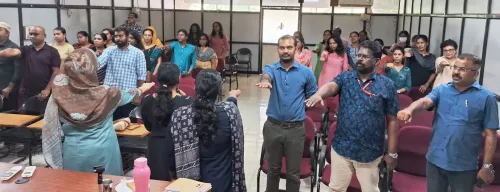
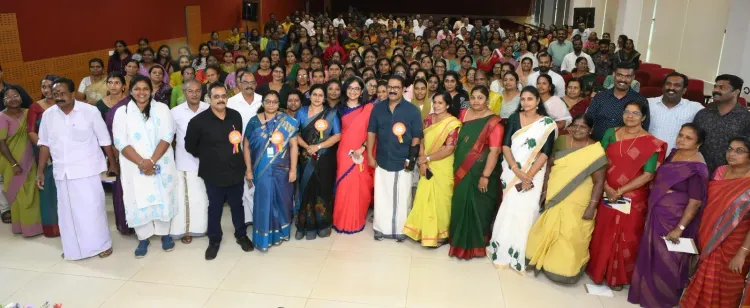
Local Self Government Minister K.M. Shaji launched the new phase at a state-level workshop for newly elected local body representatives and Community Development Society (CDS) chairpersons. He framed the shift as a fundamental change in philosophy. 'Kudumbashree 2.0 is not just a change in a scheme, but a transformation in the growth of society,' he said.
The Minister stressed that the movement must evolve from a system that provides support to one that creates opportunities — marking what he described as a decisive shift 'from survival to prosperity.' He added that women should not merely participate in the new economy but lead it, and that 'Kudumbashree must move from small enterprises to bigger possibilities.'
Key Priorities of the New Phase
The 2.0 vision centres on five strategic pillars: strengthening entrepreneurship, improving market access, adopting technology, building brands capable of competing beyond Kerala, and integrating Kudumbashree into annual local body development plans. Minister Shaji said every ward could become a small economic centre if local governments, youth groups and skilled professionals work in concert with Kudumbashree units.
He urged local governments to embed Kudumbashree into their planning cycles so that welfare benefits and livelihood opportunities reach the grassroots effectively — a structural integration that has been uneven in the past.
What Officials Said
District Panchayat President V. Priyadarshini said closer coordination between local bodies and Kudumbashree would deepen development in women's livelihood projects, agriculture, and animal husbandry. Local Self Government Department Principal Director Divya S. Iyer noted that the measurable rise in women's happiness and confidence across Kerala since Kudumbashree's founding reflected the movement's broader social impact. The next phase, she said, would be about building a Kerala where women move 'from dependence to economic leadership.'
Background: A Movement Built Over 27 Years
Kudumbashree was launched in 1998 as a state poverty eradication mission, anchored in a three-tier network of neighbourhood groups, area development societies, and community development societies. Over nearly three decades, it has grown into one of the largest women-led community networks in Asia, with its micro-enterprises and self-help group model frequently cited by international development organisations as a replicable template.
The initiative has often been credited with driving measurable improvements in women's financial inclusion and political participation at the panchayat level in Kerala. Kudumbashree 2.0 now seeks to build on that foundation, shifting the narrative from welfare recipient to economic architect.
What Comes Next
The state-level workshop marks the beginning of an outreach phase to align local body representatives with the 2.0 framework. No specific financial outlay or timeline for milestones was announced on Wednesday, but the government signalled that integration into annual development plans would be the primary near-term mechanism. How effectively local bodies operationalise the new mandate will determine whether Kudumbashree 2.0 delivers on its global-model ambition.
Point of View
But the gap between aspiration and delivery lies in execution at the local body level — historically the weakest link in Kerala's grassroots governance chain. The absence of a specific financial outlay or measurable milestones at the launch is a telling omission: without binding targets, the shift from 'survival to prosperity' risks remaining a workshop slogan. Kudumbashree's strength has always been its network density, not its enterprise scale; bridging that gap requires sustained market linkages and technology infrastructure that state announcements alone cannot guarantee.
NationPress
20 Sept 2026
Frequently Asked Questions
What is Kudumbashree 2.0?
Kudumbashree 2.0 is the Kerala government's relaunched phase of the Kudumbashree women's empowerment programme, announced on 17 June in Thiruvananthapuram. It shifts the movement's focus from poverty alleviation to building a global model for inclusive, women-led economic growth through entrepreneurship, technology, and market access.
When was Kudumbashree originally launched?
Kudumbashree was launched in 1998 as a state poverty eradication mission in Kerala. Over 27 years it has grown into one of the largest women-led community networks in Asia, built on neighbourhood groups and micro-enterprises.
Who announced Kudumbashree 2.0 and where?
Local Self Government Minister K.M. Shaji announced Kudumbashree 2.0 at a state-level workshop in Thiruvananthapuram on Wednesday, 17 June. The event was attended by newly elected local body representatives and Community Development Society chairpersons.
What are the key priorities of Kudumbashree 2.0?
The new phase focuses on strengthening entrepreneurship, improving market access, adopting technology, building competitive brands beyond Kerala, and integrating Kudumbashree into local body annual development plans. The overarching goal is to reposition Kudumbashree women as economic leaders rather than welfare beneficiaries.
Was any funding announced for Kudumbashree 2.0?
No specific financial outlay or milestone timeline was announced at the 17 June launch. The government indicated that integration into local body annual development plans would be the primary mechanism for rolling out the new phase.