Kerala's free bus ride for women from June 15 draws men's group protest
Synopsis
Kerala's universal free bus ride for women — no income cap, no age bar — launches on June 15 under the Priyadarshini scheme. But the launch day is also when a men's group has vowed to block buses and ride ticketless in protest, turning a welfare rollout into a political flashpoint. The state is also staring at a ₹750–800 crore annual revenue hole for KSRTC.
Key Takeaways
Kerala's Priyadarshini scheme offers free KSRTC ordinary bus travel to all women from 15 June , with no income, age, or category restrictions.
The scheme is part of the state's Indira Guarantee programme.
KSRTC is estimated to lose ₹750–800 crore annually; the government has promised full reimbursement on top of existing ₹1,500 crore annual support.
The All Kerala Men's Association has announced protests at the Secretariat in Thiruvananthapuram on the launch day, with warnings of bus blockades.
The group objects to the universal nature of the benefit, arguing it should be restricted to economically weaker sections identified via ration cards.
A second phase of Priyadarshini will be considered only after assessing KSRTC 's financial position.
The Kerala government's Priyadarshini scheme, which offers free travel for women in KSRTC ordinary buses with effect from 15 June, has sparked a political and social controversy after the All Kerala Men's Association announced protests on the very day of the launch. The scheme, part of the state's Indira Guarantee programme, carries no income, age, or category restrictions for beneficiaries.
What the Priyadarshini Scheme Offers
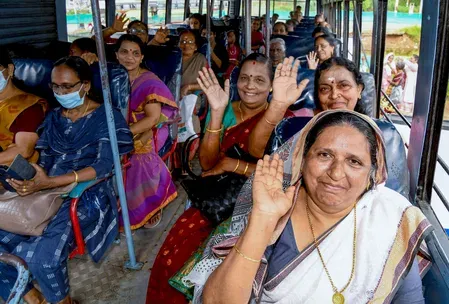
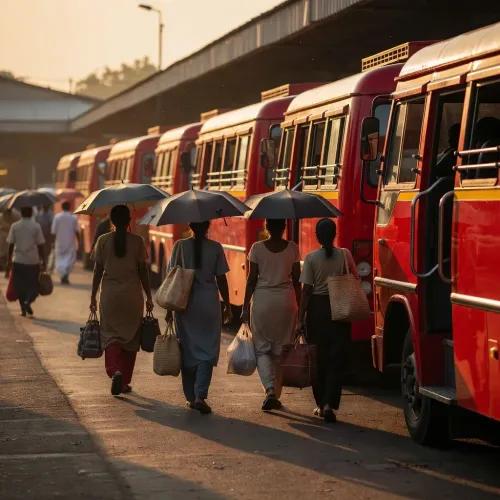
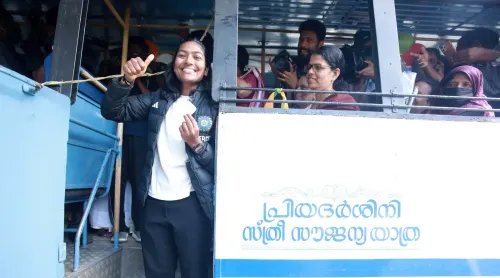
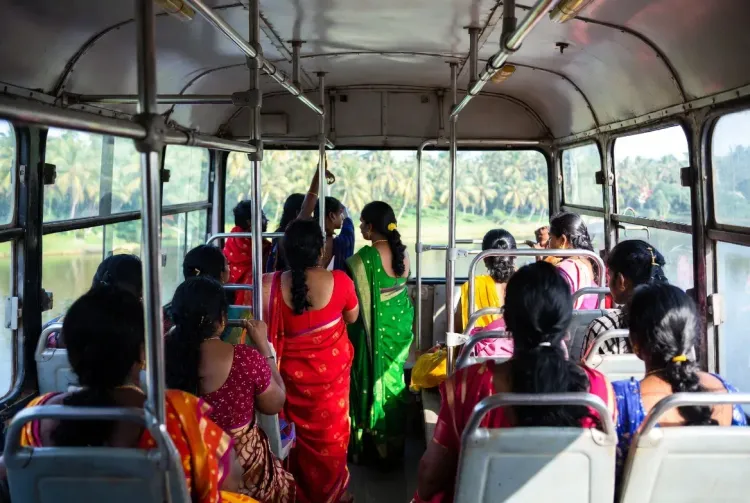
Under the first phase of Priyadarshini, all women — regardless of income level, age, or social category — will be permitted to travel free of charge in KSRTC ordinary buses across Kerala. The state government has described it as a first-of-its-kind welfare measure in the state, aimed at improving mobility and accessibility for women.
The scheme is expected to cost KSRTC between ₹750 crore and ₹800 crore annually in lost revenue. The government has assured full reimbursement of this shortfall, which will be over and above the ₹1,500 crore in annual financial support already extended to the corporation for salaries and pensions. Officials have also directed KSRTC to boost its own revenues by adding buses, expanding routes, and growing advertising income.
The Protest Threat
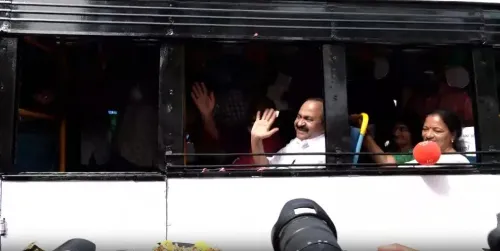
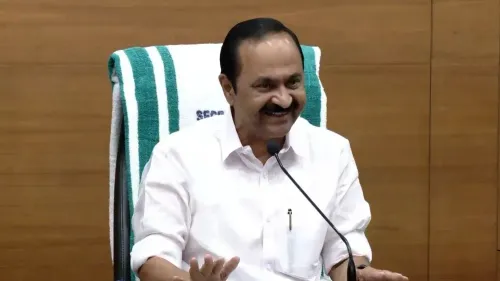
All Kerala Men's Association president Vattiyoorkavu Ajith Kumar announced that the organisation will stage a demonstration in front of the Secretariat in Thiruvananthapuram on 15 June. The group has also warned it may block buses as part of the agitation, and said its members would board buses and travel without purchasing tickets as a symbolic act of protest.
'Just because someone is born a man, there is no justice anywhere for him. Men are also a vote bank,' Ajith Kumar said, questioning the decision to extend free travel without any income or age filter.
The Core Objection
The association has made clear its opposition is not to welfare spending per se, but to the absence of targeting. 'If free travel is provided based on financial status identified through ration cards, there is no problem. But why should even those earning lakhs in salary get free travel?' Ajith Kumar asked. The group said it would have no objection if the benefit were restricted to economically weaker sections.
This comes amid a broader national debate over universal versus targeted welfare schemes, with critics across several states arguing that universal benefits can strain public finances without maximising social impact.
Financial Pressure on KSRTC
KSRTC already operates under significant financial stress, receiving ₹1,500 crore annually from the state for operational costs. The additional reimbursement of up to ₹800 crore for the Priyadarshini scheme would push total state support well beyond ₹2,300 crore per year. Officials have indicated that a second phase of the scheme will only be considered after a thorough review of the corporation's financial position.
What Comes Next
With the launch date set for 15 June and a protest already scheduled for the same day, the Priyadarshini scheme has moved from a welfare policy discussion into a wider social and political flashpoint. The government is yet to respond formally to the men's group's demands or the threat of bus blockades. Whether the state revisits the eligibility criteria in subsequent phases will likely depend on both the financial performance of KSRTC and the political temperature around the scheme.
Point of View
The Kerala government maximises uptake and sidesteps the administrative burden of targeting — but it also hands critics a legitimate argument: subsidising affluent commuters is hard to defend when KSRTC is already on a ₹1,500 crore annual drip. The men's group protest is easy to dismiss as performative, but the underlying question about means-testing welfare is a serious one that the government has not answered. If KSRTC's finances deteriorate further, the second phase may quietly introduce the income cap that the first phase conspicuously avoided.
NationPress
22 Sept 2026
Frequently Asked Questions
What is the Priyadarshini scheme in Kerala?
The Priyadarshini scheme is a Kerala government initiative that provides free travel for all women in KSRTC ordinary buses, with no restrictions based on income, age, or social category. It is part of the state's Indira Guarantee programme and takes effect from 15 June.
Why is the All Kerala Men's Association protesting the scheme?
The All Kerala Men's Association objects to the universal nature of the benefit, arguing that women with high incomes should not receive free travel. The group has demanded that eligibility be restricted to economically weaker sections identified through ration cards, and has threatened to block buses on the launch day, 15 June.
What is the financial impact of the Priyadarshini scheme on KSRTC?
KSRTC is estimated to face a revenue shortfall of ₹750–800 crore annually due to the free travel programme. The Kerala government has assured it will reimburse this loss, in addition to the ₹1,500 crore it already provides annually for salaries and pensions.
When does the Priyadarshini scheme come into effect?
The first phase of the Priyadarshini scheme launches on 15 June. A second phase will be considered only after the government assesses KSRTC's financial position following the rollout.
Who is eligible for free bus travel under the Priyadarshini scheme?
All women are eligible for free travel in KSRTC ordinary buses under the first phase of Priyadarshini, regardless of income level, age, or social category. There are no eligibility conditions attached to the benefit in this phase.