Kerala women's free KSRTC bus travel from June 15; ₹57 crore burden in 100-day trial
Synopsis
Kerala's UDF government is making good on a landmark election promise — free KSRTC bus travel for all women, regardless of caste or income — but the launch on June 15 comes with a ₹57 crore three-month price tag and a hard geographic fault line: women in Malabar may be left behind by a thin ordinary-bus network.
Key Takeaways
Kerala launches free KSRTC bus travel for women from June 15 , restricted to ordinary services in the first phase.
The 100-day trial is projected to cost ₹57 crore ; expanding to all bus categories could push the three-month burden to ₹112 crore .
An estimated 10 to 12 lakh women out of 23 lakh daily KSRTC passengers are expected to benefit.
No caste or income eligibility criteria — the scheme is universal; Aadhaar-linked smart cards being considered to prevent misuse.
Women in the Malabar region may receive limited benefit due to fewer ordinary services; government is considering new routes.
CITU demands full government reimbursement; BMS seeks conversion of KSRTC into a government department.
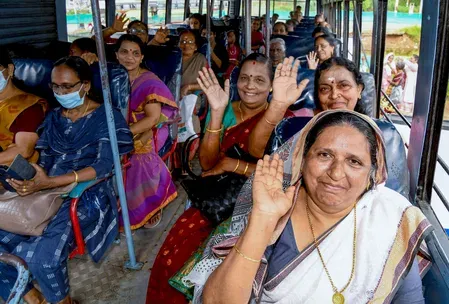
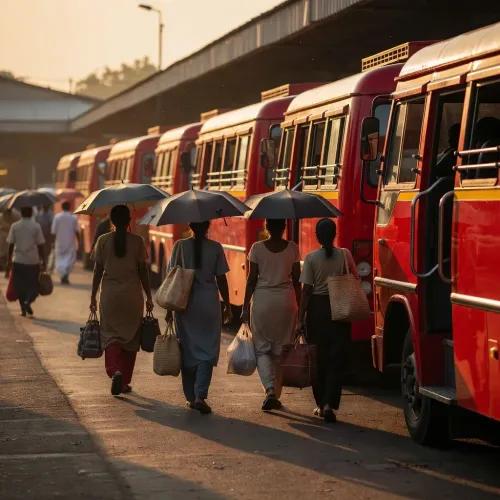
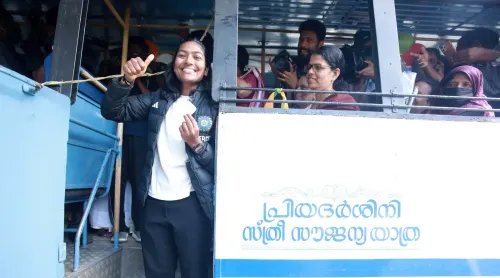
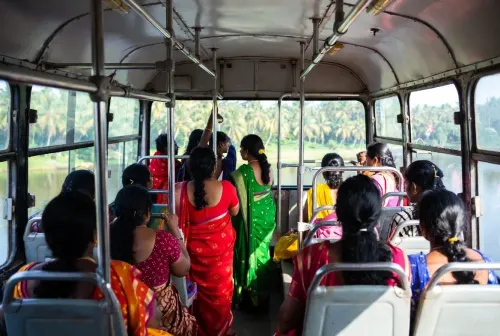
The Kerala government will launch free bus travel for women across all KSRTC ordinary services from June 15, rolling out one of the United Democratic Front (UDF) government's flagship election promises under the 'Indira Guarantee' programme. The scheme will initially run as a 100-day trial, restricted to ordinary buses, with an estimated financial burden of ₹57 crore over three months.
Key Decisions from the High-Level Meeting
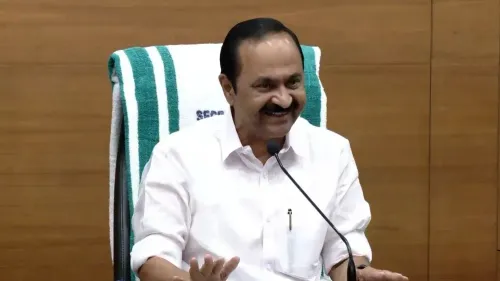
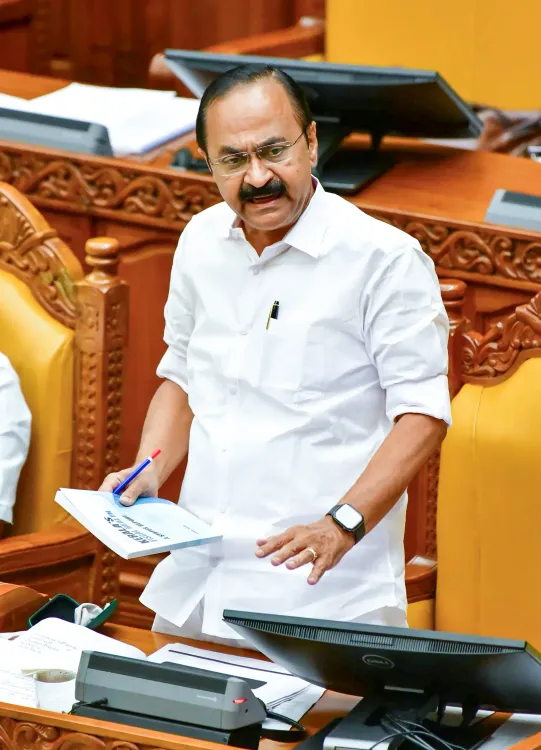
The rollout plan was finalised at a high-level meeting chaired by Chief Minister V.D. Satheesan and Transport Minister C.P. John, taking into account KSRTC's existing financial constraints and operational challenges. Minister John indicated that full details will be formally announced by Chief Minister Satheesan after cabinet review.
The scheme will be universal — no caste or income-based eligibility criteria will apply. Aadhaar-linked smart cards are being considered as a safeguard against misuse.
Financial Burden Across Phases
According to KSRTC estimates, roughly 23 lakh passengers use its network daily, of whom 10 to 12 lakh are women. Extending free travel to this section carries a substantial cost. The projected three-month burden scales sharply with scope:
Ordinary buses alone: ₹57 crore. Adding city fast services: ₹65 crore. Ordinary, Fast Passenger, and Super Fast combined: ₹90 crore. All categories: ₹112 crore.
The government has assured that ticket revenue losses will be reimbursed to KSRTC as a direct subsidy, with a special budget allocation planned. The Finance Secretary has been tasked with designing a reimbursement mechanism, and discussions are underway on bridging initial costs through the Kerala Financial Corporation (KFC).
Regional Concerns and Service Gaps
Restricting the first phase to ordinary buses has drawn criticism over geographic inequity. Women in northern Kerala, particularly the Malabar region, are likely to receive limited benefit owing to a thinner network of ordinary services compared to southern districts. The government has acknowledged the gap and is considering launching new ordinary services in underserved areas before or alongside the scheme's rollout.
Employee Unions Raise Alarms
KSRTC employee unions have not held back. The Centre of Indian Trade Unions (CITU) has demanded that the government bear the entire additional financial liability, while the Bharatiya Mazdoor Sangh (BMS) has called for converting KSRTC into a full government department. The Transport Commissioner has been directed to submit a detailed report on the financial impact during the trial period, which will inform the government's decision on extending the scheme to higher-category services.
What Comes Next
A comprehensive review of passenger patterns, revenue loss, and operational impact is scheduled before Phase 2 is considered. The government's decision on expanding the scheme to Fast Passenger and other long-distance services will hinge on that review. With KSRTC already dependent on government support for salaries and pensions, the 100-day window will be a critical stress test for both the corporation's finances and the UDF's welfare delivery record.
Point of View
And layering a ₹57 crore subsidy on top without a finalised reimbursement pipeline is a real operational risk. The geographic inequity problem is the more under-reported issue: a welfare scheme that disproportionately benefits southern Kerala while leaving Malabar women with limited access could become a political liability faster than the financial one. The government's decision to exclude income criteria is bold and inclusive, but it also means the subsidy will partially flow to women who don't need it — a trade-off that will face scrutiny when the Transport Commissioner's review lands.
NationPress
25 Sept 2026
Frequently Asked Questions
When does Kerala's free KSRTC bus travel scheme for women start?
The scheme launches on June 15 , initially covering ordinary KSRTC services only. It will run as a 100-day trial before the government decides on expanding it to Fast Passenger and other higher-category services.
Who is eligible for free KSRTC bus travel in Kerala?
All women are eligible, regardless of caste or income status — no means-testing or eligibility criteria will be imposed. The government is also considering Aadhaar-linked smart cards to prevent misuse.
What is the financial burden of the scheme on KSRTC?
Restricting the scheme to ordinary buses will cost an estimated ₹57 crore over three months. Extending it to all bus categories could raise the burden to approximately ₹112 crore for the same period. The government has committed to reimbursing KSRTC through a direct subsidy and a special budget allocation.
Why are women in northern Kerala concerned about the scheme?
The Malabar region in northern Kerala has fewer ordinary KSRTC services compared to southern districts, meaning women there stand to benefit less from a scheme limited to ordinary buses in its first phase. The government is considering launching new ordinary services in these underserved areas.
What have KSRTC employee unions said about the free travel scheme?
CITU has demanded that the government fully bear the additional financial liability arising from the scheme. BMS has gone further, calling for KSRTC to be converted into a full government department. The government has maintained that revenue losses will be reimbursed to KSRTC as a subsidy.