Priyadarshini scheme: 13 lakh Kerala women travel free on day one
Synopsis
Over 13 lakh women boarded KSRTC buses for free on the very first day of Kerala's Priyadarshini scheme — nearly doubling ridership overnight and generating ₹2.20 crore in ticket value. But private operators say they couldn't even cover diesel, setting up a clash between a high-profile welfare win and a looming operator crisis.
Key Takeaways
13,29,938 women and transgender persons travelled free on KSRTC ordinary buses on the scheme's inaugural day, 16 June 2025 .
Ridership nearly doubled compared to 7,34,693 women who used KSRTC ordinary services on 8 June .
5,95,245 additional women opted for KSRTC services on the first day of the Priyadarshini Free Travel Scheme .
Estimated value of zero-fare tickets issued on day one reached ₹2.20 crore .
Private bus operators say they failed to recover even diesel costs and are seeking a meeting with Chief Minister V.D.
The scheme was launched at the KSRTC Complex, Thampanoor, Thiruvananthapuram at 9 am on Monday.
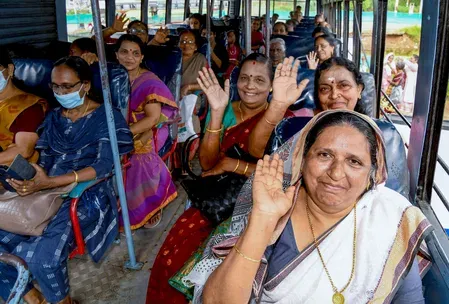
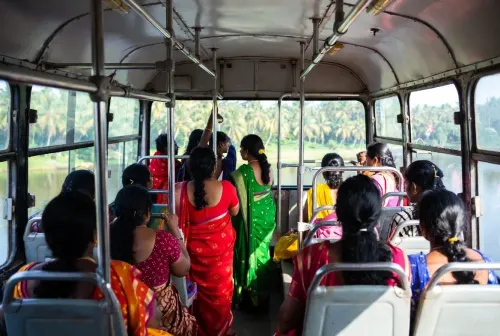
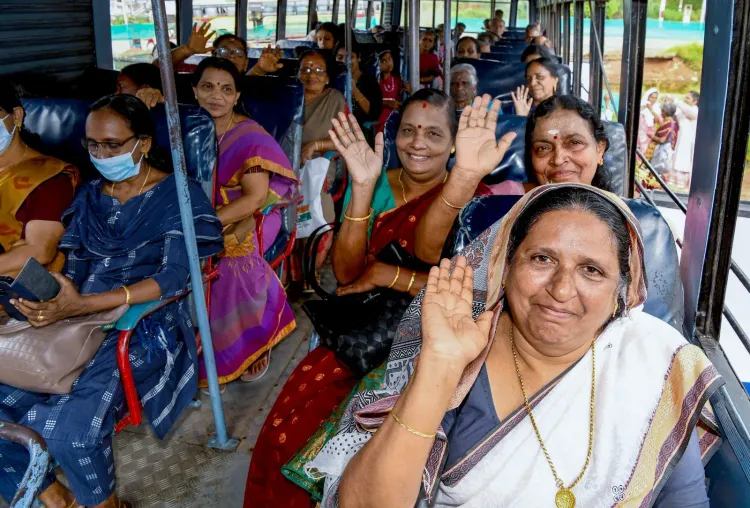
Kerala's Priyadarshini Free Travel Scheme drew an overwhelming first-day response on Monday, 16 June 2025, with more than 13 lakh women and transgender persons travelling free on KSRTC ordinary buses across the state. The scheme, launched by the Chief Minister V.D. Satheesan-led government, recorded 13,29,938 women passengers on its inaugural day — nearly double the 7,34,693 who used the same services on the previous Monday, 8 June.
Scale of the Response
The jump translates to 5,95,245 additional women passengers in a single day compared to the week before. The estimated value of zero-fare tickets issued under the scheme on day one alone stood at ₹2.20 crore, according to government figures. Officials said the turnout has reinforced their projection that the scheme will steadily expand women's participation in public transport in the weeks ahead.
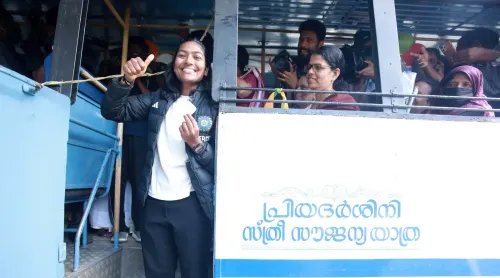
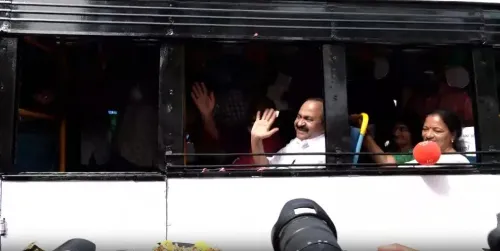
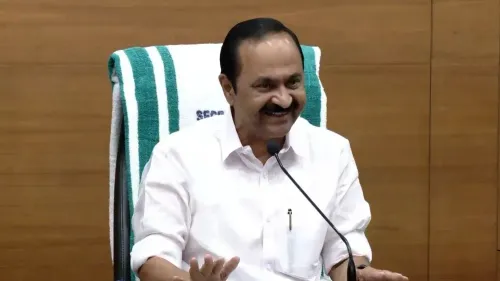
The scheme was formally inaugurated at 9 am at the KSRTC Complex in Thampanoor, Thiruvananthapuram, where Chief Minister Satheesan rang the traditional double bell to mark the launch. Under the initiative, women and transgender persons receive zero-fare tickets on all KSRTC ordinary bus services statewide.
What the Government Said
The state government has positioned the Priyadarshini scheme as a structural welfare measure aimed at enhancing mobility and reducing travel costs, with a stated focus on improving access to education, employment, and essential services for women. Officials described the first-day numbers as a strong validation of the policy design.
Private Operators Cry Foul
The scheme's rollout has not been without friction. Private bus operators, who are also required to provide free travel under the programme, said their initial assessment at the end of Monday night showed they had not recovered even the cost of diesel. An office-bearer of the private operators said they were waiting for a meeting with Chief Minister Satheesan to present their concerns.
'We will assess things, and we are waiting to meet Chief Minister V.D. Satheesan to explain our side,' the office-bearer said.
This tension between the state's welfare ambitions and the financial viability of private operators is likely to be a defining challenge as the scheme scales. Notably, the government has not yet detailed the reimbursement mechanism for private operators — a gap that operators say is unsustainable.
What Comes Next
With the scheme now active, the government's immediate test is whether the reimbursement framework for private operators can be settled quickly enough to prevent a withdrawal of services. Industry observers note that similar free-travel schemes in other states have faced operator attrition within weeks if compensation timelines were not clearly defined. The coming days will reveal whether Kerala's model can balance public welfare with operator viability.
Point of View
It signals suppressed demand that free fares have unlocked. But the scheme's durability hinges entirely on what happens to private operators, whose financial distress on day one is a warning sign the government cannot afford to ignore. Kerala has a history of ambitious welfare launches that run into implementation gaps; the absence of a clear reimbursement timeline for private operators is exactly the kind of structural oversight that turns a political success story into a service collapse. The government's next move on operator compensation will matter far more than the first-day headline.
NationPress
25 Sept 2026
Frequently Asked Questions
What is Kerala's Priyadarshini Free Travel Scheme?
The Priyadarshini Free Travel Scheme is a Kerala government initiative that provides zero-fare tickets to women and transgender persons on all KSRTC ordinary bus services across the state. It was launched on 16 June 2025 by Chief Minister V.D. Satheesan at the KSRTC Complex in Thiruvananthapuram.
How many women travelled free on the first day of the Priyadarshini scheme?
A total of 13,29,938 women and transgender persons travelled free on KSRTC ordinary buses on the scheme's first day, 16 June 2025. This was nearly double the 7,34,693 who had used the same services on the previous Monday, 8 June.
Why are private bus operators unhappy with the Priyadarshini scheme?
Private operators say their initial assessment at the end of the first day showed they could not recover even their diesel costs under the scheme. They are seeking a meeting with Chief Minister V.D. Satheesan to present their concerns and are waiting for clarity on reimbursement.
What was the estimated ticket value generated on the first day?
The estimated value of zero-fare tickets issued under the Priyadarshini scheme on its inaugural day reached ₹2.20 crore, according to government figures.
Who is eligible for free travel under the Priyadarshini scheme?
Women and transgender persons are eligible for zero-fare tickets on KSRTC ordinary bus services across Kerala under the Priyadarshini Free Travel Scheme. The government has described it as a measure to improve access to education, employment, and essential services.