Kerala's Priyadarshini scheme drives 87% rise in women bus passengers
Synopsis
Kerala's Priyadarshini free bus scheme has done something rare: it created new public transport demand rather than just reshuffling existing riders. With daily women passengers nearly doubling to 12.12 lakh and 3.81 crore free journeys logged in month one, the data makes a strong case — even as a ₹60 crore revenue gap and a fleet shortage threaten to cap how far the scheme can go.
Key Takeaways
Kerala's Priyadarshini scheme recorded an 87 per cent rise in daily women passengers on KSRTC ordinary services within its first month.
Average daily women ridership climbed from 6.48 lakh to 12.12 lakh , adding over 5.5 lakh new daily passengers.
Women now constitute 66.6 per cent of ordinary-service passengers, up from 50.9 per cent .
A total of 3.81 crore free journeys were logged in the scheme's first month.
The scheme has caused a revenue loss of approximately ₹60 crore , which the government had anticipated.
Expansion to Express and Fast Passenger services is planned but not feasible in the near term due to financial and fleet constraints.
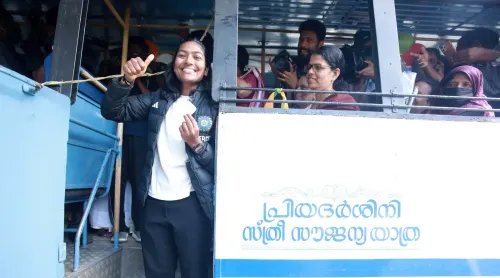
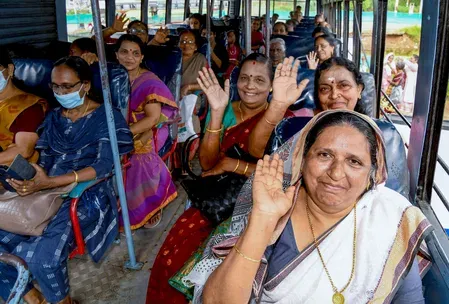
Kerala's Priyadarshini scheme, which offers free travel for women and transgender persons on Kerala State Road Transport Corporation (KSRTC) ordinary services, has recorded an 87 per cent surge in daily women ridership within its first month, Transport Minister C.P. John announced on Thursday, 17 July. The scheme has fundamentally reshaped the passenger profile of the state's public bus network.
Key Ridership Numbers
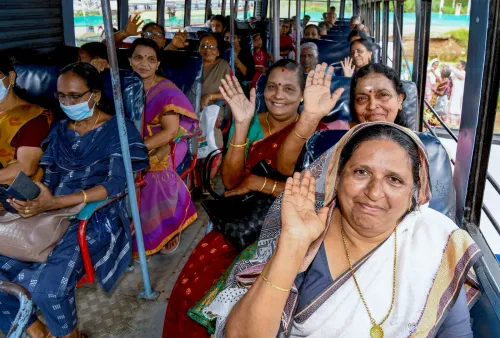
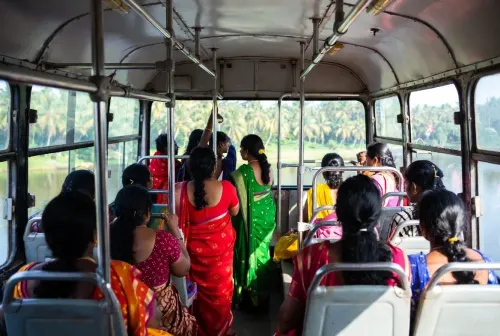
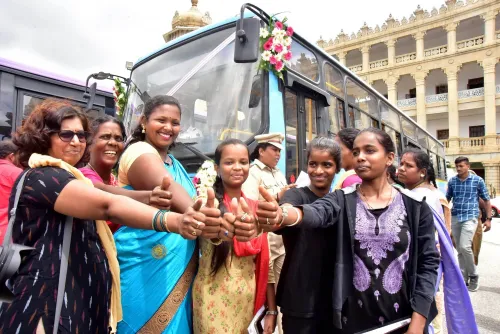
According to data drawn from KSRTC's Electronic Ticket Machines (ETMs), the average daily count of women passengers on ordinary services climbed from 6.48 lakh to 12.12 lakh — an increase of 5.5 lakh passengers per day. Women now account for 66.6 per cent of all ordinary-service passengers, up from 50.9 per cent before the scheme's launch, meaning nearly two in every three commuters on these routes are now women.
Across both ordinary and super-class services combined, average daily ridership rose from 19.03 lakh to 24.53 lakh, registering an overall 28.9 per cent increase. In the scheme's first month alone, 3.81 crore free journeys were recorded.
New Demand, Not a Passenger Shift
Minister John emphasised that the ridership growth reflects genuine new demand for public transport rather than a redistribution of existing commuters between service categories. Notably, the number of male passengers on ordinary services has remained largely unchanged, indicating that the surge in women travellers has not displaced other commuters. KSRTC has been able to absorb the additional load within its existing operational network.
Revenue Impact and Financial Arrangements
The scheme has resulted in a revenue shortfall of approximately ₹60 crore, a figure the state government had factored into its planning before the launch. Since Chief Minister V.D. Satheesan also holds the Finance portfolio, Minister John said the required funds are being released without delay. The dual role has streamlined inter-departmental approvals that have historically slowed welfare scheme disbursements in other states.
Operational Constraints and the Road Ahead
Despite the scheme's success, KSRTC faces limitations in deploying additional buses to meet rising demand. The state government is reportedly examining a proposal that would make it mandatory for each MLA to allocate funds from their constituency development budget for the purchase of at least one KSRTC bus. The Minister also indicated that the government intends to eventually extend the Priyadarshini scheme to Express and Fast Passenger services, though he acknowledged that present financial and operational constraints make such an expansion unfeasible in the near term. The scheme's next phase will depend on how quickly the fleet can be augmented and revenues stabilised.
Point of View
Not a feature. The MLA-fund bus proposal, meanwhile, is an improvised workaround for a fleet deficit that should have been addressed before launch. If KSRTC cannot scale capacity, peak-hour overcrowding could erode the very confidence in public transport that the scheme has built.
NationPress
15 Oct 2026
Frequently Asked Questions
What is the Priyadarshini scheme in Kerala?
The Priyadarshini scheme is a Kerala government initiative that provides free travel for women and transgender persons on KSRTC ordinary bus services. It was launched to enhance women's mobility and economic participation across the state.
How much has women's ridership increased under the Priyadarshini scheme?
Daily women passengers on KSRTC ordinary services rose from 6.48 lakh to 12.12 lakh — an 87 per cent increase. Women now make up 66.6 per cent of all ordinary-service passengers, up from 50.9 per cent before the scheme.
How many free journeys were recorded in the first month of the scheme?
A total of 3.81 crore free journeys were recorded during the scheme's first month of implementation, according to data from KSRTC's Electronic Ticket Machines.
What is the financial cost of the Priyadarshini scheme to KSRTC?
The scheme has resulted in a revenue loss of approximately ₹60 crore. The state government had anticipated this shortfall before launch, and funds are being released without delay since Chief Minister V.D. Satheesan also holds the Finance portfolio.
Will the Priyadarshini scheme be extended to Express and Fast Passenger services?
The Kerala government has expressed intent to extend the scheme to Express and Fast Passenger services in the future. However, Transport Minister C.P. John said current financial and operational constraints make such an expansion unfeasible at this stage.