Human reproduction in space fails at half the rate, Chinese study finds
Synopsis
Chinese scientists have confirmed for the first time that human embryonic stem cells can differentiate into germ cells in space — but the success rate plummets by roughly half and sperm-producing cells multiply over 25% more slowly, raising urgent questions about humanity's ability to reproduce beyond Earth.
Key Takeaways
Chinese Academy of Sciences and Tsinghua University researchers conducted the world's first successful differentiation of human embryonic stem cells into germ cells in a space environment.
The success rate of generating the earliest precursor germ cells fell by around half in space compared to Earth-based conditions.
Early sperm-producing cells multiplied more than 25 per cent more slowly in the space environment, according to the study.
The findings were published in Science Advances on July 15, 2026 , and attribute the outcomes largely to microgravity and cosmic radiation.
Experiments were conducted aboard two Tianzhou cargo spacecraft missions supporting China 's Tiangong space station.
Despite reduced efficiency, the fact that germ cell differentiation occurred at all in space is considered a scientific milestone that opens a path for future countermeasure research.
A landmark study by Chinese Academy of Sciences researchers has found that human reproductive cells develop far less effectively in space than on Earth, casting doubt on humanity's ability to sustain biological reproduction beyond our planet. The findings, published in Science Advances on July 15, 2026, represent the world's first successful differentiation of human embryonic stem cells into germ cells in a space environment.
What the experiment found
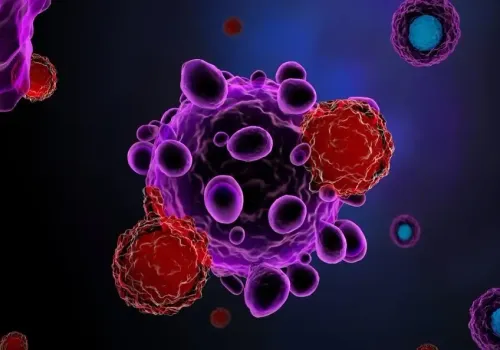
Scientists from the Shanghai Institute of Technical Physics under the Chinese Academy of Sciences and Beijing's Tsinghua University cultured human reproductive cells aboard two of China's Tianzhou cargo spacecraft missions. The results were stark: the success rate of generating the earliest precursor germ cells dropped by around half compared to Earth-based controls, while early sperm-producing cells multiplied more than 25 per cent more slowly in space, according to the paper.
Why it matters
The study is the first of its kind to successfully differentiate human embryonic stem cells into germ cells within a space environment, according to the researchers. This milestone makes the findings both scientifically significant and sobering — confirming that microgravity and cosmic radiation pose serious biological barriers to human reproduction off-planet. The implications extend to long-duration missions, permanent space habitats, and any realistic vision of multi-generational spaceflight.
The silver lining
Despite the setbacks, the fact that differentiation occurred at all — even at reduced efficiency — is itself a breakthrough. The research demonstrates that human germ cell development in space is possible in principle, giving scientists a biological baseline from which to develop countermeasures. Future work could focus on shielding technologies, pharmacological interventions, or engineered habitats designed to partially replicate Earth's gravitational and radiation environment.
The competitive backdrop
The experiment leverages China's expanding orbital infrastructure, particularly the Tianzhou cargo resupply programme supporting the Tiangong space station. As China, the United States, and other spacefaring nations accelerate plans for lunar bases and deep-space missions, understanding the biological limits of long-term human presence in space is becoming an urgent scientific and strategic priority. No comparable human germ-cell differentiation study has been conducted by any other space programme to date.
What's next
Researchers are expected to build on these findings to investigate targeted interventions that could improve reproductive cell viability in microgravity. The study sets a scientific foundation that will be critical for any serious planning around permanent human settlement beyond Earth — whether on the Moon, Mars, or further into the solar system.
Frequently Asked Questions
What did Chinese scientists discover about human reproduction in space?
Researchers from the Chinese Academy of Sciences and Tsinghua University found that human reproductive cells develop significantly less effectively in space. The success rate of generating the earliest precursor germ cells fell by around half, and early sperm-producing cells multiplied more than 25 per cent more slowly compared to Earth-based conditions, according to findings published in Science Advances on July 15, 2026 .
Why is this space reproduction study historically significant?
The study marks the world's first successful differentiation of human embryonic stem cells into germ cells in a space environment, according to the researchers. While the efficiency was reduced, the fact that differentiation occurred at all establishes a critical scientific baseline for future human spaceflight biology research.
What caused the reduced reproductive cell development in space?
The researchers attributed the reduced development rates primarily to microgravity and cosmic radiation, the two dominant environmental differences between space and Earth. Both factors appear to interfere with the cellular processes that drive germ cell formation and proliferation.
Which spacecraft were used in the human reproduction space experiment?
The experiments were conducted aboard two of China 's Tianzhou cargo spacecraft missions, which service the Tiangong space station. The Tianzhou programme provided the orbital platform needed to culture and study human reproductive cells in a genuine space environment.
What does this mean for the future of humans living in space?
The findings suggest that natural human reproduction in space faces serious biological obstacles, with germ cell development efficiency roughly halved compared to Earth. However, scientists say the results also open a pathway for developing countermeasures — such as radiation shielding or pharmacological interventions — that could eventually make off-world reproduction viable.