CM Siddaramaiah's Karnataka Highlights Shakti Scheme Impact
Synopsis
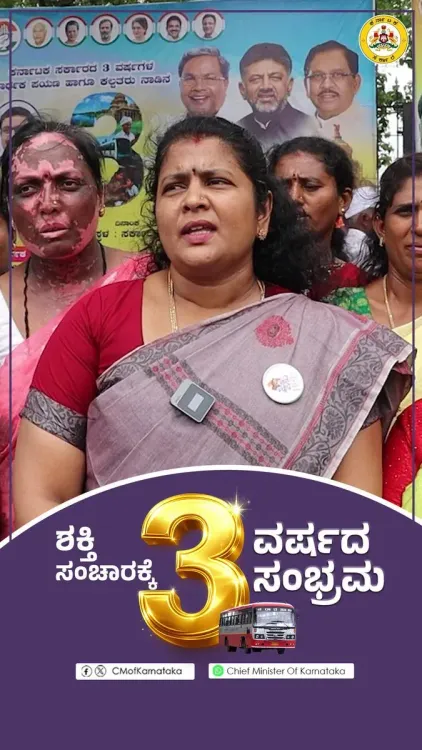
The Chief Minister's Office of Karnataka shared video testimonials on 11 June 2026 from women beneficiaries of the Shakti Yojane, the state's free-bus-travel scheme, underscoring its role in expanding women's access to employment, education, and healthcare across the state.
Key Takeaways
The Chief Minister's Office of Karnataka posted beneficiary testimonials for the Shakti Yojane on 11 June 2026 .
The scheme, launched in June 2023 , provides free travel to all women on KSRTC and allied state transport buses.
The post was attributed to Deputy Chief Minister DK Shivakumar and included a video of women sharing their experiences.
Beneficiaries cited improved access to employment, education, and medical services as key outcomes.
Karnataka's scheme is part of a broader trend of zero-fare or subsidised bus travel for women adopted by multiple Indian states since 2019.
Future budget allocations and independent impact evaluations will determine the scheme's long-term fiscal sustainability and policy reach .
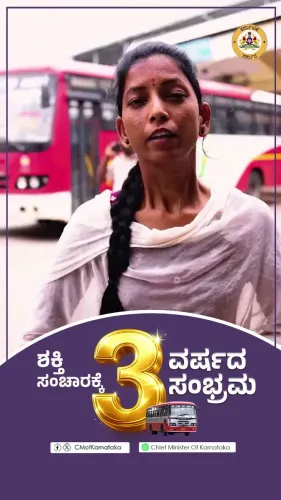
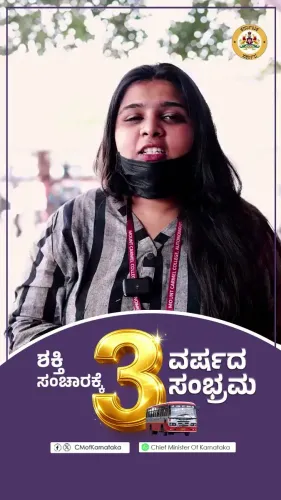
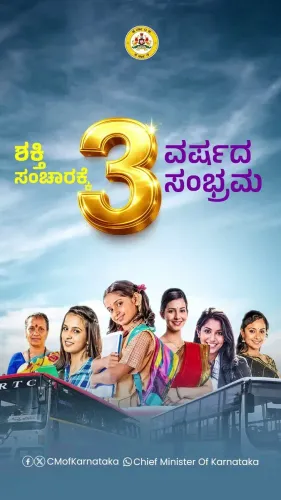
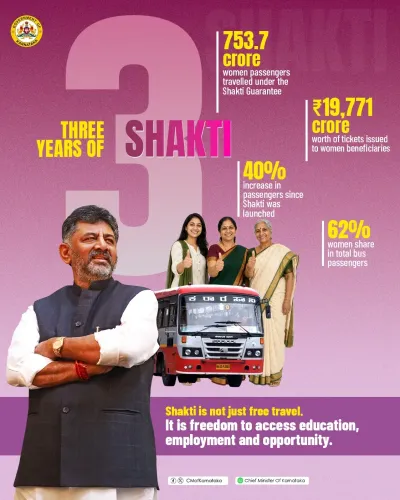
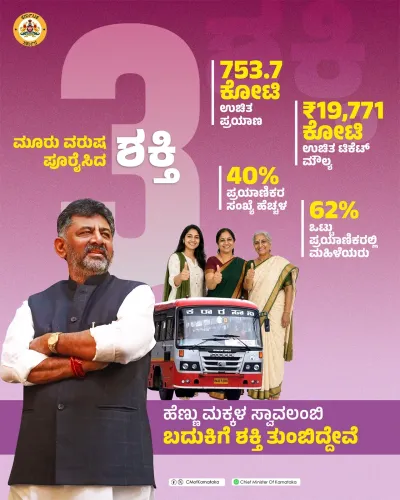
The Chief Minister's Office of Karnataka on 11 June 2026 shared testimonials from women beneficiaries of the Shakti Yojane, highlighting how the state's free-bus-travel scheme is enabling lakhs of women to pursue employment, education, and healthcare across Karnataka.
The post, attributed to Deputy Chief Minister DK Shivakumar, stated in Kannada: 'Shakti Yojane adhi raajyada saarige basgalalli uchita prayanada saulabhya padeda lakshaantara hennumakkaLu indu svaavalambi badukinedeege hejje haakuttiddaare' — 'Lakhs of women who have availed free travel in state transport buses under the Shakti Scheme are today stepping towards a self-reliant life.' The post shared video testimonials from beneficiaries describing their progress.
Context
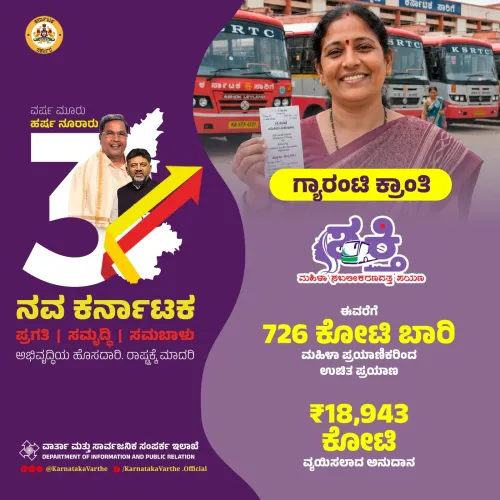
The Shakti Yojane was formally launched in June 2023 by the Karnataka Congress government as a fulfilment of a key election manifesto promise on women's mobility. Under the scheme, all women are entitled to travel free of charge on buses operated by Karnataka State Road Transport Corporation (KSRTC) and allied state transport undertakings. The scheme was designed to remove the financial barrier of daily commuting, which disproportionately constrained women's access to public life.
The 11 June post marks what appears to be a periodic outreach by the Chief Minister's Office to document and amplify real-world impact through beneficiary voices, underlining the scheme's continued political and policy salience for the ruling Congress government.
Policy Backdrop
Karnataka's Shakti scheme is part of a wider national pattern: states including Delhi, Tamil Nadu, Telangana, and Punjab have introduced zero-fare or heavily subsidised bus travel for women since 2019, positioning such measures as low-cost instruments to raise female labour-force participation. The schemes draw on evidence that transport costs and safety concerns are among the primary deterrents to women entering or sustaining employment outside the home.
For Karnataka, the scheme sits within a broader five-guarantee framework the Congress government committed to ahead of the 2023 assembly elections. The other guarantees cover household cash transfers, free cooking gas cylinders, subsidised electricity, and unemployment allowances for graduates — together representing a substantial fiscal commitment by the state exchequer.
Stakeholders and Impact
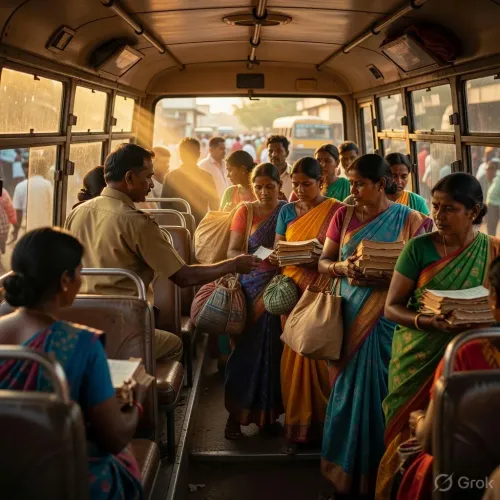
The primary beneficiaries are women commuters across urban and rural Karnataka, including female students travelling to colleges, working women commuting to offices and factories, and women accessing district hospitals and primary health centres. The scheme's reach spans the entire KSRTC network, making it especially significant for women in smaller towns and semi-urban areas where private transport options are limited or unaffordable.
KSRTC and allied transport corporations bear the operational cost, which is reimbursed by the state government. The arrangement has implications for the financial health of the transport corporations, making future budget allocations a closely watched indicator of the scheme's sustainability.
What's Next
Policy observers will watch Karnataka's next state budget for the quantum of allocation earmarked to reimburse transport corporations under Shakti, as well as any independent impact evaluation measuring changes in female workforce participation or school and college enrolment. The government has also signalled possible extension of fare concessions to upcoming metro and suburban rail projects in Bengaluru, which would significantly expand the scheme's urban footprint. The continued public amplification of beneficiary testimonials suggests the ruling party views Shakti as a durable political asset ahead of future electoral cycles.
Point of View
Associating himself publicly with the scheme reinforces his positioning as a champion of women's welfare within the Congress ecosystem. The post also signals that the ruling party views Shakti as a long-cycle political asset, not merely a pre-election promise already delivered. In the broader context of India's welfare-to-empowerment policy debate, Karnataka is making an implicit argument that mobility subsidies are productive social investment, not mere populism.
NationPress
19 Sept 2026
Frequently Asked Questions
What is the Shakti Yojane in Karnataka?
The Shakti Yojane is a Karnataka government scheme launched in June 2023 that allows all women to travel free of charge on state-run KSRTC and allied transport corporation buses across the state.
Who is eligible for free bus travel under Shakti scheme Karnataka?
All women residing in Karnataka are eligible for free travel on KSRTC and allied state transport buses under the Shakti Yojane, with no income or age restriction specified under the base scheme.
What did DK Shivakumar say about the Shakti scheme in June 2026?
Deputy Chief Minister DK Shivakumar, through the Chief Minister's Office of Karnataka's official X account on 11 June 2026, shared video testimonials of beneficiary women stating that the scheme is helping them move towards a self-reliant life by enabling access to jobs, education, and healthcare.
How does the Shakti scheme help women in Karnataka?
The scheme removes the financial burden of daily commuting, enabling women to access employment, educational institutions, and medical services — particularly in smaller towns and semi-urban areas where affordable transport options are limited.
Which other Indian states have free bus travel for women?
States including Delhi, Tamil Nadu, Telangana, and Punjab have introduced zero-fare or heavily subsidised bus travel for women since 2019, making Karnataka's Shakti scheme part of a broader national policy trend.