CM Siddaramaiah's Shakti Scheme Marks 3 Years, 753.7 Cr Women Passengers
Synopsis
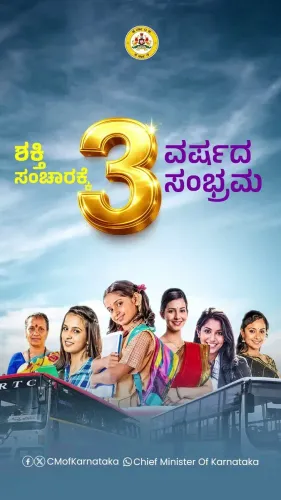
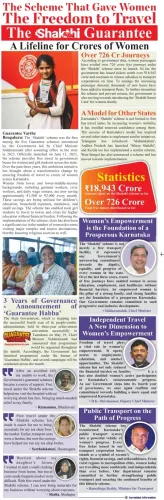
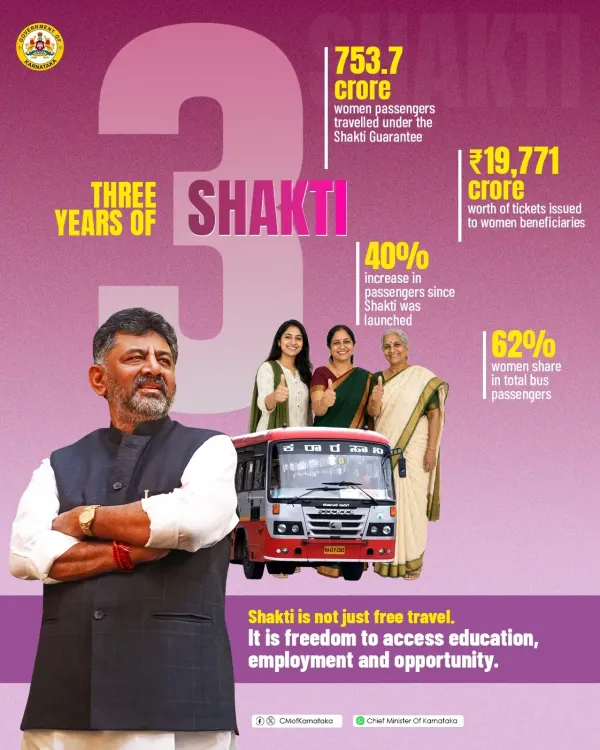
Karnataka's Chief Minister's Office marks three years of the Shakti Guarantee on 11 June 2026, reporting 753.7 crore free bus trips by women. Launched in June 2023 as a Congress poll promise, the scheme aims to expand women's access to education, employment and independence across the state.
Key Takeaways
The Shakti Guarantee scheme completed three years on 11 June 2026 .
A cumulative 753.7 crore women passengers have travelled free under the scheme since its launch.
The scheme was launched on 11 June 2023 by Chief Minister Siddaramaiah as one of five Congress poll guarantees.
Free travel is provided across KSRTC , BMTC , and other Karnataka state transport corporations.
The CMO frames the scheme as enabling women's access to education, employment, and greater independence.
Karnataka's initiative is part of a broader trend of women-focused free public-transport schemes across Indian states including Delhi , Tamil Nadu , and Telangana .
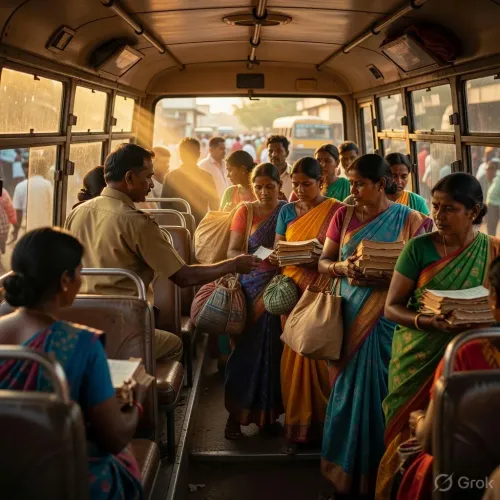
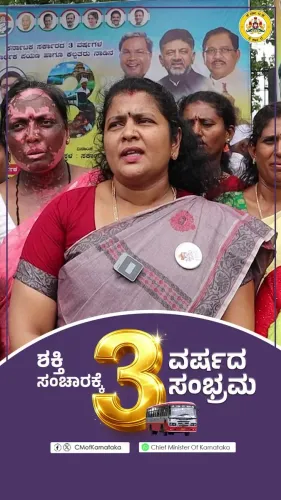
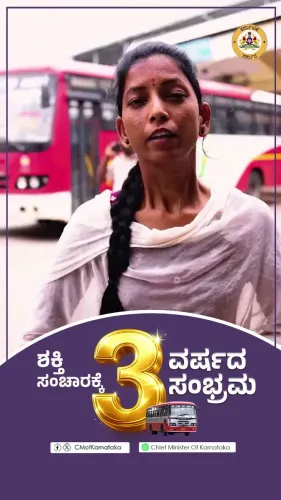
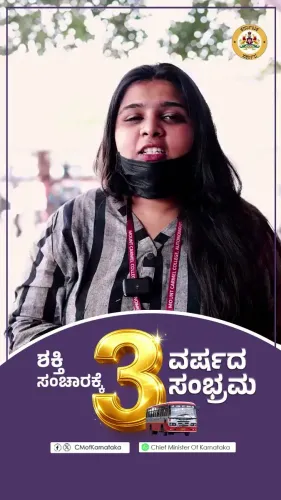
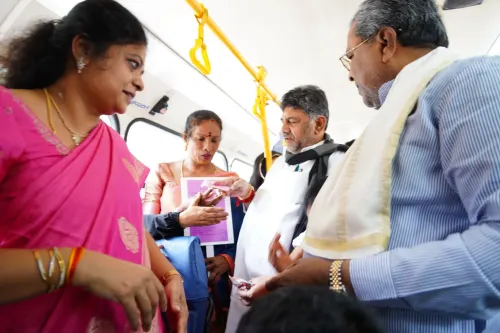
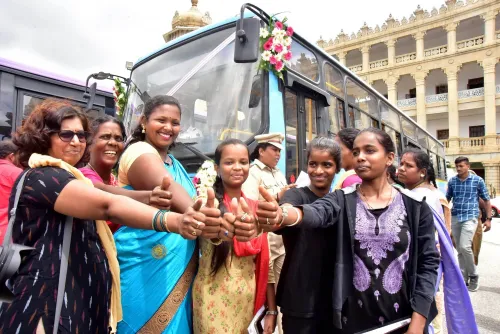
The Chief Minister's Office of Karnataka marked three years of the Shakti Guarantee scheme on Thursday, 11 June 2026, citing 753.7 crore women passengers who have travelled free on state-run buses since the programme's launch in June 2023. The milestone underscores the Congress government's flagship welfare initiative, which provides free bus travel to all women across Karnataka's state transport network.
Context
The Shakti scheme was formally launched on 11 June 2023 by Chief Minister Siddaramaiah as one of five pre-poll guarantees the Indian National Congress had promised in its manifesto ahead of the May 2023 Karnataka assembly elections. The scheme covers travel on buses operated by the Karnataka State Road Transport Corporation (KSRTC), BMTC, and other state transport corporations, with the government reimbursing the corporations for foregone fare revenue. Announcing the third anniversary, the CMO described free bus travel as 'a pathway to education, employment, opportunity and greater independence for Karnataka's women.'
Policy Backdrop
Karnataka's Shakti Guarantee is part of a broader pattern of targeted gender-welfare transport schemes that have emerged across Indian states since 2021, with similar programmes rolled out in Delhi, Tamil Nadu, and Telangana. These initiatives are designed to address persistent gaps in women's mobility, safety, and labour-force participation — barriers that disproportionately affect women in both urban and rural settings. The southern-state emphasis on such schemes after the 2023 election cycle reflects a wider political consensus that accessible public transport is a direct enabler of women's economic agency.
Chief Minister Siddaramaiah's office has consistently framed Shakti not merely as a subsidy but as an instrument of social equity — one that reduces household transport expenditure and expands the geographic range within which women can seek work, education, and healthcare.
Stakeholders and Impact
The primary beneficiaries are women commuters across Karnataka, spanning students, daily-wage workers, homemakers, and professionals who rely on state buses. The cumulative ridership figure of 753.7 crore trips cited by the CMO suggests sustained, high-volume uptake over three years, pointing to structural demand for affordable public mobility among women. State transport corporations — particularly KSRTC and BMTC — have been central operational partners, managing ticketing, data collection, and reimbursement claims under the scheme.
Independent assessments of the scheme's effect on female workforce participation and household savings remain a key area to watch, as do the annual reimbursement figures in state budget documents, which reflect the fiscal commitment required to sustain the programme at scale.
What's Next
With the scheme entering its fourth year, attention will turn to whether the Karnataka government proposes any expansion, revision, or cap on coverage in upcoming budget cycles. Analysts and civil-society groups are likely to push for rigorous impact evaluations that go beyond ridership numbers to measure outcomes in employment, education enrolment, and safety perceptions among women commuters. The CMO's framing of every free bus ride as 'a step towards a more empowered Karnataka' signals that the government intends to keep Shakti central to its governance narrative ahead of future electoral cycles.
Point of View
Anchoring its welfare identity ahead of future electoral contests. The 753.7 crore ridership figure, if borne out by independent audit, would represent one of the largest single-scheme women's mobility interventions in Indian state history. Shakti sits within a competitive southern-state dynamic where welfare guarantees have become the primary currency of electoral legitimacy, raising questions about fiscal sustainability as reimbursement obligations to transport corporations compound year on year. The real test will be whether impact evaluations confirm that free travel is translating into measurable gains in female workforce participation and educational attainment, or whether ridership growth alone is being used as a proxy for empowerment.
NationPress
28 Oct 2026
Frequently Asked Questions
What is the Shakti Guarantee scheme in Karnataka?
The Shakti Guarantee is a Karnataka government programme launched on 11 June 2023 that provides free bus travel to all women on state-run transport services including KSRTC and BMTC, aimed at improving women's mobility and access to education and employment.
How many women have travelled free under the Shakti scheme?
According to the Chief Minister's Office of Karnataka, 753.7 crore women passengers have travelled free under the Shakti Guarantee since the scheme's launch in June 2023.
Who launched the Shakti scheme in Karnataka?
Chief Minister Siddaramaiah launched the Shakti scheme on 11 June 2023 as one of five welfare guarantees promised by the Indian National Congress in its manifesto for the May 2023 Karnataka assembly elections.
Which buses are covered under the Karnataka Shakti scheme?
The scheme covers buses operated by KSRTC, BMTC, and other Karnataka state transport corporations, with the government reimbursing the corporations for the foregone fare revenue.
Are other Indian states offering free bus travel to women?
Yes, similar free or subsidised public-transport schemes for women have been introduced in Delhi, Tamil Nadu, and Telangana, reflecting a broader national trend of using mobility as a gender-welfare intervention.