How are Kerala's 4.5 lakh Class 10 students embracing the future through robotics training?
Click to start listening
Synopsis
Kerala's education system is revolutionizing learning with a new robotics training program for Class 10 students, covering 4.5 lakh students state-wide. This initiative, aimed at familiarizing students with robotics, promises hands-on experience and future career pathways in technology. Discover how KITE is shaping the future of education in Kerala!
Key Takeaways
- Statewide reach: The program targets 4.5 lakh students.
- Hands-on learning: Emphasis on practical skills through projects.
- Collaboration: Training conducted by Little KITES with expert mentors.
- Future-ready: Prepares students for emerging tech careers.
- Innovative curriculum: Aligns with updated Class 10 IT education.
Thiruvananthapuram, Jan 6 (NationPress) The public education structure in Kerala made a remarkable advancement on Tuesday as the Kerala Infrastructure and Technology for Education (KITE) initiated a comprehensive robotics training program for all Class 10 students.
This ambitious project encompasses approximately 4.5 lakh students enrolled in government and aided schools throughout the State, representing one of the largest school-level robotics training initiatives in India.
The program, executed by KITE - the tech arm of the General Education Department - aims to introduce students to robotics concepts that have recently been incorporated into the updated Class 10 Information Technology curriculum.
The workshops, scheduled for completion in all schools by January 15, are designed to equip students with hands-on skills that will also assist them in preparing for the forthcoming SSLC examinations.
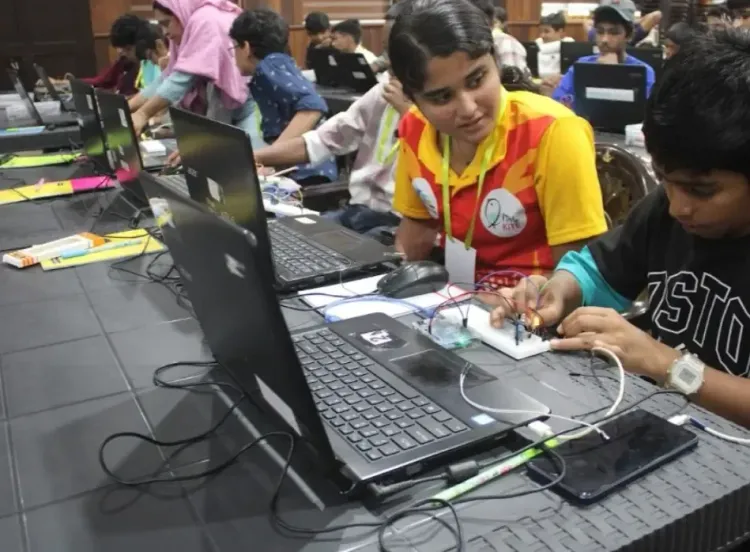
Training sessions are being facilitated by Little KITES, India’s largest student-led IT network, under the guidance of skilled mentors in each school.
The program is structured into two distinct modules.
The first module emphasizes developing an understanding of robotics and its relevance in daily life and advanced sectors.
Students will explore the basic architecture of robotic systems - using sensors as input devices, microcontrollers as processors, and actuators as output devices - with practical exposure to essential components such as Arduino UNO boards, breadboards, and LEDs provided in KITE's robotic kits.
The second module transitions to hands-on learning.
Utilizing block-based PictoBlox software, students will learn fundamental coding to execute simple tasks like blinking LEDs and controlling buzzers.
The training culminates in a practical project where students will independently construct an automatic sanitizer dispenser using IR sensors and servo motors, providing them with a tangible sense of accomplishment and practical application.
To facilitate effective participation, KITE has allotted one robotic kit for every four to five students.
Schools lacking Little KITES units have been instructed to coordinate training with assistance from neighboring institutions.
KITE CEO K. Anvar Sadath stated that this initiative exemplifies the State’s commitment to making advanced technology accessible to all students, emphasizing that early exposure to robotics will pave the way for future careers in emerging tech sectors.
Point of View
The initiative by KITE in Kerala represents a significant step towards integrating technology in education. By providing robotics training to a vast number of students, the program not only enhances learning but also prepares them for future challenges in a rapidly evolving job market. Such initiatives should be adopted nationwide to ensure that students across India are equipped with the necessary skills for tomorrow's workforce.
NationPress
08/01/2026
Frequently Asked Questions
What is the goal of the robotics training program?
The goal is to familiarize Class 10 students with robotics concepts and practical skills, enhancing their understanding of technology as outlined in the revised IT curriculum.
How many students will benefit from this initiative?
Approximately 4.5 lakh students enrolled in government and aided schools across Kerala will benefit from this training.
Who is conducting the training sessions?
The training sessions are being conducted by Little KITES, under the supervision of trained mentors in each school.
What will students learn during the program?
Students will learn about robotics architecture, coding skills using PictoBlox software, and will complete a hands-on project by building an automatic sanitizer dispenser.
When will the training be completed?
The workshops are scheduled to be completed in all participating schools by January 15.