CM Conrad Sangma thanks Union Minister for Khasi, Garo CBSE inclusion
Synopsis
Meghalaya Chief Minister Conrad Sangma has publicly thanked Union Education Minister Dharmendra Pradhan for including Khasi and Garo languages in the CBSE R3 framework, calling it a milestone for linguistic preservation and inclusive education under the National Education Policy 2020.
Key Takeaways
Khasi and Garo languages have been included in the CBSE R3 framework , as acknowledged by Meghalaya CM Conrad Sangma on 23 May 2026 .
Union Education Minister Dharmendra Pradhan was credited with 'swift intervention' enabling the inclusion.
The move aligns with the National Education Policy 2020 , which mandates mother-tongue and regional-language integration in school curricula.
CBSE has been progressively adding tribal languages since 2014 , previously including Santhali , Bodo , Mizo , and Ao .
Students, language teachers, and CBSE-affiliated schools in Meghalaya are the primary beneficiaries.
Syllabi, textbooks, and teacher-training modules for the two languages are awaited from CBSE .
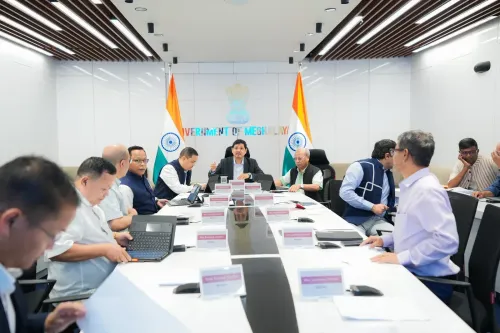
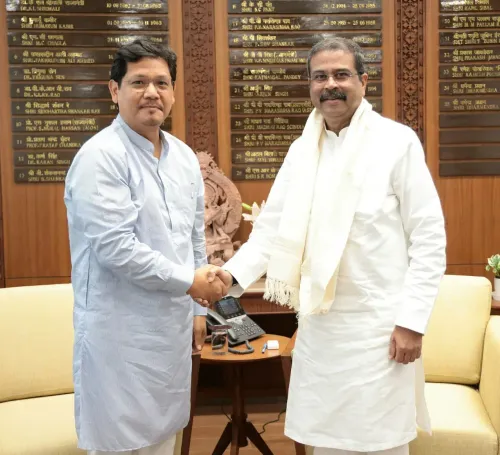
Meghalaya Chief Minister Conrad Sangma on Saturday, 23 May 2026 publicly thanked Union Education Minister Dharmendra Pradhan for enabling the inclusion of Khasi and Garo languages in the CBSE R3 framework, calling it a significant step toward an inclusive national education system that honours every linguistic identity.
Context
Sangma, writing on behalf of the people of Meghalaya, credited Pradhan's 'swift intervention' for the development. He noted that the move would 'benefit students, ease challenges for schools, support language teachers, and strengthen the preservation of Meghalaya's rich linguistic heritage.' The post also tagged @EduMinOfIndia and @LahkmenR, signalling coordination at multiple levels of the education establishment.
Khasi and Garo are the two dominant tribal languages of Meghalaya, spoken by the Khasi-Jaintia and Garo communities respectively. Their formal recognition within the CBSE curriculum framework marks a long-sought institutional acknowledgement of their status.
Policy Backdrop
The inclusion aligns with the National Education Policy 2020, which directed all school boards — including CBSE — to integrate mother tongues and regional languages as both mediums of instruction and examinable subjects. The policy explicitly prioritised tribal and minority languages, particularly in the Northeast.
CBSE has progressively added regional and tribal languages as elective subjects since 2014, beginning with Santhali and later expanding to languages such as Bodo, Mizo, and Ao. The addition of Khasi and Garo continues this trajectory, reflecting a broader shift from a centralised, Hindi-English-dominant curriculum toward one accommodating India's multilingual federal character.
Stakeholders and Impact
The most immediate beneficiaries are students enrolled in CBSE-affiliated schools in Meghalaya, who will now have formal access to their mother tongues within the national board's framework. Language teachers of Khasi and Garo stand to gain structured career pathways and standardised syllabi, addressing a long-standing professional gap.
Schools in the state that previously navigated the absence of these languages in the CBSE system will find administrative and academic processes simplified. Linguistic heritage organisations and community groups in Meghalaya have consistently advocated for this recognition, viewing formal curriculum inclusion as essential to intergenerational language transmission.
What's Next
Attention will now turn to CBSE's release of syllabi, textbooks, and teacher-training modules for Khasi and Garo — the operational steps that will determine how quickly the policy change translates into classroom reality. The precise implementation timeline and the number of schools to be covered under the R3 framework are yet to be officially detailed.
The development could also set a precedent for similar inclusions of tribal languages from Arunachal Pradesh, Nagaland, and Manipur, states where linguistic communities have made comparable demands. NEP 2020's mandate provides the policy scaffolding; Meghalaya's success may accelerate those conversations.
Point of View
If incremental, outcome of the NEP 2020 push to decentralise India's curriculum away from its Hindi-English axis. For Conrad Sangma, the public acknowledgement of Pradhan's role is also a political signal — it reinforces the NPP's positioning as an effective broker between Meghalaya's tribal communities and the central government. The broader pattern of northeastern languages entering the CBSE fold suggests that the policy architecture is now sufficiently robust to absorb such additions, though the real test will be implementation: textbooks, trained teachers, and examination infrastructure. If Meghalaya's model is executed well, it could become a template that accelerates similar demands from Nagaland, Manipur, and Arunachal Pradesh.
NationPress
7 Oct 2026
Frequently Asked Questions
What is the CBSE R3 framework and why does it matter for Khasi and Garo?
The CBSE R3 framework is a curricular structure under which the Central Board of Secondary Education classifies and includes languages for study and examination. The inclusion of Khasi and Garo means students in Meghalaya can now formally study these tribal languages within the national board system, giving them academic recognition and a structured syllabus.
Which languages have been added to CBSE from Meghalaya?
Khasi and Garo, the two dominant tribal languages of Meghalaya, have been added to the CBSE R3 framework following the intervention of Union Education Minister Dharmendra Pradhan, as announced by Chief Minister Conrad Sangma on 23 May 2026.
How does this relate to the National Education Policy 2020?
The National Education Policy 2020 directed all school boards, including CBSE, to integrate mother tongues and regional languages into curricula. The inclusion of Khasi and Garo is a direct implementation of that mandate, continuing a trend that has seen several northeastern tribal languages added to CBSE since 2014.
Who will benefit from Khasi and Garo being in CBSE?
Students enrolled in CBSE-affiliated schools in Meghalaya are the primary beneficiaries, as they gain access to formal instruction in their mother tongues. Language teachers will gain structured career pathways, and schools will have standardised administrative processes for these languages.
What other northeastern languages has CBSE included in recent years?
CBSE began adding tribal and regional languages in 2014 with Santhali and has since expanded to include Bodo, Mizo, and Ao, among others. The addition of Khasi and Garo continues this broader effort to accommodate India's multilingual character within the national curriculum.