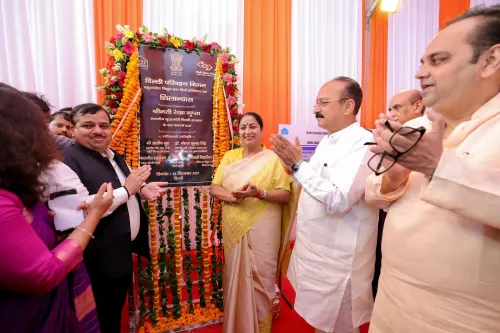
Delhi CM Rekha Gupta Reviews Plan for 32,000 EV Charging Stations

Synopsis
Delhi Chief Minister Rekha Gupta chaired a review meeting on 8 July 2026 to fast-track EV charging infrastructure under the city's new EV policy, targeting 32,000 fast-charging stations at Metro stations, DDA markets, malls, and railway stations over four years, with solar integration and phased upgrades of existing slow chargers.
Key Takeaways
Delhi CM Rekha Gupta held a review meeting on 8 July 2026 to accelerate EV charging infrastructure rollout under the new Delhi EV Policy.
The government targets approximately 32,000 EV charging stations across Delhi within the next four years .
Fast-charging stations will be installed at Metro station parking lots, DDA market complexes, malls, and railway stations .
Existing slow-charging stations will be upgraded to fast-charging stations in a phased manner.
The plan emphasises solar-based charging , adequate power supply, and proximity to homes and workplaces.
Cabinet colleague Dr.
Pankaj Kumar Singh and senior departmental officials attended the meeting.
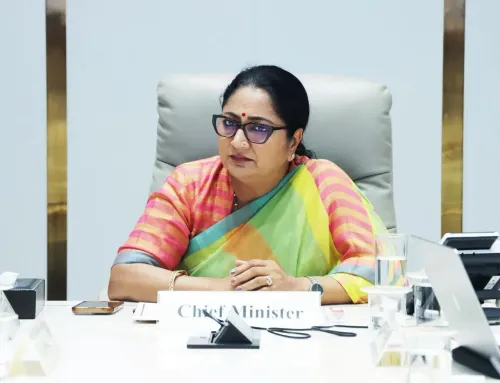
Delhi Chief Minister Rekha Gupta chaired a detailed review meeting on Wednesday, 8 July 2026, to accelerate the rollout of electric vehicle charging infrastructure across the capital as part of the city's new EV policy. The meeting, attended by Cabinet colleague Dr. Pankaj Kumar Singh and senior officials from relevant departments, set a target of approximately 32,000 EV charging stations across Delhi over the next four years.
Posting on X, CM Rekha Gupta said the goal is to make charging accessible near homes and workplaces, with modern fast-charging stations planned at Metro station parking lots, DDA market complexes, malls, railway stations, and other prominent public spaces. She also noted that existing slow-charging stations will be upgraded to fast-charging facilities in a phased manner.
Context
The post, written in Hindi, outlined the broad contours of the infrastructure push: 'हमारा लक्ष्य अगले चार वर्षों में दिल्ली में लगभग 32,000 EV चार्जिंग स्टेशन विकसित करना है' ('Our goal is to develop approximately 32,000 EV charging stations in Delhi over the next four years'). The announcement comes as the Delhi government moves to operationalise its new EV policy, which aims to sharply increase the share of electric vehicles in the capital's overall vehicle fleet.
Delhi has long grappled with severe air pollution, and the expansion of EV infrastructure is positioned as a key lever to reduce vehicular emissions. The review meeting signals that the government is moving from policy framing to active implementation planning.
Policy Backdrop
Delhi introduced its first Electric Vehicle Policy in 2020, which offered purchase incentives and set targets for EV adoption across vehicle categories. The current push builds on that framework, with a sharper focus on charging infrastructure density rather than demand-side subsidies alone.
At the national level, the central government's Faster Adoption and Manufacturing of Electric Vehicles (FAME) scheme, launched in 2015, has provided a policy backbone for states to develop EV ecosystems. Delhi's target of 32,000 charging stations in four years would represent a significant scale-up relative to what currently exists in the city, and aligns with India's broader ambition to cut fossil fuel dependence and meet emission reduction commitments.
The plan specifically emphasises solar-based charging alongside grid power, signalling an intent to integrate renewable energy into the EV supply chain. Adequate power supply and improved public amenities at charging points were also flagged as priorities in the meeting.
Stakeholders and Impact
The primary beneficiaries of the expansion would be Delhi's EV users and the broader commuting public, who currently face 'range anxiety' due to the sparse and uneven distribution of charging points. Locating fast chargers at Metro stations and railway stations is a deliberate choice to integrate EV charging into existing high-footfall transit hubs.
The Delhi Development Authority (DDA), which manages a large portfolio of market complexes across the city, is among the key agencies whose properties will host the new infrastructure. Private entities operating malls and commercial spaces are also implicitly part of the rollout plan. The phased upgrade of existing slow chargers to fast chargers will reduce charging wait times and improve user confidence in switching to electric vehicles.
Multiple Indian states — including Maharashtra, Karnataka, and Tamil Nadu — have rolled out comparable EV infrastructure programmes, reflecting a national pattern of urban centres competing to build out green mobility networks.
What's Next
The immediate next steps will likely include the issuance of tenders or expressions of interest for the installation of fast-charging stations at Metro and railway station parking lots, and for solar-powered charging facilities at DDA market complexes. Progress on these tenders will be an early indicator of whether the four-year, 32,000-station target is on track.
If Delhi achieves even a significant fraction of this target, it could position the capital as a benchmark for EV charging density among Indian cities, reinforcing the link between urban air quality goals and green transport infrastructure investment.
Point of View
000-station target is ambitious by any Indian urban benchmark and, if tendered promptly, would signal that the BJP-led Delhi government is using green mobility as a visible governance deliverable in its early term. The solar-charging emphasis also threads the EV agenda into a wider renewable energy narrative, giving the policy a dual air-quality and climate framing. Execution timelines and tender outcomes in the coming months will determine whether this remains an aspirational target or becomes a measurable infrastructure milestone.
NationPress
8 Jul 2026
Frequently Asked Questions
What is Delhi's new EV charging station target?
Delhi has set a target of approximately 32,000 EV charging stations to be developed over the next four years under its new EV policy, as announced by Chief Minister Rekha Gupta on 8 July 2026.
Where will the new EV charging stations be installed in Delhi?
The new fast-charging stations will be installed at Metro station parking lots, DDA market complexes, malls, railway stations, and other major public locations across Delhi.
What is Delhi's EV policy?
Delhi's EV policy is a framework to promote electric vehicle adoption and infrastructure in the capital. The city introduced its first EV policy in 2020 with purchase incentives and adoption targets; the current government is now focusing on rapidly expanding charging infrastructure under a new version of the policy.
Will existing slow chargers in Delhi be replaced?
Yes, existing slow-charging stations in Delhi will be upgraded to fast-charging stations in a phased manner, according to the review meeting chaired by CM Rekha Gupta.
What role will solar energy play in Delhi's EV charging plan?
The Delhi government has specifically emphasised solar-based charging as part of the new infrastructure plan, aiming to integrate renewable energy into the EV charging network alongside conventional grid power.