Khattar Extends Vijayadashami Wishes, Urges Inner Ravan Vanquish
Synopsis
Union Minister Manohar Lal Khattar marked Vijayadashami 2026 with a devotional post invoking Lord Ram's teachings, calling on citizens to conquer inner vices and commit to building a developed, ideal India.
Key Takeaways
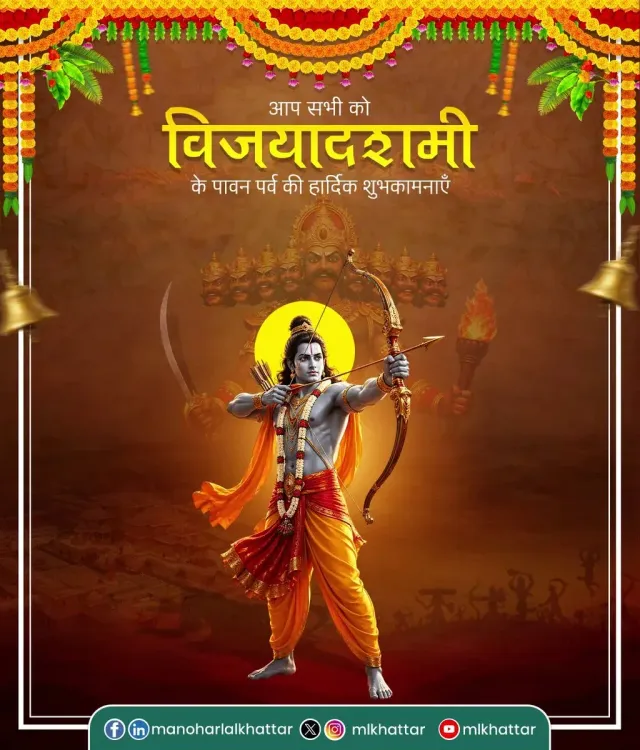
Union Minister Manohar Lal Khattar posted Vijayadashami greetings on X on 20 October 2026 .
He identified the festival's true battlefield as internal — naming anger, arrogance, greed and jealousy as the four heads of the metaphorical Ravan to be defeated.
His message explicitly linked the festival's spiritual message to the government's 'Viksit Bharat' (Developed India) development vision.
Khattar invoked Maryada Purushottam Bhagwan Shri Ram as the moral model for building an ideal society.
The post reflects the BJP's consistent approach of fusing Hindu cultural observance with its national governance narrative.
On the auspicious morning of Vijayadashami 2026, Union Power and Housing Minister Manohar Lal Khattar turned the festival's ancient symbolism into a pointed call for personal and national transformation — urging every Indian to slay the inner demons of anger, ego, greed and envy before building a better country.
Posting on X on Tuesday, 20 October, Khattar opened with the invocation ॐ रां रामाय नमः ('Om Ram Ramaya Namah') and greeted followers for what he called 'the sacred festival of the victory of dharma, truth and justice.' The message drew directly on the Ramayana's moral architecture, naming the ten-headed king Ravan not as a historical villain but as a living metaphor — क्रोध, अहंकार, लोभ और ईर्ष्या ('anger, arrogance, greed and jealousy') — each a head to be burned.
Lord Ram's teachings as a blueprint for 'Viksit Bharat'
The closing lines of Khattar's post explicitly tied the festival's spiritual message to a political-developmental aspiration. He called on citizens to 'adopt the teachings of Maryada Purushottam Bhagwan Shri Ram and take a resolve to build an ideal society and a Viksit Bharat (Developed India).' The phrase 'Viksit Bharat' is the central government's stated long-term national development vision — a framework the BJP and the Modi administration have consistently referenced across policy speeches and campaign messaging.
A festival India celebrates in hundreds of forms
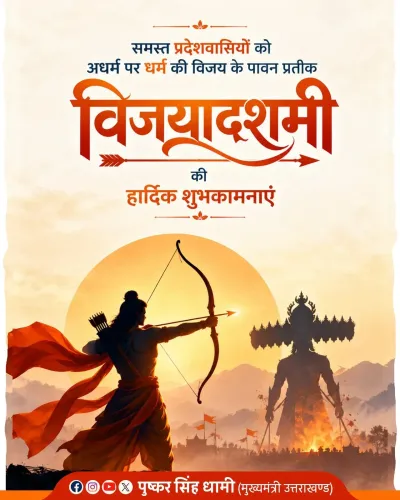
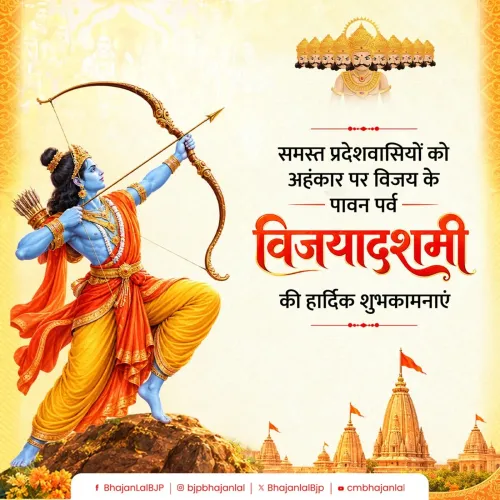
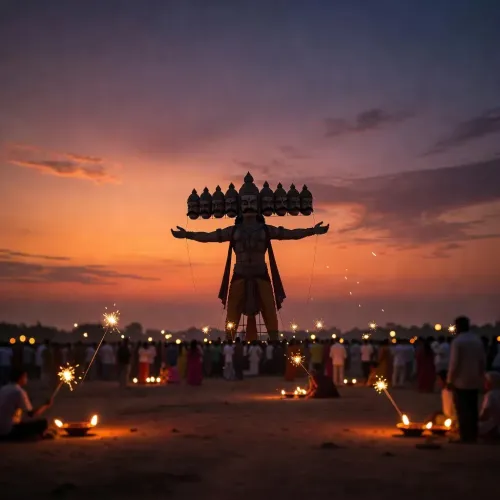
Vijayadashami, also widely known as Dussehra, falls on the tenth day of the Navratri cycle and marks the defeat of the demon king Ravan by Lord Ram. Across the country, towering effigies of Ravan are set ablaze in public grounds from Delhi's Ramlila Maidan to Mysuru's palace forecourt, drawing millions. Indian political leaders across party lines customarily post greetings on the occasion, but Khattar's message — pairing classical devotional verse with the government's development lexicon — reflects the BJP's signature style of weaving Hindu cultural identity with its governance narrative.
Khattar, who served as Chief Minister of Haryana before being elevated to the Union Cabinet, commands a significant following in the Hindi-belt electorate where Ramayana imagery resonates with particular depth. His post closed with a resounding जय जय श्री राम — 'Jai Jai Shri Ram' — the salutation that doubles as both devotional expression and political signature for the BJP.
On a day when effigies burn and crowds cheer the triumph of good, the real ask in Khattar's message was quieter and harder: look inward, vanquish the Ravan within, then build.
Point of View
Internalises the villain as a personal moral challenge rather than an external enemy, and pivots neatly to 'Viksit Bharat' — linking devotion to the government's development agenda in a single breath. For a party that has long argued Hindu cultural identity and national progress are inseparable, the formula is well-rehearsed but effective. The choice to open with a Sanskrit mantra and close with 'Jai Jai Shri Ram' signals that the audience is the Hindi-belt faithful — a constituency Khattar cultivated across a decade as Haryana's Chief Minister. There are no new policy commitments here, but the messaging discipline is precise.
NationPress
20 Oct 2026
Frequently Asked Questions
What did Manohar Lal Khattar post on Vijayadashami 2026?
Khattar posted devotional Vijayadashami greetings on X, urging Indians to adopt Lord Ram's teachings, defeat inner vices like anger and greed, and pledge to build an ideal society and a 'Viksit Bharat'.
What is Vijayadashami and why do politicians post about it?
Vijayadashami, also called Dussehra, is a major Hindu festival marking the victory of Lord Ram over the demon king Ravan — symbolising the triumph of good over evil. Indian political leaders across parties traditionally post greetings to connect with citizens on this widely celebrated occasion.
What does 'Viksit Bharat' mean in Khattar's Dussehra message?
'Viksit Bharat' means 'Developed India' and is the central government's long-term national development vision. Khattar used the term to link the festival's spiritual message of self-improvement with the BJP-led government's governance aspiration.
Who is Manohar Lal Khattar?
Manohar Lal Khattar is India's Union Minister of Power and Housing and Urban Affairs, a senior BJP leader, and former Chief Minister of Haryana.
What vices did Khattar refer to as the 'Ravan' within?
Khattar named anger (krodh), arrogance (ahankaar), greed (lobh) and jealousy (irshya) as the four symbolic heads of the inner Ravan that every individual must defeat.