Seoul stocks fall 2.36% as AI investment fears hammer chip shares
Synopsis
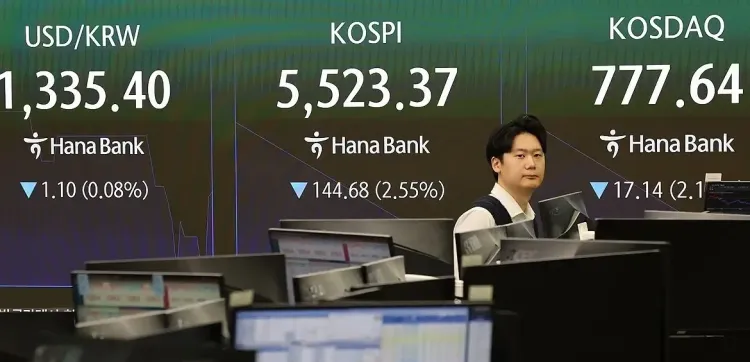
Seoul's benchmark KOSPI slid 2.36% to 5,631.95 on Tuesday as doubts about returns on AI infrastructure spending hammered chip giants Samsung Electronics and SK hynix. Coming a day after a dramatic intraday reversal driven by institutional buying, the renewed sell-off signals that AI investment anxiety is far from resolved — and the market is now bracing for a potentially decisive verdict from Tesla and Meta earnings later this week.
Key Takeaways
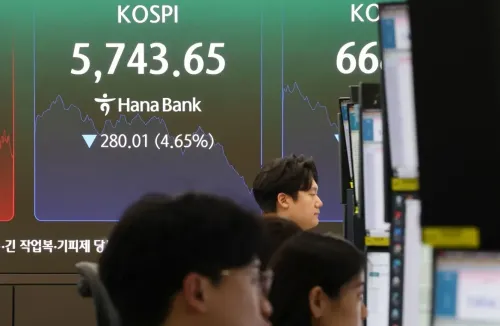
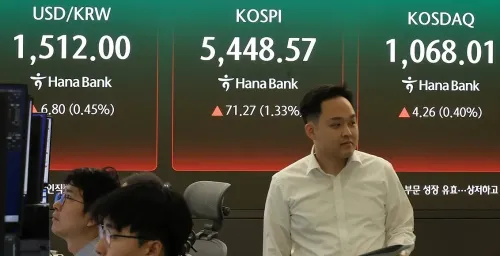
The KOSPI fell 136.06 points (2.36%) to 5,631.95 as of 11:20 am on 20 October , hitting an intraday low of 5,493.24 .
SK hynix dropped 2.74% and Samsung Electronics fell 1.03% , leading the tech-driven sell-off.
Samsung Electro-Mechanics bucked the trend, gaining 2.48% despite opening lower.
On Monday, institutions bought a net 574.66 billion won (~ US$432 million ), helping the KOSPI close up 1.76% after a steep early fall.
Investors are awaiting earnings from Tesla and Meta Platforms this week and monitoring the 3 November US midterm elections and interest rate outlook.
The Korea Composite Stock Price Index (KOSPI) dropped 136.06 points, or 2.36%, to 5,631.95 as of 11:20 am local time on Tuesday, 20 October, as mounting concerns over the return on investment from artificial intelligence infrastructure triggered a broad sell-off in South Korean technology and chip stocks. The benchmark had earlier plunged to an intraday low of 5,493.24 — a decline of roughly 3.17% — before recovering some ground.
Chip Giants Bear the Brunt
Technology stocks led the decline across the board. Samsung Electronics Co. shed 1.03%, while SK hynix Inc. fell a steeper 2.74%, as investors reassessed the near-term earnings outlook for chipmakers tied to the AI supply chain. Bucking the trend, Samsung Electro-Mechanics Co., an electronics components affiliate of Samsung Electronics, recovered from an early dip to gain 2.48% by mid-session.
Currency Market Reaction
The Korean won was quoted at 1,327.6 won per US dollar as of 11:20 am, strengthening 5.5 won from the previous session's close — a modest sign of stabilisation even as equities slid.
Monday's Reversal Adds Context
The Tuesday weakness follows a volatile Monday session. The KOSPI had opened 3.17% lower on Monday, 19 October, but reversed sharply to close up 99.96 points, or 1.76%, at 5,768.01 — aided by heavy institutional buying of a net 574.66 billion won (approximately US$432 million). Foreign investors sold a net 37.87 billion won, while retail investors offloaded a net 1.09 trillion won. That reversal, however, appears to have offered only temporary relief.
Overnight US Cues and Broader Caution
Overnight, Wall Street ended on a mixed note. The Dow Jones Industrial Average edged down 0.07%, while the S&P 500 rose 0.41% and the Nasdaq Composite Index gained 1.11% to close at 26,430.89 — a partial rebound from what had been the technology sector's steepest weekly drop since June. The divergence between US tech's partial recovery and Seoul's continued slide underscores how exposed Korean chip stocks are to sentiment shifts in the AI investment narrative.
What Markets Are Watching Next
Analysts note that investors remain cautious ahead of earnings reports from major companies including Tesla and Meta Platforms due this week, as well as the 3 November US midterm elections. Continued uncertainty over the interest rate outlook adds another layer of risk to market positioning. Whether the KOSPI can stabilise will likely hinge on whether AI-linked earnings from US tech firms reassure investors that heavy infrastructure spending will eventually translate into returns.
Point of View
Which sit at the supply-chain apex. What is striking is that even a US Nasdaq rebound overnight was not enough to steady nerves in Seoul, suggesting investors are demanding earnings proof, not just price signals. The upcoming Tesla and Meta results will be a crucial stress test for the AI valuation thesis that has underpinned chip stocks all year.
NationPress
20 Oct 2026
Frequently Asked Questions
Why did Seoul stocks fall on 20 October 2026?
The KOSPI fell 2.36% to 5,631.95 primarily due to investor concerns over whether heavy spending on artificial intelligence infrastructure would generate sufficient returns. The sell-off was concentrated in chip stocks, with SK hynix and Samsung Electronics among the biggest losers.
How much did Samsung Electronics and SK hynix fall?
Samsung Electronics declined 1.03% and SK hynix fell 2.74% during Tuesday morning trade in Seoul. Both companies are major players in the AI chip supply chain and bore the brunt of the AI investment sentiment shift.
What happened to Seoul stocks on Monday before this decline?
On Monday, 19 October, the KOSPI opened 3.17% lower but staged a sharp reversal to close up 1.76% at 5,768.01, supported by institutional buying of a net 574.66 billion won. Foreign and retail investors were net sellers during that session.
What are investors watching that could affect South Korean stocks?
Markets are closely monitoring earnings reports from Tesla and Meta Platforms due this week, the 3 November US midterm elections, and ongoing uncertainty about the global interest rate outlook. Strong AI-related earnings from US tech firms could help reassure investors and stabilise the KOSPI.
How did US markets perform overnight before the Seoul sell-off?
US markets ended mixed overnight, with the Dow Jones edging down 0.07%, the S&P 500 rising 0.41%, and the Nasdaq gaining 1.11% to 26,430.89, partially recovering from the prior week's steep technology sell-off. Despite the partial US rebound, Seoul's chip-heavy index continued to slide.