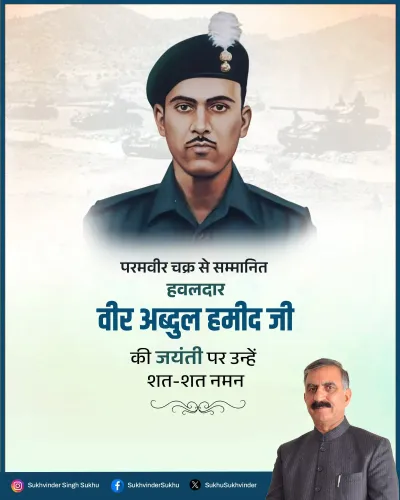
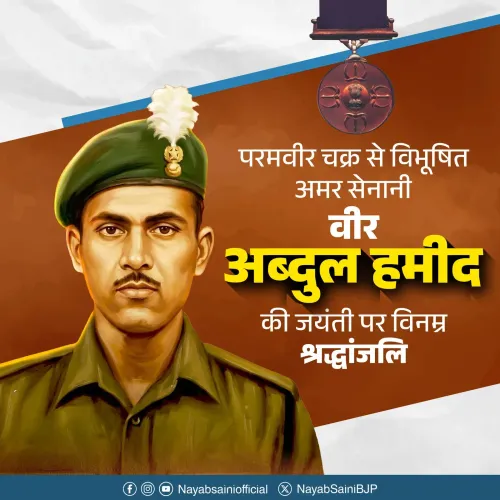
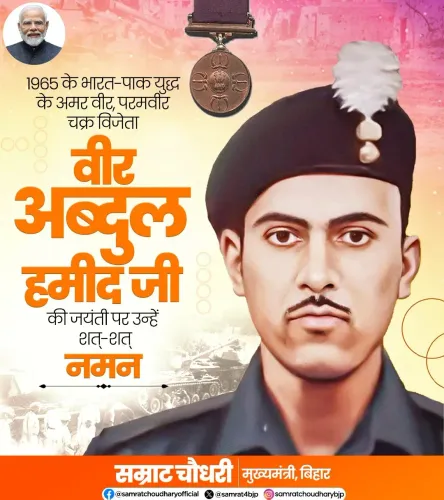
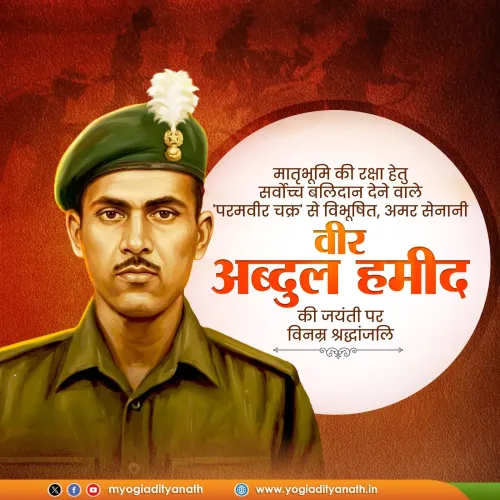
Khattar pays tribute to PVC hero Abdul Hamid on birth anniversary
Synopsis
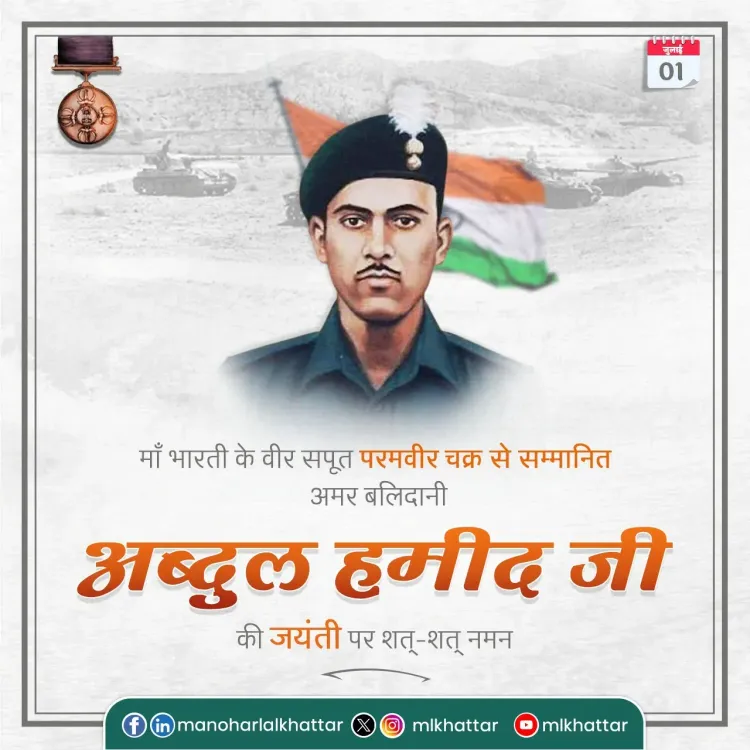
Union Power Minister Manohar Lal Khattar on 1 July 2026 paid homage to Param Vir Chakra awardee Abdul Hamid on his birth anniversary, saluting the soldier's supreme sacrifice during the 1965 India-Pakistan War and the Battle of Asal Uttar.
Key Takeaways
Union Power Minister Manohar Lal Khattar posted a tribute to Abdul Hamid on his birth anniversary on 1 July 2026 .
Abdul Hamid was posthumously awarded the Param Vir Chakra for destroying multiple Pakistani tanks during the Battle of Asal Uttar in the 1965 India-Pakistan War .
The Param Vir Chakra is India's highest wartime gallantry decoration, instituted on 26 January 1950 .
The 1965 war lasted 22 days and ended with a UN-mandated ceasefire; Asal Uttar is regarded as one of the largest post-World War II tank battles.
Tributes to 1965 war heroes are expected to intensify ahead of Vijay Diwas on 23 September .
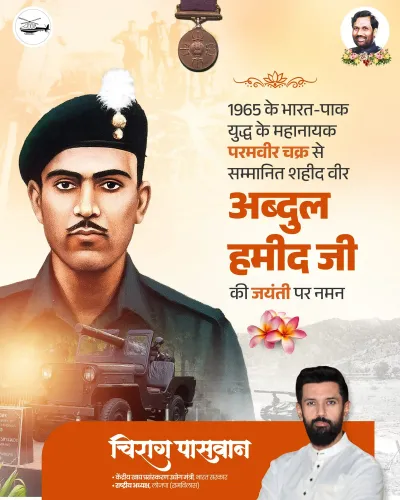
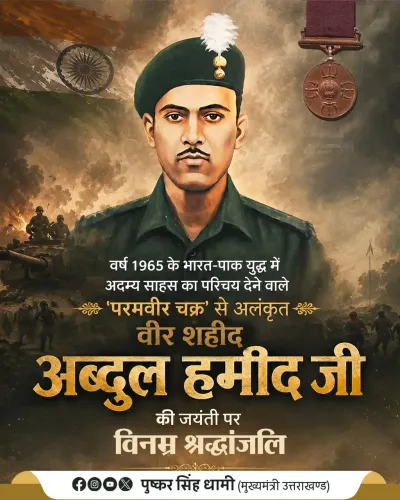
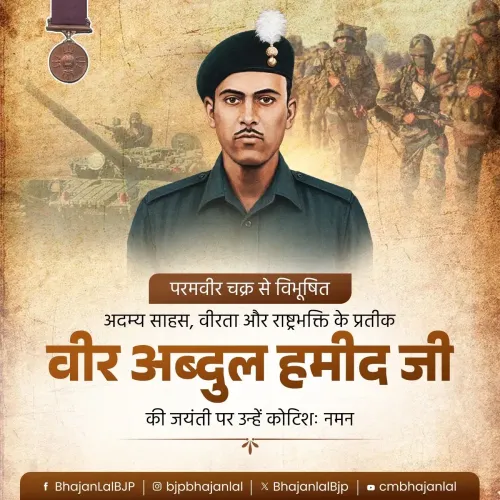
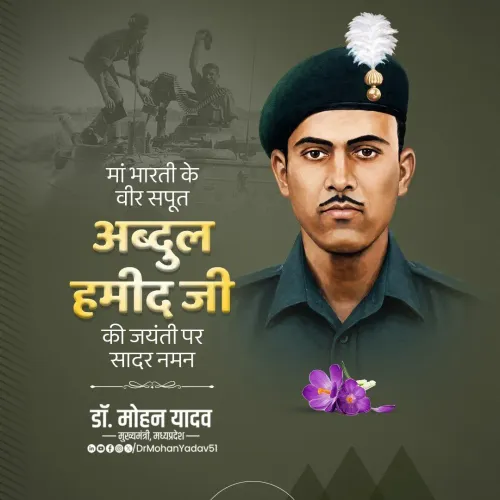
Union Power Minister Manohar Lal Khattar on Wednesday, 1 July 2026 paid homage to Company Quarter Master Havildar Abdul Hamid, the Param Vir Chakra awardee who laid down his life during the 1965 India-Pakistan War, on the occasion of the soldier's birth anniversary.
In a post on X, Khattar wrote: 'Varsh 1965 ke Bharat-Pakistan yuddh mein asadharan shaurya va parakram ka pradarshan karne wale, Param Vir Chakra vijeta Veer Abdul Hamid ji ki jayanti par unhe shat-shat naman.' — translated: 'Saluting with a hundred bows the Param Vir Chakra winner, Veer Abdul Hamid, who displayed extraordinary valour and courage in the 1965 India-Pakistan War on his birth anniversary. The nation will forever remain indebted to your supreme sacrifice for the protection of the motherland.'
Context
Abdul Hamid was a soldier of the 4th Battalion, Grenadiers of the Indian Army who became one of the most celebrated heroes of the 1965 India-Pakistan War. He was posthumously awarded the Param Vir Chakra — India's highest wartime gallantry decoration — for his extraordinary bravery during the Battle of Asal Uttar in Punjab, where he single-handedly destroyed multiple Pakistani tanks using a recoilless gun mounted on a jeep.
Hamid was killed in action during this engagement, making the supreme sacrifice that the minister's post honours. His birth anniversary is observed each year as an occasion for national remembrance of his courage.
Policy Backdrop
The Param Vir Chakra was instituted by the President of India on 26 January 1950 as the republic's highest decoration for battlefield gallantry in the face of the enemy. Only a handful of soldiers who served in the 1965 war received the honour, making each recipient a figure of singular national significance.
Tributes by Union ministers to Param Vir Chakra recipients form part of a consistent national practice of publicly commemorating specific military actions and battle honours. The 1965 war, which lasted 22 days before a UN-mandated ceasefire, remains a landmark chapter in independent India's military history, with the Battle of Asal Uttar widely regarded as one of the largest tank battles in post-World War II history.
Stakeholders and Impact
The tribute resonates with armed forces veterans, the families of martyrs, and citizens who observe the anniversaries of the 1965 conflict. Public remembrance by senior government ministers reinforces institutional recognition of soldiers' sacrifices beyond formal defence ministry channels.
For the family and community of Abdul Hamid — who hailed from Dhampur in present-day Uttar Pradesh — such high-profile tributes from serving Union ministers carry symbolic weight, affirming that the state continues to honour the legacy of its highest gallantry awardees.
What's Next
Commemorations of the 1965 war are expected to intensify as Vijay Diwas on 23 September approaches, when official ceremonies are typically held to mark the ceasefire anniversary and honour veterans. Parliamentary debates on defence budgets and veterans' welfare schemes periodically reference the sacrifices of Param Vir Chakra recipients, keeping their legacies part of active policy discourse.
The continued public recognition of soldiers like Abdul Hamid by civilian leadership underscores the government's broader emphasis on military heritage as a pillar of national identity.
Point of View
Particularly around the 1965 war's landmark engagements. The choice to honour a Param Vir Chakra recipient on his birth anniversary — rather than only on battle or ceasefire anniversaries — reflects a deliberate broadening of the commemorative calendar. Such posts also serve to keep the legacy of India's highest gallantry awardees in public consciousness between formal state ceremonies. As Vijay Diwas approaches in September, this tribute may signal the start of a wider commemorative cycle across the government.
NationPress
1 Jul 2026
Frequently Asked Questions
Who was Abdul Hamid and why is he famous?
Abdul Hamid was a Company Quarter Master Havildar in the Indian Army's 4th Battalion, Grenadiers , who destroyed multiple Pakistani tanks during the Battle of Asal Uttar in the 1965 India-Pakistan War . He was killed in action and posthumously awarded the Param Vir Chakra , India's highest wartime gallantry honour.
What is the Param Vir Chakra?
The Param Vir Chakra is India's highest military decoration for battlefield gallantry in the face of the enemy. It was instituted by the President of India on 26 January 1950 and has been awarded to only a very small number of soldiers.
What was the Battle of Asal Uttar in 1965?
The Battle of Asal Uttar was a major engagement during the 1965 India-Pakistan War , fought in Punjab . It is widely considered one of the largest tank battles since World War II, in which Indian forces repulsed a Pakistani armoured offensive.
Why did Manohar Lal Khattar pay tribute to Abdul Hamid?
Union Power Minister Manohar Lal Khattar posted the tribute on 1 July 2026 to mark the birth anniversary of Abdul Hamid , honouring the soldier's supreme sacrifice for the protection of the motherland during the 1965 war .
When is Vijay Diwas related to the 1965 war observed?
Vijay Diwas commemorating the 1965 India-Pakistan War ceasefire is observed on 23 September each year, when official ceremonies are typically held to honour veterans and battle honours of that conflict.