Khattar salutes PGCIL team for restoring power in Ladakh
Synopsis
Union Power Minister Manohar Lal Khattar publicly honoured PGCIL engineers and field workers for restoring electricity across Ladakh in hostile high-altitude conditions, calling them 'unsung heroes' who exemplify national service.
Key Takeaways
Union Power Minister Manohar Lal Khattar praised the PGCIL team on November 2, 2026 for restoring power across Ladakh .
Khattar called the field workers 'unsung heroes' who displayed 'extraordinary courage, dedication, and sense of duty.' PGCIL is India's central transmission utility managing the country's inter-state power grid, including in extreme Himalayan terrain.
Ladakh became a Union Territory in 2019 , after which the central government accelerated power transmission projects in the region.
High-altitude conditions — sub-zero temperatures, snowfall, and isolated sub-stations — make power restoration in Ladakh uniquely demanding.
The tribute aligns with broader central government efforts on winter power preparedness in remote Himalayan border areas.
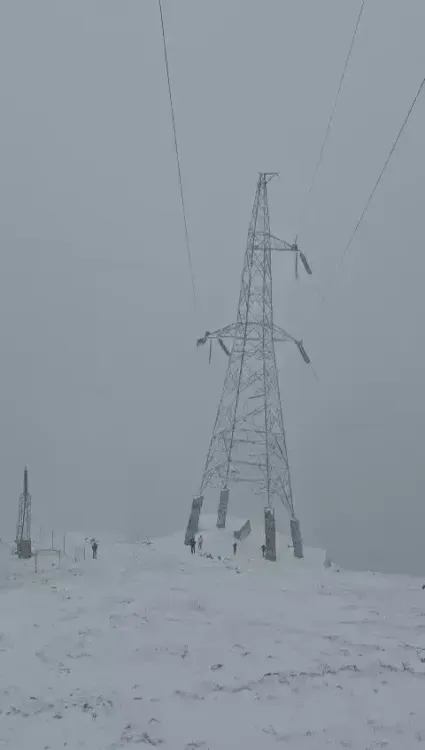
In the freezing, wind-scoured terrain of Ladakh, keeping the lights on is not a routine task — it is an act of endurance. Union Power Minister Manohar Lal Khattar on Monday, November 2, 2026, took to X to publicly honour the Power Grid Corporation of India Limited (PGCIL) team that restored electricity across the high-altitude Union Territory under what he described as 'the most hostile conditions.'
A tribute from the top of the power ministry
Khattar's post did not mince words. 'The extraordinary courage, dedication, and sense of duty displayed by the PGCIL team in restoring electricity across Ladakh are truly commendable,' he wrote, calling the engineers and field workers 'unsung heroes' who 'exemplify the highest traditions of professional excellence.' The minister said their 'unwavering determination to keep every home illuminated' deserves the nation's 'deepest appreciation.'
The four videos attached to the post — while their specific contents are unverified — suggest the restoration work unfolded in challenging field conditions, the kind that PGCIL teams in the Himalayas routinely navigate: sub-zero temperatures, high-altitude passes, and terrain that makes every metre of transmission line a hard-won gain.
Ladakh's grid: a frontier challenge since 2019
PGCIL, formally the Power Grid Corporation of India Limited, is the country's central transmission utility — the backbone of India's inter-state power grid. In Ladakh, its mandate grew sharply after the region was carved out as a Union Territory in 2019, prompting the central government to accelerate transmission and distribution strengthening projects in one of the world's most inhospitable landscapes.
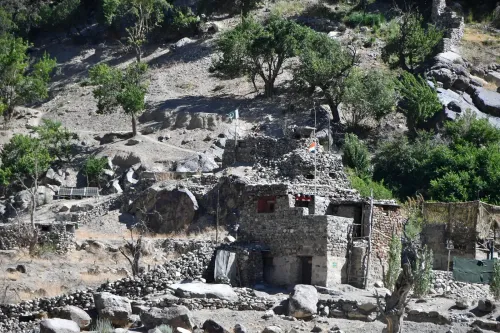
The UT sits at altitudes that routinely exceed 3,500 metres, with winters that push temperatures well below freezing and snowfall that can isolate entire sub-stations for days. For the residents of villages strung across the Indus valley and the Zanskar range, a PGCIL crew arriving after an outage is, in the most literal sense, the return of warmth.
Why Khattar's public praise matters now
The Power Ministry's public acknowledgement of field crews — rather than project launches or capacity numbers — signals an awareness that India's energy ambitions are ultimately executed by people working far from any spotlight. With winter power preparedness becoming an annual policy concern in Himalayan border regions, and new transmission projects for Ladakh expected on the ministry's agenda, the timing of this tribute underscores the human infrastructure behind the megawatt targets.
The nation, Khattar said, 'takes pride in these selfless professionals who work tirelessly to keep India illuminated.' On the frontlines of India's grid, that pride has a very specific address — and today, at least, it got called out by name.
Point of View
The Power Ministry has had a political as well as operational stake in demonstrating reliable grid reach to the region. Publicly honouring frontline workers also serves a softer purpose: building institutional morale in a utility whose work rarely makes headlines until something goes wrong. Watch whether this tribute precedes a formal announcement on winter power preparedness or new transmission capacity for Ladakh.
NationPress
2 Nov 2026
Frequently Asked Questions
Why did Manohar Lal Khattar praise PGCIL in Ladakh?
Union Power Minister Manohar Lal Khattar praised the PGCIL team for restoring electricity across Ladakh under extreme high-altitude and hostile weather conditions, calling them 'unsung heroes' who showed extraordinary courage and dedication.
What is PGCIL and what does it do in Ladakh?
PGCIL, or Power Grid Corporation of India Limited, is India's central transmission utility managing the inter-state power grid. In Ladakh, it operates and maintains transmission infrastructure in difficult high-altitude terrain, including handling outages caused by extreme weather.
Why is maintaining power supply in Ladakh so difficult?
Ladakh sits at altitudes often exceeding 3,500 metres, with sub-zero winter temperatures, heavy snowfall, and rugged terrain that can isolate sub-stations and transmission lines, making every restoration operation physically demanding and logistically complex.
When did the central government start strengthening Ladakh's power grid?
After Ladakh was designated a Union Territory in 2019, the central government accelerated power transmission and distribution strengthening projects in the region to improve reliability for residents.
What power projects are expected for Ladakh in 2026?
Specific upcoming projects have not been formally announced, but the Ministry of Power is expected to focus on winter power preparedness measures and new transmission capacity for Ladakh as part of ongoing Himalayan border area grid strengthening.