Khijadiya Bird Sanctuary records 100% Black-necked Stork breeding success in Gujarat study
Synopsis
A peer-reviewed study has confirmed Khijadiya Bird Sanctuary in Gujarat as a viable Black-necked Stork breeding site — with all four monitored nests producing two fledglings each, a 100 per cent success rate. The finding is significant because the species nested on invasive gando baval trees rather than native species, suggesting greater habitat adaptability than previously documented.
Key Takeaways
Khijadiya Bird Sanctuary in Jamnagar, Gujarat has been confirmed as a breeding site for the Black-necked Stork in a study spanning July 2024 to March 2025 .
Researchers documented four active nests and eight fledglings , achieving a 100 per cent fledging success rate .
The sanctuary supported a peak seasonal population of 21 birds , including five non-breeding adults.
All nests were built on Neltuma juliflora (gando baval), an invasive species, at heights of 3 to 4.5 metres .
Adult storks attended nests for an average of 62 minutes per visit across 89 monitoring visits , with 94 per cent of foraging departures involving biparental nest relief.
The Black-necked Stork is listed under Schedule II of the Wild Life (Protection) Act, 1972 (amended 2022).
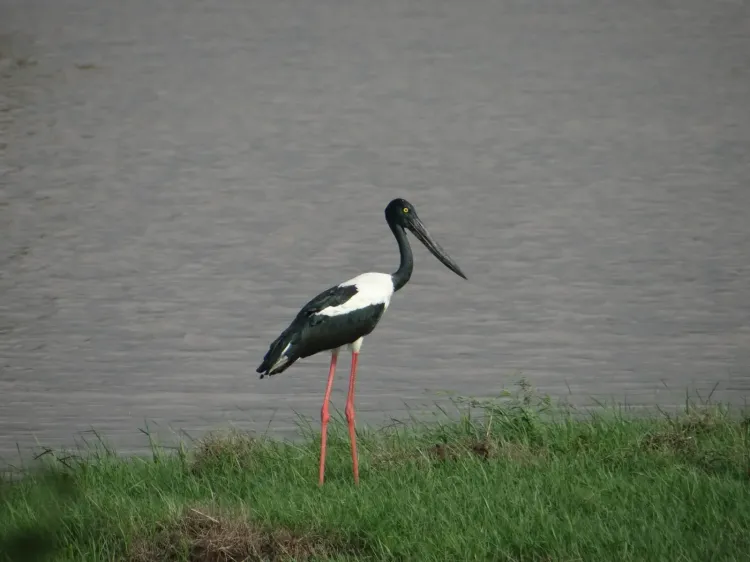
Khijadiya Bird Sanctuary in Jamnagar district, Gujarat, has been confirmed as a significant breeding site for the Black-necked Stork (Ephippiorhynchus asiaticus), with a peer-reviewed scientific study documenting four active nests, eight fledglings, and a 100 per cent fledging success rate at the Ramsar-designated wetland. The research, conducted between July 2024 and March 2025, has been published in the Journal of Threatened Taxa.
The study was carried out by scientists from the Gujarat Ecological Education and Research (GEER) Foundation — Sandeep Munjpara, Divyrajsinh Jadeja, Nita Solanki, Amitkumar Nayak, and B.P. Pati — and assessed the population status, breeding ecology, nest-site characteristics, and reproductive performance of one of India's largest wetland birds.
Key Findings of the Study
Researchers conducted field surveys across 48 georeferenced sampling points distributed over eight management zones within the sanctuary, accumulating more than 320 hours of observation data through nest monitoring, behavioural observations, and habitat assessments.
'One of the most significant findings of the study was the confirmation of four active Black-necked Stork nests within the sanctuary. Each nest was occupied by a breeding pair and successfully produced two fledglings, resulting in a total of eight juveniles,' said B.P. Pati, Director of the GEER Foundation. Along with five regularly observed non-breeding adults, the sanctuary supported a peak seasonal population of 21 birds during the study period.
All four nests were located on Neltuma juliflora (commonly known as gando baval), at heights ranging from 3 to 4.5 metres. Notably, the species is traditionally associated with large native trees such as acacias and figs for nesting — the findings suggest it can adapt to structurally suitable invasive trees where native options are scarce.
Habitat Characteristics That Supported Breeding
The nesting sites shared distinct ecological features: proximity to shallow wetlands with water depths of 0.3 to 0.7 metres, surrounded by open water, emergent vegetation, and elevated ground. These conditions provided access to fish, amphibians, crustaceans, and aquatic invertebrates — critical food resources for breeding adults and growing chicks.
'Black-necked Storks require more than water to survive and reproduce. Their successful breeding depends on the availability of suitable feeding areas, aquatic prey, nesting trees, shallow water, vegetation and relatively undisturbed sites,' said Dr Jaipal Singh, Principal Chief Conservator of Forests (Wildlife).
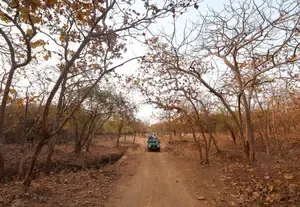
The nests were situated in restricted-access areas at wetland-woodland interfaces and on elevated mounds, reducing flood exposure while keeping the birds close to foraging grounds.
Breeding Timeline and Parental Behaviour
The study documented distinct phases of the breeding cycle. Behavioural changes were recorded in August and September, followed by nest construction in early October. Eggs hatched between late October and early November, with intensive chick-rearing continuing through December. All four nests had produced fledglings by year-end.
During 89 nest-monitoring visits, adult storks attended their nests for an average of 62 minutes per visit. In 94 per cent of recorded foraging departures, one parent returned to replace the other — demonstrating highly coordinated biparental care. Researchers recorded no nest abandonment, predation, or chick mortality during the monitoring period.
'Such behaviour ensures continuous protection and care of eggs and chicks,' said Dr Sandeep Munjpara, a GEER Foundation scientist and one of the study's authors. Juveniles were also observed seeking food from parents after fledging, indicating continued parental support as they developed independent foraging abilities.
Conservation Significance and Government Response
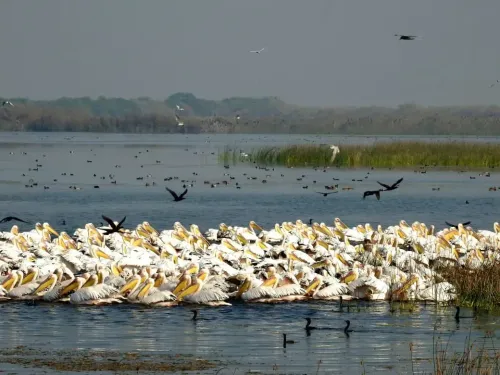
The Black-necked Stork is listed under Schedule II of the Wild Life (Protection) Act, 1972, as amended in 2022. Khijadiya, which combines freshwater and saline habitats and lies along the Central Asian Flyway, has long been recognised as a feeding and wintering ground for resident and migratory waterbirds. This study adds evidence of its role as an active breeding habitat.
Forests and Environment Minister Arjun Modhwadia congratulated the GEER Foundation team, stating the research would help develop more focused conservation measures. Minister of State for Forests and Environment Pravin Mali noted that the state had taken steps to protect its natural heritage, including the Ramsar-designated sanctuary.
With the sanctuary's stable hydrological conditions, low human disturbance, and adequate prey availability identified as key factors behind the breeding success, researchers and forest officials suggest that maintaining these conditions will be critical to sustaining the stork population at Khijadiya in the years ahead.
Point of View
But the more consequential detail is the nesting substrate: invasive gando baval trees, not native acacias or figs. If the Black-necked Stork is adapting to invasive vegetation, conservation planning across Indian wetlands may need to revisit assumptions about habitat suitability. The study also quietly underscores a governance point — restricted-access zoning and low human disturbance, not expensive interventions, appear to be the decisive variables. That is a replicable model, and one that wildlife managers at other Ramsar sites along the Central Asian Flyway should examine closely.
NationPress
9 Oct 2026
Frequently Asked Questions
What did the Khijadiya Bird Sanctuary Black-necked Stork study find?
The study confirmed four active Black-necked Stork nests at Khijadiya Bird Sanctuary in Jamnagar, Gujarat, with each nest producing two fledglings — a 100 per cent fledging success rate. The sanctuary supported a peak seasonal population of 21 birds during the study period from July 2024 to March 2025.
Where was the Black-necked Stork study published?
The research was published in the peer-reviewed Journal of Threatened Taxa . It was conducted by scientists from the Gujarat Ecological Education and Research (GEER) Foundation.
Why is the Black-necked Stork nesting on invasive trees significant?
The species is traditionally associated with large native trees such as acacias and figs for nesting. The finding that it successfully bred on Neltuma juliflora (gando baval), an invasive species, suggests the stork can adapt to structurally suitable non-native trees where native nesting options are limited — an important insight for habitat management.
What habitat conditions supported successful breeding at Khijadiya?
The nesting sites were near shallow wetlands with water depths of 0.3 to 0.7 metres, surrounded by open water, emergent vegetation, and elevated ground. Low human disturbance, stable hydrological conditions, and adequate prey — fish, amphibians, crustaceans, and aquatic invertebrates — were identified as key factors.
What is the conservation status of the Black-necked Stork in India?
The Black-necked Stork is listed under Schedule II of the Wild Life (Protection) Act, 1972, as amended in 2022. It is one of India's largest wetland birds and is considered a species of conservation concern.