CM Dhami Opens Baikunth Chaturdashi Mela in Srinagar
Synopsis
Chief Minister Pushkar Singh Dhami opened the Baikunth Chaturdashi Mela in Srinagar, inspected rural livelihood stalls and visited Kamleshwar Mahadev Temple. His address also covered heritage, transport projects and a planned honorarium increase for Anganwadi and ASHA workers.
Key Takeaways
Chief Minister Pushkar Singh Dhami inaugurated the Baikunth Chaturdashi Mela and Development Exhibition in Srinagar, Pauri Garhwal.
He inspected stalls under the National Rural Livelihood Mission and Gramotthan project and ground hill salt on a traditional stone.
Dhami offered prayers at Kamleshwar Mahadev Temple and described the fair as a symbol of local culture and social unity.
He discussed the Rishikesh-Karnaprayag rail project and said a Srinagar-Dehradun helicopter service would start soon.
He said increased honorariums for Anganwadi workers, helpers and ASHA workers would take effect from 1 December 2026.
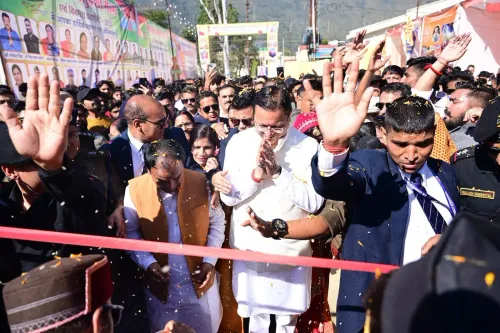
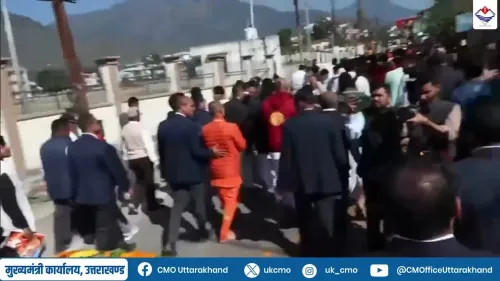
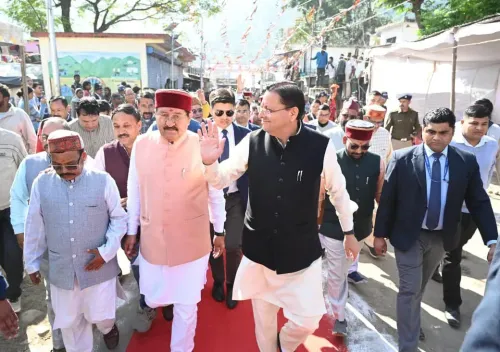
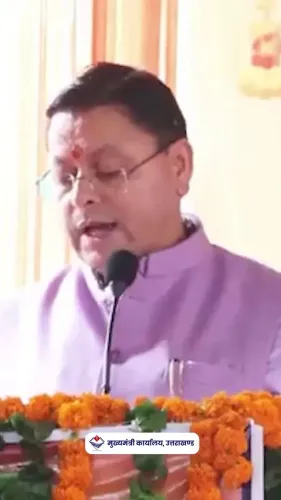
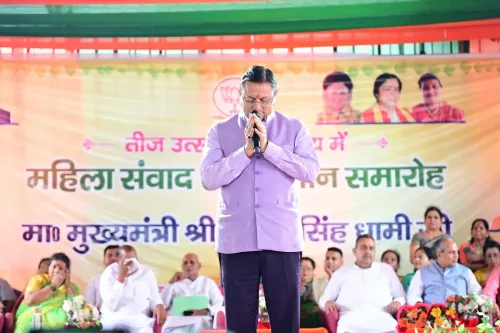
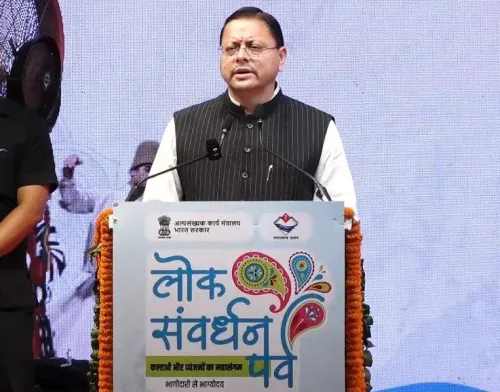
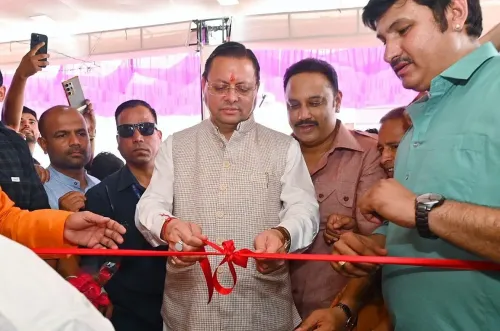
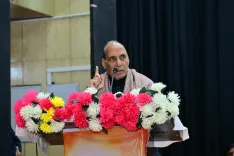
Local drums, flower showers and stalls showcasing products made by rural women set the scene as the Chief Minister's Office of Uttarakhand said Chief Minister Pushkar Singh Dhami inaugurated the Baikunth Chaturdashi Mela and Development Exhibition in Srinagar, Pauri Garhwal, on 23 November 2026. The event brought local livelihoods, religious traditions and the region's infrastructure needs into one gathering.
Dhami visits stalls and Kamleshwar Mahadev Temple
The Chief Minister inspected stalls set up under the National Rural Livelihood Mission and the Gramotthan project, according to the office. He learned about local products and women's self-help group activities, and ground hill salt using a traditional grinding stone.
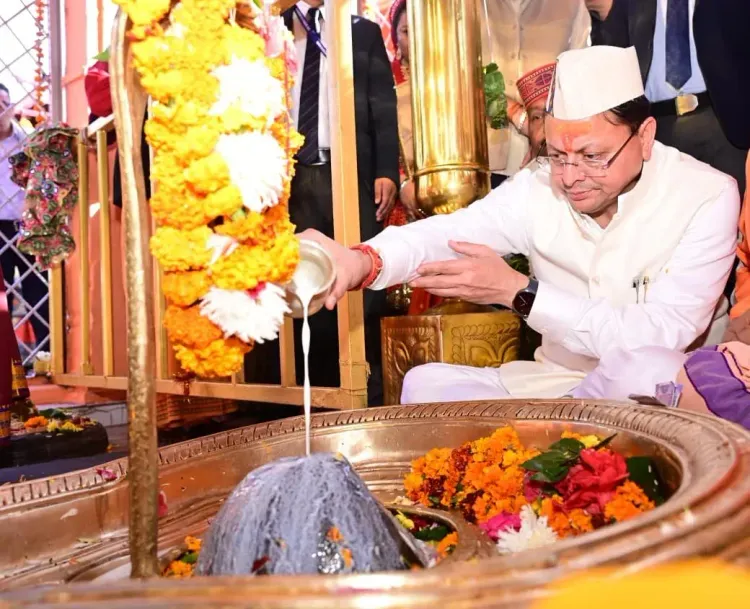
Dhami also offered prayers at Kamleshwar Mahadev Temple for the state's well-being and prosperity. Describing the fair, he said it was 'not merely a religious and cultural event, but also a symbol of our folk culture, traditions and social unity'.
The National Rural Livelihood Mission, launched in 2011, supports rural livelihoods through self-help groups. Its presence at the fair put the work of those groups alongside the region's religious and cultural traditions.
Rail, roads and heritage in Dhami's Srinagar address
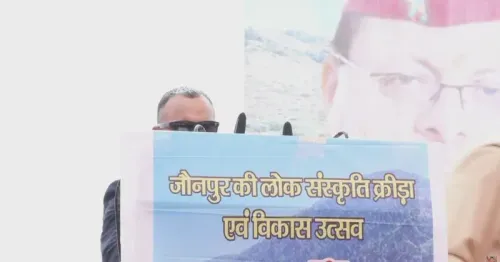
Dhami said the government was developing religious and historic sites through the Kedarkhand Mandir Mala Mission, the Manaskhand Mandir Mala Mission and other schemes, while promoting local products and women's economic empowerment. He also cited the guidance of Prime Minister Narendra Modi in the state's approach to development and heritage.
On connectivity, the Chief Minister said work on the Rishikesh-Karnaprayag rail project was moving rapidly and that a helicopter service between Srinagar and Dehradun would start soon. He also discussed the proposed widening of the Kotdwar-Pauri-Srinagar road; the post did not give completion dates for these projects.
Dhami said honorariums for Anganwadi workers, helpers and ASHA workers would rise from 1 December 2026. For residents and workers, the next test is how those commitments and connectivity projects translate into services on the ground.
Point of View
With self-help group stalls alongside a religious celebration. Dhami's address linked that theme to temple development and transport connectivity, both prominent features of the state's development agenda. The practical questions are when the promised transport services will reach residents and how the honorarium increase will be implemented.
NationPress
23 Nov 2026
Frequently Asked Questions
Where did CM Dhami inaugurate the Baikunth Chaturdashi Mela?
He inaugurated the fair and development exhibition in Srinagar, Pauri Garhwal, Uttarakhand.
What did Dhami do at the Srinagar mela?
He inspected rural livelihood stalls, learned about local products and women's self-help groups, and ground hill salt using a traditional stone. He also offered prayers at Kamleshwar Mahadev Temple.
What did Dhami say about Srinagar Dehradun helicopter service?
Dhami said a helicopter service between Srinagar and Dehradun would start soon. The Chief Minister's Office post did not give a launch date.
When will Uttarakhand Anganwadi and ASHA honorariums increase?
Dhami said the increase for Anganwadi workers, helpers and ASHA workers would take effect from 1 December 2026.
What is the National Rural Livelihood Mission?
The National Rural Livelihood Mission is a central government programme launched in 2011 to support rural livelihoods through self-help groups.