Kishan Reddy promotes Hyderabad Liberation Virtual Museum
Synopsis
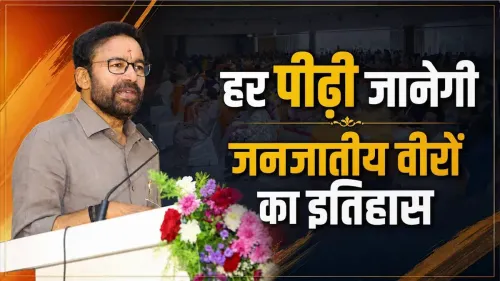
Union Minister G. Kishan Reddy has spotlighted the 'Liberation of Hyderabad Samsthan' Virtual Museum at Salar Jung Museum, which uses 3D tours and archival documents to chronicle Operation Polo and the 1948 integration of Hyderabad into India, urging youth to engage with the platform.
Key Takeaways
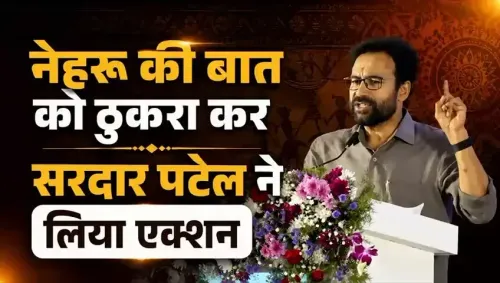
Kishan Reddy , Union Minister of Coal and Mines and BJP Telangana president, promoted the 'Liberation of Hyderabad Samsthan' Virtual Museum on 19 August 2026 .
The museum is accessible at liberationhyderabad.org and is hosted under the Salar Jung Museum, Hyderabad .
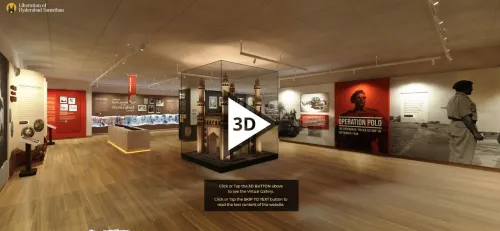
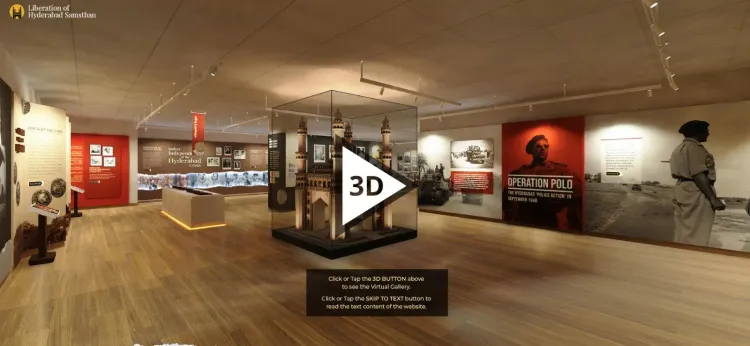
It features archival documents, newspaper clippings, interactive maps, and immersive 3D virtual tours of the Hyderabad Liberation Struggle.
A dedicated section covers Operation Polo , the September 1948 military action that integrated Hyderabad Samsthan into the Indian Union.
The initiative is aimed particularly at youth and historians seeking primary-source access to this chapter of post-independence history.
A digital archive honouring one of post-independence India's most consequential — and still-contested — chapters has drawn fresh attention. Union Coal and Mines Minister G. Kishan Reddy on Wednesday, 19 August 2026 called on citizens, especially the youth, to explore the 'Liberation of Hyderabad Samsthan' Virtual Museum hosted at the Salar Jung Museum, Hyderabad — a platform that brings archival documents, photographs, interactive maps and immersive 3D virtual tours to anyone with an internet connection.
What the virtual museum holds
The platform at liberationhyderabad.org aggregates archival documents, newspaper clippings, interactive maps and immersive 3D virtual tours to reconstruct the story of the Hyderabad Liberation Struggle. It pays particular tribute to the leaders, freedom fighters and martyrs whose sacrifices drove the movement. Crucially, it dedicates a section to Operation Polo — the September 1948 military action through which the Indian Union ended the Nizam's rule over the princely state of Hyderabad Samsthan and completed the subcontinent's political integration.
Operation Polo and why its memory matters
Operation Polo, launched in September 1948, was a five-day police action that brought the vast, landlocked princely state into the Indian republic after the Nizam refused accession. The integration remains a defining — and in some quarters, sharply debated — moment in post-partition Indian history. Reddy, who serves as BJP Telangana state president alongside his cabinet role, framed the museum as a tool of national memory: 'Preserving this history is essential to ensuring that future generations understand the struggles and sacrifices that shaped our nation.'
Digital museums as a new front for historical memory
The Hyderabad initiative is part of a broader pattern in which government cultural bodies have turned to digital formats to democratise access to archival material on princely-state integration. The Salar Jung Museum — one of India's premier national museums, known for its vast art and historical collections — lends institutional credibility to the project. A virtual format removes the barrier of physical travel, putting primary sources directly in front of school students and researchers alike.
Whether similar virtual exhibits will follow for other princely-state integrations remains an open question — but the Hyderabad model, with its combination of 3D tours and primary documents, sets a template worth watching.
Point of View
Particularly in Telangana where the event carries deep political resonance. Digital platforms allow this framing to reach younger voters without the friction of physical commemoration. The move also reinforces the party's cultural-nationalist positioning ahead of any future state electoral cycle in Telangana, where Reddy holds the state president's post. Institutionalising the 'liberation' narrative through a credible venue like the Salar Jung Museum gives the project a veneer of archival neutrality while advancing a specific historical reading.
NationPress
3 Oct 2026
Frequently Asked Questions
What is the Liberation of Hyderabad Samsthan Virtual Museum?
It is a digital museum accessible at liberationhyderabad.org, hosted under the Salar Jung Museum in Hyderabad, that uses archival documents, photographs, interactive maps and 3D virtual tours to document the Hyderabad Liberation Struggle and Operation Polo of September 1948.
What was Operation Polo?
Operation Polo was a September 1948 Indian military police action that ended the Nizam of Hyderabad's rule and integrated the princely state of Hyderabad Samsthan into the Indian Union.
Why did G. Kishan Reddy promote the Hyderabad virtual museum?
Reddy, as Union Minister of Coal and Mines and BJP Telangana state president, urged citizens — especially youth — to explore the museum to understand the sacrifices that shaped India's post-independence integration, framing historical memory as a national duty.
Where is the Salar Jung Museum located?
The Salar Jung Museum is located in Hyderabad, Telangana, and is one of India's major national museums known for its extensive art and historical collections.
How can I visit the Liberation of Hyderabad Samsthan Virtual Museum?
The virtual museum can be explored online at liberationhyderabad.org, which offers 3D virtual tours, archival documents, newspaper clippings and interactive maps free of charge.