Kishan Reddy: ₹664 Cr PMJVK Push for Telangana Minorities
Synopsis
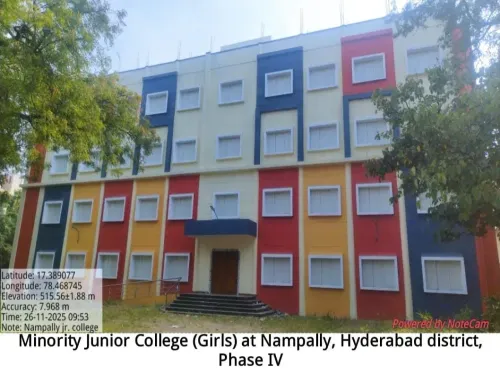
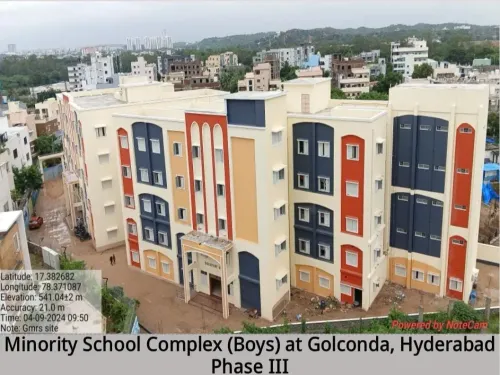
Union Minister G. Kishan Reddy has highlighted 41 PMJVK projects worth ₹664 crore sanctioned in Telangana for minority students, with 18 residential schools, 4 junior colleges, and 4 hostels planned in Hyderabad and Secunderabad — of which several are already complete.
Key Takeaways
41 PMJVK projects worth an estimated ₹664 crore have been sanctioned across Telangana for minority education and accommodation infrastructure.
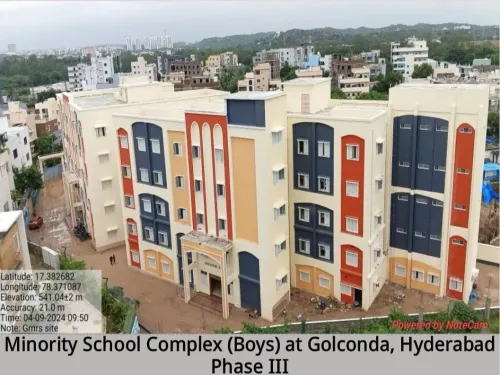
In Hyderabad and Secunderabad specifically, the sanction covers 18 minority residential schools , 4 junior colleges , and 4 hostels .
3 junior colleges and 2 hostel buildings from this batch are already constructed and operational.
Work on 10 additional projects in the same corridor is currently under way.
PMJVK was restructured in 2018 from the earlier Multi-sectoral Development Programme (MsDP) launched in 2008-09, and operates on a centre-state cost-sharing model.
The announcement was made by Union Coal and Mines Minister and BJP Telangana president G.
Kishan Reddy on 9 November 2026 .
Forty-one federally sanctioned projects, ₹664 crore in estimated expenditure, and a direct pipeline of schools, colleges, and hostels into Hyderabad and Secunderabad — Union Coal and Mines Minister G. Kishan Reddy put those numbers squarely on the record on Monday, 9 November 2026, spotlighting what the Centre says is a concrete infrastructure drive for minority students in Telangana under the Pradhan Mantri Jan Vikas Karyakram (PMJVK).
What the ₹664 crore buys in Hyderabad and Secunderabad
Reddy's post, written in Telugu, details the project mix sanctioned for the twin cities: 18 minority residential schools, 4 junior colleges, and 4 hostels. Of those, 3 junior colleges and 2 hostel buildings are already complete. Work on 10 more projects is described as moving quickly. The minister tagged @MOMAIndia — the Ministry of Minority Affairs — and anchored the update under the Sabka Saath Sabka Vikas (development for all) banner.
The underlying scheme, PMJVK, is an area-based infrastructure programme that targets notified minority-concentrated blocks and towns. It was restructured and rebranded in 2018 from its predecessor, the Multi-sectoral Development Programme (MsDP), which the Centre had first launched in 2008-09 to address development deficits in districts with significant minority populations. Funding is shared between the Centre and the states.
Why Telangana fits the PMJVK template
Hyderabad, the state capital, carries one of the largest urban Muslim populations in South India and has historically been a focal point for central minority-welfare disbursements. Routing PMJVK investments through the city — and the adjoining cantonment town of Secunderabad — is consistent with the scheme's mandate to concentrate infrastructure where minority communities are demonstrably concentrated.
Reddy, who also serves as BJP's Telangana state president, has a political stake in making Centre-funded welfare delivery visible in a state currently governed by the Congress. Highlighting completed assets — colleges open, hostels standing — lets the BJP make a direct accountability argument ahead of any future state electoral cycle.
Residential schools, hostels, and the access gap they address
The emphasis on residential schools and hostels is deliberate. Boarding infrastructure addresses one of the persistent barriers to secondary and higher secondary education in lower-income minority communities: the cost and logistics of daily commuting from under-served neighbourhoods. With 18 residential schools alone in the Hyderabad-Secunderabad corridor, the government's stated goal is to push quality education into walking — or at most short-commute — distance for students who might otherwise drop out.
The remaining projects in the pipeline will be the real test. Announced numbers and completed assets are very different things in Indian infrastructure delivery — and 10 ongoing projects across a congested urban sprawl will face the familiar gauntlet of land clearances, contractor timelines, and state-centre coordination. Watch for formal completion and handover dates as the benchmark that matters most.
Point of View
Using completed physical assets as a counter-narrative to state government claims. Reddy's dual role — Union minister and Telangana BJP chief — means this announcement operates simultaneously as a governance report card and a political positioning exercise. The residential school and hostel focus is substantively meaningful: boarding infrastructure tackles the access gap more directly than day-school construction alone. The real test, however, is whether the remaining 10-plus ongoing projects cross the finish line on schedule — which will determine whether this becomes a durable electoral asset or a half-built talking point.
NationPress
9 Nov 2026
Frequently Asked Questions
What is the Pradhan Mantri Jan Vikas Karyakram (PMJVK)?
PMJVK is a central government scheme under the Ministry of Minority Affairs that funds infrastructure development — schools, colleges, hostels, and other facilities — in areas with significant minority-community concentrations. It was restructured in 2018 from the earlier Multi-sectoral Development Programme launched in 2008-09, and operates on a centre-state cost-sharing basis.
How many PMJVK projects have been sanctioned in Telangana?
According to Union Minister G. Kishan Reddy, 41 PMJVK projects with an estimated cost of ₹664 crore have been sanctioned in Telangana.
What projects are being built for minorities in Hyderabad and Secunderabad?
The sanctioned projects for Hyderabad and Secunderabad include 18 minority residential schools, 4 junior colleges, and 4 hostels. Of these, 3 junior colleges and 2 hostel buildings are already complete, and 10 more projects are under active construction.
Who is G. Kishan Reddy?
G. Kishan Reddy is a senior BJP leader who currently serves as India's Union Minister of Coal and Mines and is also the president of the BJP's Telangana state unit.
What does Sabka Saath Sabka Vikas mean in the context of minority welfare?
'Sabka Saath Sabka Vikas' — meaning 'together with all, development for all' — is the BJP government's inclusive development slogan under which schemes like PMJVK are presented as delivering equitable infrastructure investment across all communities, including notified minority groups.