Kishan Reddy highlights new rail station near Mallanna Swamy Temple
Synopsis
Union Coal and Mines Minister G. Kishan Reddy on June 6 highlighted the features of a new railway station serving the Komuravelli Mallanna Swamy Temple in Telangana, citing a 450-metre platform, heritage architecture, Divyangjan facilities, and integration with Rajiv Rahadari (SH-1) to boost pilgrim access and regional connectivity.
Key Takeaways
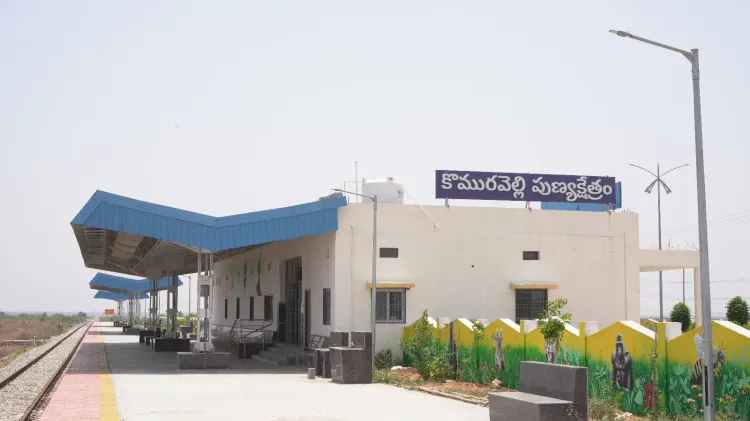
Kishan Reddy shared details of a new railway station near the Komuravelli Mallanna Swamy Temple in Telangana on June 6, 2026 .
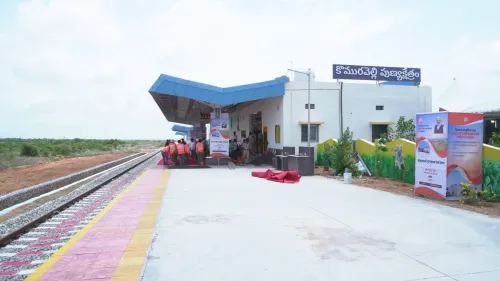
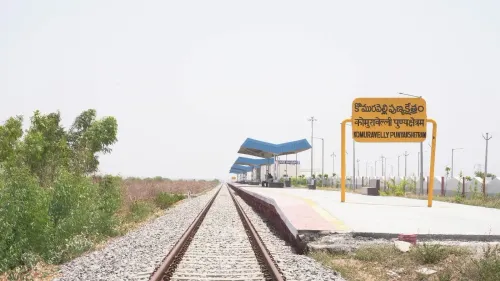
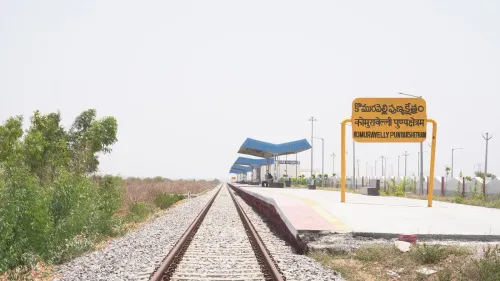
The station includes a 450m × 10m high-level platform , five shelters, a waiting hall, booking counters, and drinking water facilities.
Separate toilet facilities for ladies, gents, and Divyangjan are part of the design, reflecting updated accessibility standards.
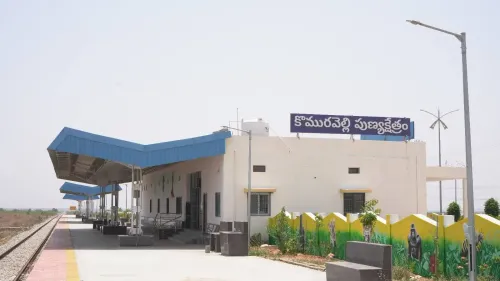
The station's architectural elevation and murals reflect local heritage, deity, flora, and fauna.
The project is integrated with Rajiv Rahadari (SH-1) for last-mile road-rail connectivity.
The development is expected to boost pilgrimage, local tourism, and economic activity in the Komuravelli area.
Union Coal and Mines Minister G. Kishan Reddy on Saturday, June 6, 2026, shared details of a newly developed railway station in Telangana that will serve pilgrims visiting the revered Komuravelli Mallanna Swamy Temple, outlining a range of modern passenger amenities and connectivity improvements.
What the station offers
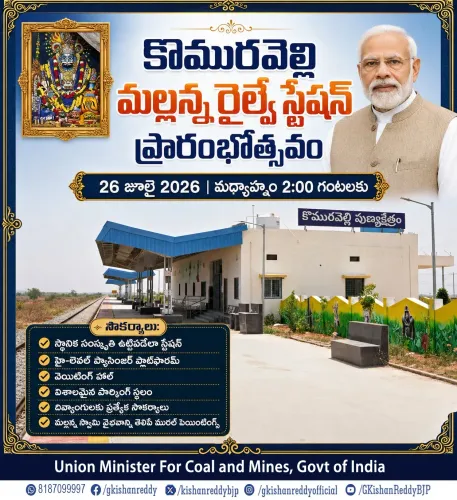
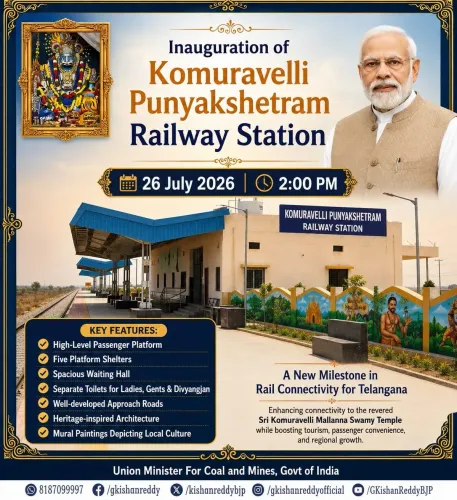
The station features a 450-metre by 10-metre high-level passenger platform, five platform shelters, a spacious waiting hall, and seating with 3-seater benches. Booking counters, drinking water facilities, and separate toilet blocks for ladies, gents, and Divyangjan (persons with disabilities) are also part of the design.
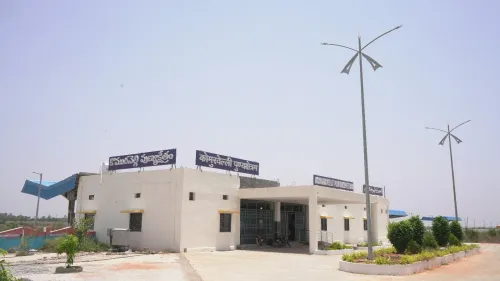
The station building includes an entrance portico and an architectural elevation described as reflecting local heritage, with mural paintings depicting a local deity, flora, and fauna. A circulating area with parking facilities and well-developed approach roads complete the facility.
Context
The Komuravelli Mallanna Swamy Temple is a significant pilgrimage destination in Telangana, drawing large numbers of devotees from across the region. Dedicated rail access to such sites has been a recurring demand from local communities, and the new station is positioned to address that gap directly.
Reddy, who also serves as BJP Telangana state president, highlighted that the station would provide 'direct rail access for devotees visiting the revered Komuravelli Mallanna Swamy Temple' and give a 'boost to local tourism, pilgrimage, and economic activity.'
Policy backdrop
The project aligns with the broader thrust of the Amrit Bharat Stations Scheme, launched in 2023, which targets redevelopment of over 1,300 stations across India with modern amenities and locally inspired architectural themes. The scheme emphasises accessibility features, heritage design, and improved passenger experience.
The National Infrastructure Pipeline (2019) had earlier identified rail station modernisation and last-mile road-rail integration as priority sectors. The new station's linkage to Rajiv Rahadari (SH-1), Telangana's state highway, reflects that integrated approach — ensuring, as Reddy noted, 'seamless last-mile connectivity.'
Stakeholders and impact
Pilgrims, daily commuters, and the local tourism sector in the Komuravelli area stand to benefit most directly. Improved connectivity is expected to ease access for the large volumes of devotees who visit the temple, particularly during festival seasons.
The inclusion of Divyangjan-specific toilet facilities and modern seating reflects evolving accessibility standards in public infrastructure, a requirement increasingly embedded in railway redevelopment guidelines. Local businesses and hospitality services near the temple are also likely to see increased footfall.
What's next
Attention will now turn to the station's operational timeline and actual passenger uptake once services commence. Further rail-road integration announcements in upcoming state budgets or Railway Board plans for Telangana will indicate whether this forms part of a wider corridor upgrade. Progress on other Amrit Bharat stations in the state will also be watched as a measure of scheme rollout pace.
Point of View
The post underscores how BJP leaders leverage infrastructure projects across portfolios to build local visibility. The Amrit Bharat Stations Scheme provides the policy scaffolding, but the political dividend is being claimed at the state level.
NationPress
21 Oct 2026
Frequently Asked Questions
What is the new railway station near Komuravelli Mallanna Swamy Temple?
A newly developed station near the Komuravelli Mallanna Swamy Temple in Telangana has been highlighted by Union Minister G. Kishan Reddy, featuring a 450-metre high-level platform, heritage-themed architecture, and modern passenger amenities including Divyangjan facilities.
What is the Amrit Bharat Stations Scheme?
The Amrit Bharat Stations Scheme, launched in 2023, is a central government programme to redevelop over 1,300 railway stations across India with modern facilities, improved accessibility, and architecture reflecting local cultural heritage.
How will the new station benefit pilgrims visiting Komuravelli?
The station will provide direct rail access to devotees visiting the Komuravelli Mallanna Swamy Temple, reducing travel difficulty and boosting pilgrim numbers, particularly during festival seasons when footfall is highest.
What is Rajiv Rahadari SH-1 and how does it connect to this station?
Rajiv Rahadari (SH-1) is a state highway in Telangana. The new station is integrated with this highway to ensure seamless last-mile road-rail connectivity for passengers arriving from across the region.
Why is G. Kishan Reddy posting about a railway station when his portfolio is coal and mines?
G. Kishan Reddy also serves as BJP Telangana state president, which means he regularly highlights infrastructure and development projects in the state as part of his political role, regardless of his central ministerial portfolio.