Kishan Reddy Greets Bharat Ratna Advani on Birthday
Synopsis
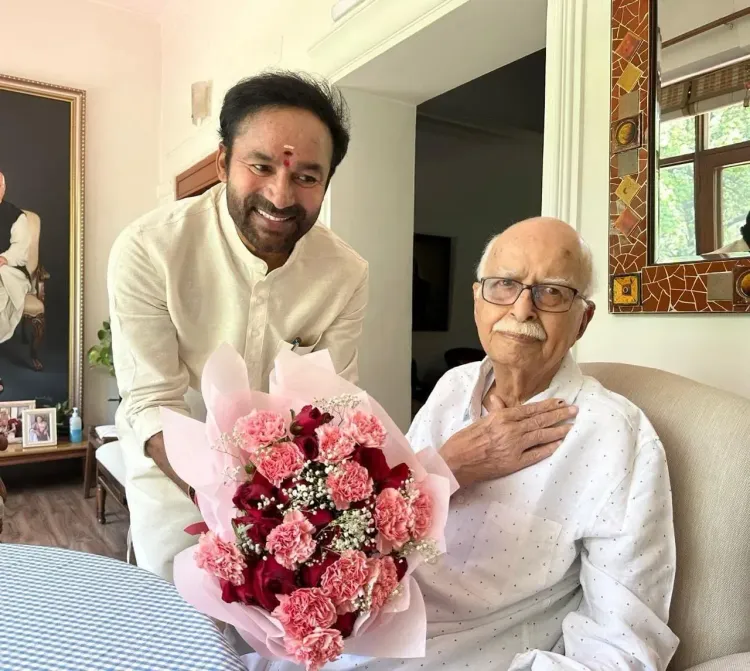
Union Coal Minister G. Kishan Reddy wished Bharat Ratna and former Deputy PM L.K. Advani on his birthday on 8 November 2026, recalling his journey from RSS volunteer to BJP co-founder, his Emergency-era defiance, and the historic 1990 Ram Rath Yatra.
Key Takeaways
Union Coal and Mines Minister G.
Kishan Reddy extended birthday wishes to former Deputy Prime Minister and Bharat Ratna L.K.
Advani on 8 November 2026 .
Reddy highlighted Advani's roots in the Rashtriya Swayamsevak Sangh and his central role in building the Bharatiya Jana Sangh , the BJP's direct predecessor founded in 1951 .
The tribute specifically recognised Advani's opposition to the Emergency (1975–77) , during which he was among the jailed dissidents.
The 1990 Ram Rath Yatra from Somnath to Ayodhya — a campaign credited with reshaping Hindu nationalist electoral politics — was cited as a defining moment of his leadership.
Advani holds the Bharat Ratna , India's highest civilian honour, formally recognising his decades-long contribution to Indian public life.
The post reflects the BJP's established practice of using public tributes to veteran leaders to reinforce party ideological continuity.
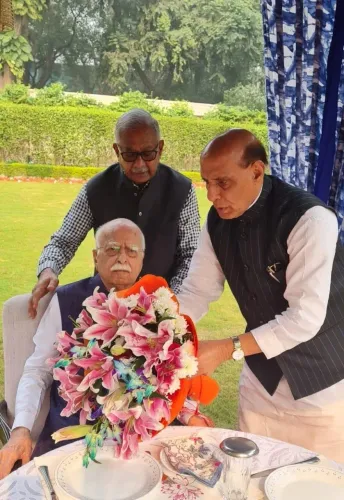
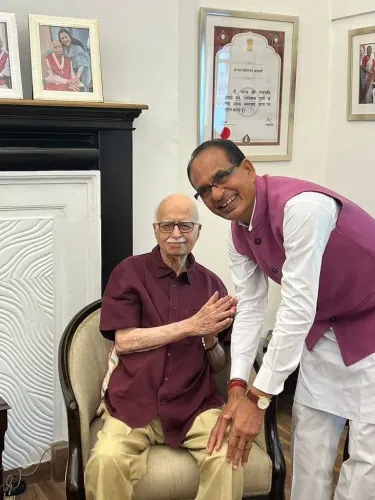
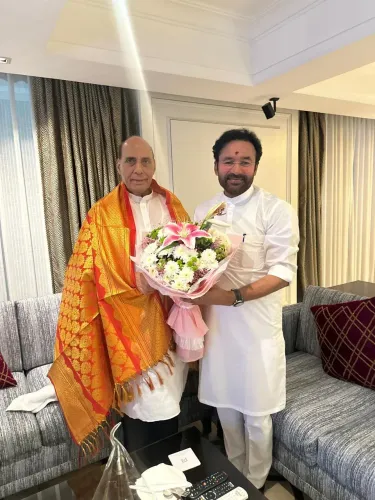
A towering architect of modern Indian conservatism turns a year older — and Union Coal and Mines Minister G. Kishan Reddy marked the occasion on Sunday, 8 November 2026, with a warm tribute to former Deputy Prime Minister and Bharat Ratna Lal Krishna Advani, honouring the veteran leader's journey from RSS volunteer to the highest echelons of Indian statecraft.
Reddy's post traced Advani's ideological lineage with precision: 'Having dedicated his life to the nation through the Rashtriya Swayamsevak Sangh, Shri Advani Ji played a pivotal role in building the Bharatiya Jana Sangh, which paved the way for the Bharatiya Janata Party.' The tribute also invoked two defining moments — Advani's resistance during the 1975–77 Emergency and the landmark 1990 Ram Rath Yatra.
From RSS Pracharak to Founding the BJP's Ideological Core
Advani's political biography is, in many ways, the BJP's own origin story. The Bharatiya Jana Sangh, founded in 1951, served as the political arm shaped by the RSS's nationalist ideology — and Advani was among its central figures as the organisation grew across north India through the 1960s and 1970s. When the Jana Sangh formally dissolved into the broader Janata Party coalition after the Emergency and then re-emerged as the BJP in April 1980, Advani was at the heart of that transformation.
That continuity from RSS to Jana Sangh to BJP is precisely what senior party figures invoke on occasions like this. It is a deliberate act of institutional memory — a reminder that the party's current electoral dominance rests on decades of ideological groundwork.
The Emergency Stand and the Rath Yatra That Changed Politics
Reddy's tribute singled out two episodes that loom large in BJP's internal mythology. During Prime Minister Indira Gandhi's Emergency (1975–77), Advani was among the opposition leaders jailed under the Maintenance of Internal Security Act — a period the party has long cast as a test of democratic resolve. His detention, and the broader coalition that emerged against the Emergency, laid the groundwork for the Janata government of 1977.
Then came September 1990. The Ram Rath Yatra — a cross-country procession from Somnath in Gujarat toward Ayodhya — galvanised Hindu nationalist sentiment on a scale that reshaped Indian electoral geography. Advani's Toyota van, decorated to resemble a chariot, became one of the most photographed images in post-independence Indian politics. The yatra was eventually halted when Advani was arrested in Bihar, but it had already set off a chain of events that culminated in the 1992 demolition of the Babri Masjid and, decades later, the Supreme Court-cleared construction of the Ram Mandir at Ayodhya.
Bharat Ratna and the Question of Belated Honour
Advani was conferred the Bharat Ratna, India's highest civilian honour, underscoring the state's formal recognition of his contributions. The award, celebrated within the BJP as long overdue, cemented his place in the party's pantheon — even as his public role had diminished in the years before.
Reddy's birthday post fits a well-established pattern among BJP ministers and state presidents: publicly marking the milestones of veteran leaders to signal ideological continuity and party cohesion. As Telangana BJP president, Reddy speaks not just as a Union minister but as a regional party head — lending the tribute a dual institutional weight.
Advani's story, as Reddy frames it, is one of a 'nation-first ethos' outlasting every political storm. That narrative, retold every birthday, is now part of how the BJP writes its own history.
Point of View
The Jana Sangh, the Emergency, and the Rath Yatra in a single post, Kishan Reddy situates Advani not as a retired figure but as the ideological bedrock on which the party's current dominance rests. This matters especially in Telangana, where the BJP is working to convert ideological capital into electoral ground. Regularly amplifying the foundational narrative — RSS to Jana Sangh to BJP — serves as both internal cohesion and a signal to the broader Hindu nationalist voter base that the party's roots remain intact.
NationPress
8 Nov 2026
Frequently Asked Questions
When is L.K. Advani's birthday?
L.K. Advani was born on 8 November 1927 , making 8 November a date consistently marked by BJP leaders each year.
What is the Ram Rath Yatra and why is it significant?
The Ram Rath Yatra was a cross-country procession led by L.K. Advani in September 1990 , travelling from Somnath in Gujarat toward Ayodhya to mobilise support for a Ram temple. It is considered a watershed moment in Indian politics that dramatically expanded the BJP's electoral base.
What is the connection between RSS, Jana Sangh, and BJP?
The Rashtriya Swayamsevak Sangh (RSS) , founded in 1925 , provided the ideological foundation for the Bharatiya Jana Sangh , established in 1951 . After the Emergency-era Janata Party experiment ended, Jana Sangh leaders formally launched the Bharatiya Janata Party in April 1980 — with Advani among its founding architects.
Why was Advani awarded the Bharat Ratna?
L.K. Advani was conferred the Bharat Ratna , India's highest civilian honour, in recognition of his decades of contribution to Indian public life, including his role in founding and shaping the BJP and his long parliamentary career.
Who is G. Kishan Reddy?
G. Kishan Reddy is the Union Minister of Coal and Mines in the Government of India and the BJP's Telangana state president . He posted the birthday tribute to Advani on 8 November 2026 .