Yogi Adityanath's Diwali in Ayodhya: 'No one can fire bullets at Ram devotees now'
Synopsis
On Diwali, CM Yogi Adityanath visited Ayodhya, prayed at the Ram Temple and declared that bullets can no longer be fired at Ram devotees — a charged invocation of the city's contested past, delivered from its holiest ground on its most symbolic occasion.
Key Takeaways
CM Yogi Adityanath visited Ayodhya on 8 November 2026 for Diwali , offering prayers at the Shri Ram Janmabhoomi Temple .
He declared: 'Now, in Ayodhya, bullets will not be fired on Ram devotees' — invoking the city's historical disputes.
He called on citizens to take a collective resolution to protect Ayodhya's religious identity, dignity and cultural heritage.
He distributed fruits and sweets among sanitation workers, boatmen and families in the Nishad settlement and Ashok Singhal Ward .
He also shared messages on X emphasising social harmony and the cultural significance of Diwali rooted in Sanatan values.
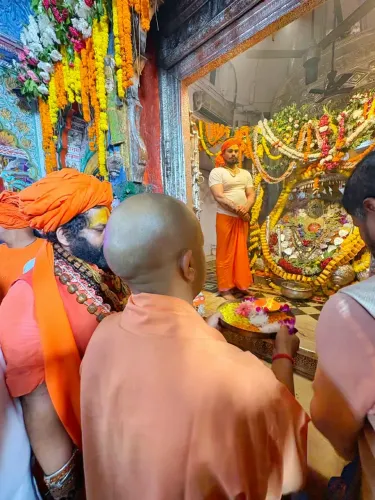
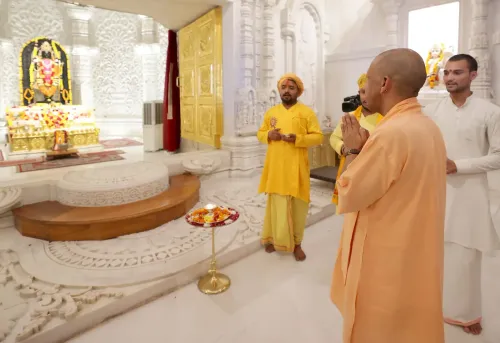
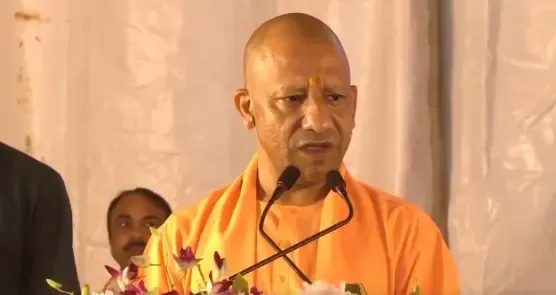
Uttar Pradesh Chief Minister Yogi Adityanath visited Ayodhya on Sunday, 8 November 2026 to mark Diwali, offering prayers at the Shri Ram Janmabhoomi Temple, distributing fruits and sweets among sanitation workers, boatmen and underprivileged families, and delivering a pointed message about protecting the holy city's religious and cultural identity.
Key Remarks at the Celebrations
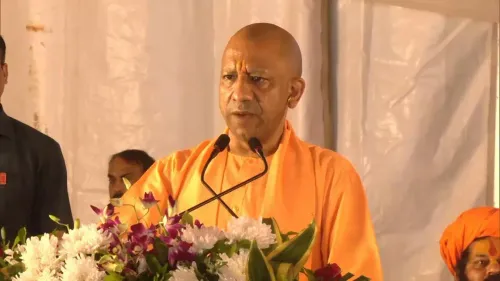
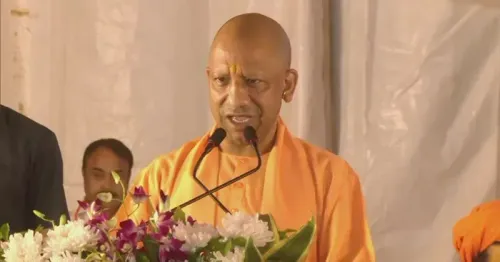
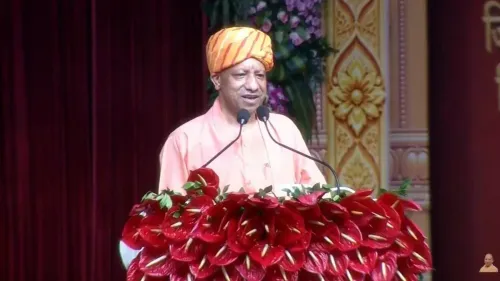
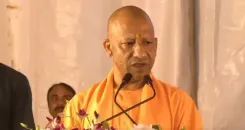
Addressing people gathered in Ayodhya during the festivities, Chief Minister Yogi invoked the city's past, asserting that restrictions and violence against devotees would no longer be permitted. 'Now, in Ayodhya, bullets will not be fired on Ram devotees. Now, in Ayodhya, no one can use a stick to say 'Jai Shri Ram'. Now, in Ayodhya, no one will be able to put a ban on 5-kosi, 14-kosi and 84-kosi circumambulations,' he said.
Yogi also urged citizens to collectively safeguard Ayodhya's religious identity, dignity and cultural heritage. 'We have to take only one resolution. That resolution has to be that in the coming times, there should be no evil eye on our Ayodhya. Our resolution should be against the loot of Ayodhya's wealth, defame Ayodhya again; there should not be any evil eye on our Ayodhya,' he said.
Prayers at Ram Temple and Calls for a Dignified City
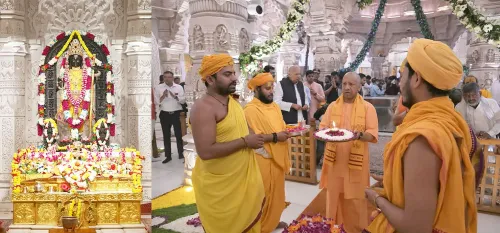
During his Diwali visit, the Chief Minister performed darshan of Ram Lalla at the Shri Ram Janmabhoomi Temple and sought blessings for the country's progress, public welfare and prosperity. He also emphasised the importance of maintaining the city's cleanliness and organisation, saying: 'Ayodhya should be clean, beautiful, well-organised and dignified. Ayodhya is Lord Ram's Ayodhya. We have to organise Ayodhya in the same way and move forward.'
Sweets for Sanitation Workers and Boatmen
Underscoring the value of civic service, Yogi distributed fruits and sweets among three groups: sanitation workers responsible for maintaining Shri Ayodhya Dham, boatmen who preserve the tradition associated with the friendship between Lord Shri Ram and Nishadraj, and families residing in the Nishad settlement and Ashok Singhal Ward. He praised their dedication, saying their spirit of service forms the foundation of Ayodhya's cleanliness, beauty and vibrancy.
Posts on X Reflect on Diwali's Cultural Significance
Earlier in the day, Yogi shared his Diwali message on X, drawing on the ideals of Lord Shri Ram to highlight social harmony. 'The life of Lord Shri Ram teaches us that a sense of belonging and harmony is what binds society together. The great festival of Diwali is a sacred occasion to share this sense of kinship,' he wrote. In a separate post, he described Diwali as 'the sacred festival of the eternal consciousness of Sanatan culture, the ideals of Maryada Purushottam Lord Shri Ram, and the everlasting values of dharma, truth and spiritual heritage.' His remarks come as Ayodhya continues to attract heightened national attention following the consecration of the Ram Temple earlier in the year, with the city's development and religious governance remaining central to the ruling Bharatiya Janata Party's (BJP) political narrative in Uttar Pradesh.
Point of View
Sticks and circumambulation bans — was deliberate political signalling, not mere festival rhetoric; it draws a direct contrast with pre-2017 Uttar Pradesh and anchors the BJP's governance claim squarely in the Ram narrative. The visit also comes as Ayodhya's transformation into a pilgrimage-and-tourism economy accelerates, making the Chief Minister's presence there on Diwali a convergence of faith, optics and statecraft. What mainstream coverage underweights is the institutional subtext: the emphasis on sanitation workers and boatmen quietly frames development as the other half of the Ram Temple story. The forward question is whether Ayodhya's rapidly commercialising ecosystem can sustain the 'dignified and clean city' ideal Yogi articulates — or whether the two are on a collision course.
NationPress
8 Nov 2026
Frequently Asked Questions
What did CM Yogi Adityanath say about Ram devotees in Ayodhya on Diwali?
CM Yogi Adityanath declared during Diwali celebrations in Ayodhya on 8 November 2026 that bullets can no longer be fired at Ram devotees and that no one can ban the traditional circumambulations in the city. He framed the remark as an assertion that the city's past restrictions and violence against devotees belong to a closed chapter.
Why did CM Yogi visit Ayodhya on Diwali?
Chief Minister Yogi Adityanath visited Ayodhya to participate in Diwali celebrations, offer prayers and perform darshan at the Shri Ram Janmabhoomi Temple, and distribute sweets among sanitation workers, boatmen and underprivileged families. The visit also served as an occasion to deliver a message on protecting Ayodhya's religious identity and cultural heritage.
Who did CM Yogi distribute sweets to in Ayodhya?
CM Yogi distributed fruits and sweets to sanitation workers maintaining Shri Ayodhya Dham, boatmen connected to the tradition of Nishadraj, and families from the Nishad settlement and Ashok Singhal Ward. He praised their contributions as the foundation of Ayodhya's cleanliness and vibrancy.
What did CM Yogi post on X about Diwali?
CM Yogi shared two posts on X on Diwali. In the first, he wrote that the life of Lord Shri Ram teaches that a sense of belonging and harmony binds society together and that Diwali is a sacred occasion to share that kinship. In the second, he described Diwali as the festival of Sanatan culture's eternal consciousness, rooted in the ideals of Lord Shri Ram and the values of dharma, truth and spiritual heritage.
What is the significance of Ayodhya's Diwali celebrations in 2026?
Ayodhya's Diwali in 2026 carries heightened symbolic weight following the consecration of the Ram Temple earlier in the year, which transformed the city into a major national pilgrimage and tourism destination. The festival draws large-scale state participation, with CM Yogi's presence reinforcing both the religious and political significance of Ayodhya to the Uttar Pradesh government's narrative.