Kishan Reddy Greets West Bengal on State Foundation Day
Synopsis
Union Coal and Mines Minister G. Kishan Reddy marked West Bengal Day on 20 June 2026 by honouring the state's cultural giants — from Tagore to Subhas Chandra Bose — and expressing confidence that West Bengal will advance under the Viksit Bharat vision of PM Modi.
Key Takeaways
Kishan Reddy extended greetings to West Bengal on West Bengal Day, 20 June 2026 .
The Minister cited the Bhakti movement , the Bengal Renaissance , and the freedom struggle as pillars of the state's national contribution.
Five icons were named: Swami Vivekananda , Bankim Chandra Chattopadhyay , Rabindranath Tagore , Subhas Chandra Bose , and Syama Prasad Mookerjee .
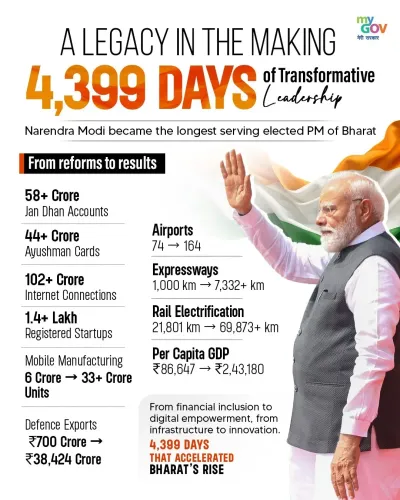
The post linked West Bengal's future progress to PM Narendra Modi 's Viksit Bharat vision for a developed India by 2047 .
The tribute reflects the BJP's established outreach pattern in opposition-ruled West Bengal ahead of future electoral cycles.
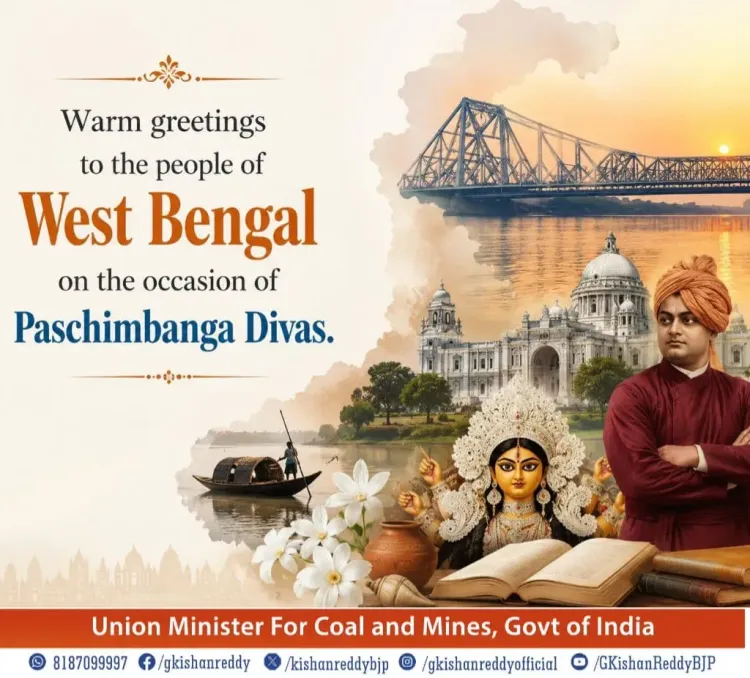
Union Coal and Mines Minister G. Kishan Reddy on Saturday, 20 June 2026, extended greetings to the people of West Bengal on the occasion of West Bengal Day, invoking the state's storied cultural and intellectual legacy and linking its future to the Viksit Bharat vision of Prime Minister Narendra Modi.
Context
In his post, the Minister described West Bengal as 'a land of immense cultural richness, spirituality, knowledge, and scientific excellence' that has 'played a pivotal role in shaping India's civilisational and national journey.' He invoked a sweeping historical arc — from the Bhakti movement and the Bengal Renaissance through the freedom struggle — to underscore the state's centrality to modern India's identity.
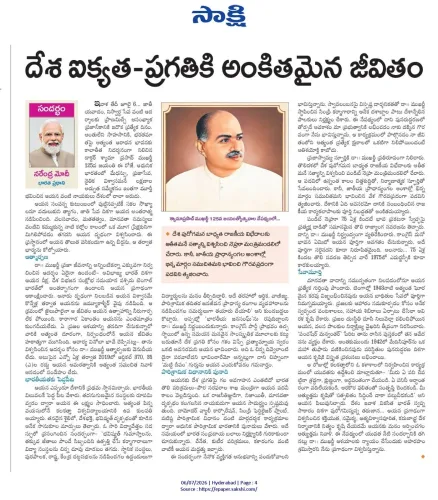
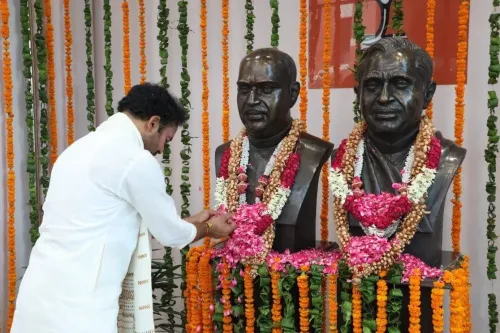
Reddy specifically named five towering figures: Swami Vivekananda, Bankim Chandra Chattopadhyay, Rabindranath Tagore, Subhas Chandra Bose, and Syama Prasad Mookerjee, calling their contributions an enduring source of inspiration for generations of Indians.
Policy Backdrop
The mention of Syama Prasad Mookerjee — founder of the Bharatiya Jana Sangh, the ideological precursor to the BJP — is a recurring feature of the party's communications on Bengal-related occasions, signalling an assertion of cultural and political ownership over a strand of the state's history. The reference to the Bhakti movement and the Bengal Renaissance similarly reflects a broader BJP effort to frame India's civilisational continuity through a particular historical lens.
The Viksit Bharat framework, articulated by PM Modi as a vision for a developed India by 2047, has increasingly been used as the umbrella narrative under which state-level milestones and tributes are anchored in central government communications. Reddy's post follows this template precisely, tying regional pride to a national development goal.
Stakeholders and Impact
West Bengal is currently governed by the Trinamool Congress, making it a key opposition-ruled state that the BJP has consistently targeted in its outreach. Posts of this nature — combining historical celebration with the ruling party's development narrative — are part of a pattern of political goodwill-building ahead of future electoral cycles in the state.
Cultural organisations, academic institutions, and residents of West Bengal are the immediate audience for such messaging. The invocation of universally revered figures like Tagore, Vivekananda, and Bose is intended to transcend partisan lines and appeal to a broad cross-section of Bengali society.
What's Next
Observers will watch whether the ceremonial greetings translate into concrete central-government initiatives — infrastructure investment, cultural project funding, or scheme launches — targeted at West Bengal in the coming weeks. The state's next assembly election cycle will also sharpen the political significance of continued high-profile outreach by BJP leaders of Reddy's stature.
Point of View
Reddy's voice lends national weight to what might otherwise read as routine seasonal goodwill. Whether such messaging builds durable electoral ground in West Bengal remains the central question for the party's Bengal strategy.
NationPress
18 Sept 2026
Frequently Asked Questions
What is West Bengal Day and when is it celebrated?
West Bengal Day marks the foundation of the state of West Bengal and is observed on 20 June each year, commemorating its formal establishment within the Indian Union.
Why did G. Kishan Reddy post about West Bengal Day?
As Union Coal and Mines Minister and a senior BJP leader, Reddy extended ceremonial greetings as part of the party's broader outreach to West Bengal, an opposition-governed state.
Who are the historical figures mentioned in Kishan Reddy's West Bengal Day post?
Reddy named Swami Vivekananda , Bankim Chandra Chattopadhyay , Rabindranath Tagore , Subhas Chandra Bose , and Syama Prasad Mookerjee as icons who shaped India's civilisational journey.
What is the Viksit Bharat vision mentioned in the post?
Viksit Bharat is PM Narendra Modi 's vision for transforming India into a fully developed nation by 2047 , the centenary of independence, with contributions expected from every state.
What is Syama Prasad Mookerjee's connection to the BJP?
Syama Prasad Mookerjee founded the Bharatiya Jana Sangh , the ideological forerunner of the BJP, making him a frequently invoked figure in the party's political and cultural communications.