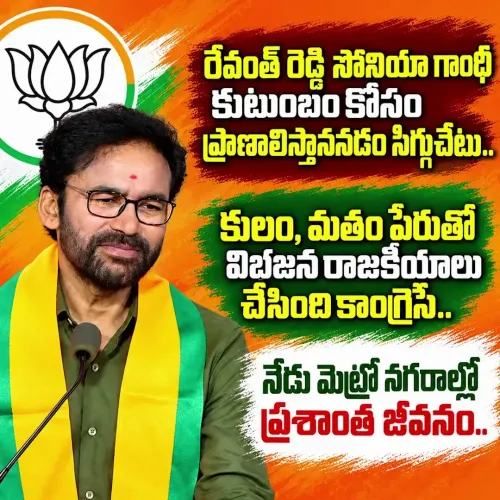
Kishan Reddy slams Rahul Gandhi over EVM, EC remarks
Synopsis
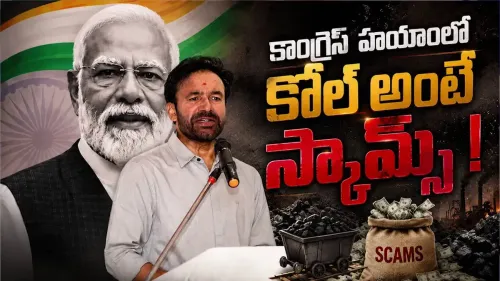
Union Coal and Mines Minister G. Kishan Reddy accused Rahul Gandhi of losing political judgement, arguing Congress praises the Election Commission when it wins and blames EVMs when it loses — a charge the BJP has deployed repeatedly since 2019.
Key Takeaways
Kishan Reddy attacked Rahul Gandhi on September 27, 2026 for remarks about the Election Commission of India and EVMs .
He accused Congress of praising electoral institutions after wins and attacking them after losses.
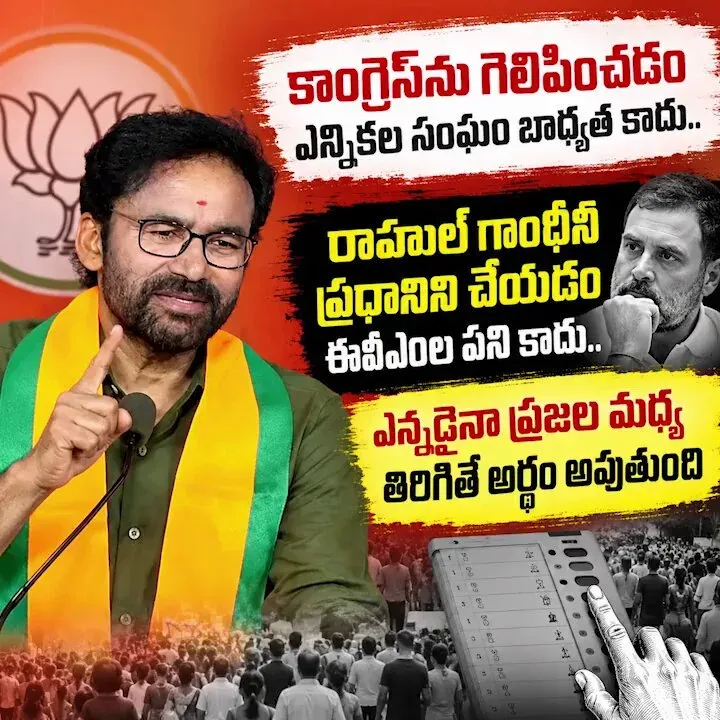
Kishan Reddy stated it is not the Election Commission's job to get Congress elected, nor EVMs' duty to make Rahul Gandhi Prime Minister.
The BJP's rebuttal follows a pattern seen since the 2019 Lok Sabha elections , when Congress first publicly questioned EVM reliability after defeat.
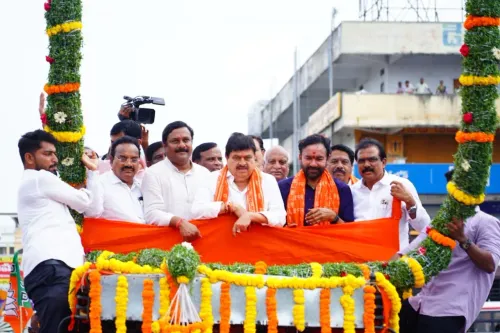
As BJP Telangana state president , Kishan Reddy's attack carries both national and state-level political resonance.
Every time the Congress loses, the Election Commission becomes the villain — and every time it wins, the same institution is suddenly flawless. Union Coal and Mines Minister G. Kishan Reddy fired that pointed charge at Rahul Gandhi on Sunday, September 27, 2026, accusing the Congress leader of losing political judgement in his public remarks about electoral institutions.
The double-standard accusation Kishan Reddy is levelling
Posting in Telugu, Kishan Reddy stated: 'కాంగ్రెస్ పార్టీ గెలిస్తే ఎన్నికల సంఘం చాలా బాగా పనిచేసినట్టు, కాంగ్రెస్ పార్టీ ఓడిపోతే ఎలక్షన్ కమిషన్ సరిగ్గా పని చేయలేదు' — ['When Congress wins, the Election Commission worked very well; when Congress loses, the Election Commission did not work properly']. The BJP minister argued that Congress applies a selective yardstick: praise for the Election Commission of India when results favour the party, and accusations of malfunction when they do not.
Kishan Reddy sharpened the critique further, saying it is not the Election Commission's responsibility to get the Congress party elected, and that the EVMs carry no obligation to make Rahul Gandhi the Prime Minister. His message: go among the people and understand reality, rather than blaming the machinery of democracy.
A well-worn script in Indian politics
This is not the first time this argument has surfaced. After the 2019 Lok Sabha elections, Congress leaders publicly questioned EVM reliability and demanded a return to paper ballots following their defeat. The pattern has repeated itself across multiple national and state contests — losing parties challenge the machines, winning parties defend the institutions. Kishan Reddy's post is the BJP's latest, crisp articulation of that rebuttal.
As BJP's Telangana state president, Kishan Reddy carries a particular political stake in this debate. Telangana has been a contested battleground between the BJP, Congress, and regional forces, making attacks on Congress credibility a consistent strategic tool for the state unit.
What it means for the opposition's EVM narrative
The broader political arithmetic is straightforward: every time a major opposition voice raises the EVM question, the ruling party frames it not as a legitimate institutional concern but as a loser's grievance. By tying the critique directly to Rahul Gandhi's prime ministerial ambitions, Kishan Reddy escalates the attack from process to persona — a deliberate rhetorical move that shifts the conversation from 'are EVMs reliable?' to 'is Rahul Gandhi ready to accept democratic outcomes?'
Whether the Election Commission issues any fresh clarification on EVM audits, or whether the Congress responds formally, will determine how long this exchange stays in the news cycle — but the underlying argument is one Indian democracy has been having for years, and shows no sign of resolution.
Point of View
Making the challenger look undemocratic rather than vigilant. By personalising the argument around Rahul Gandhi's prime ministerial ambitions, the BJP escalates the stakes from a procedural debate to a question of leadership credibility. This tactic has proven durable since 2019 — it sidesteps substantive discussion of EVM auditability by placing the burden of proof on the loser. With state elections on the horizon, expect this framing to intensify as each side works to define whose version of 'democratic faith' voters accept.
NationPress
27 Sept 2026
Frequently Asked Questions
What did G. Kishan Reddy say about Rahul Gandhi and the Election Commission?
Kishan Reddy accused Rahul Gandhi of applying a double standard — calling the Election Commission excellent when Congress wins and blaming EVMs when it loses. He said it is not the EC's job to get Congress elected or to make Rahul Gandhi the Prime Minister.
Why is Rahul Gandhi criticising the Election Commission?
According to Kishan Reddy's post, Rahul Gandhi made remarks questioning the Election Commission's functioning, reportedly linked to electoral losses. The specific recent remarks cited in the post fall after publicly available records and have not been independently verified.
Has Congress questioned EVMs before?
Yes. After the 2019 Lok Sabha elections , senior Congress leaders publicly demanded a return to paper ballots and questioned EVM reliability following their defeat, establishing a precedent the BJP references repeatedly.
Who is G. Kishan Reddy?
G. Kishan Reddy is the Union Minister of Coal and Mines in the Government of India and serves as the BJP's Telangana state president .
What is the BJP's standard response to EVM criticism?
The BJP consistently argues that opposition parties accept election results when they win but blame the machines and the Election Commission when they lose, framing EVM criticism as an unwillingness to accept democratic outcomes.