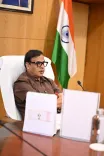
Kishan Reddy fires back at Rahul Gandhi over EC, 'vote chori' row
Synopsis
Union Minister G. Kishan Reddy on 25 September 2026 issued a detailed rebuttal of Rahul Gandhi's allegations against the Election Commission, countering 'vote chori' claims with data from Tamil Nadu, Kerala and West Bengal, and accusing Congress of real mandate-theft through Telangana defections.
Key Takeaways
Kishan Reddy responded sharply to Rahul Gandhi 's 'deshdrohi' remark against PM Modi and Home Minister Shah, calling it a sign Gandhi has 'lost his balance.' Reddy cited the Supreme Court 's upholding of a Telangana MLA's disqualification for defecting to Congress on the very day Gandhi lectured on democracy.
He alleged ten MLAs elected on other party tickets were absorbed into Congress in Telangana under Gandhi and CM Revanth Reddy , calling it 'the real vote chori.' Reddy used results from Tamil Nadu, Kerala and West Bengal to argue the SIR voter-roll revision was not a BJP electoral tool, noting Trinamool Congress won 13 of 20 affected seats in Bengal.
He recalled that Congress gave former Chief Election Commissioner Dr.
Gill a Rajya Sabha seat and ministerial post, undermining its claim of defending EC independence.
Gandhi's comparison of Indian voters to those of Iraq and North Korea was called 'an insult' to the over 92 per cent of West Bengal voters who turned out to cast their ballots.
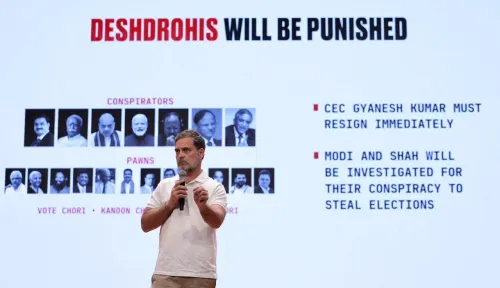
When the Leader of the Opposition calls an elected Prime Minister and Home Minister 'deshdrohi' (traitors), the ruling party's response rarely stays polite — and on Friday, 25 September 2026, Union Coal and Mines Minister G. Kishan Reddy delivered one of the sharpest BJP counter-offensives in recent memory, dismantling Rahul Gandhi's allegations against the Election Commission of India point by point and turning the spotlight squarely on Congress's own record on defections and institutional credibility.
The 'deshdrohi' remark and Kishan Reddy's counter-charge
The trigger was a press conference at which Gandhi reportedly labelled Prime Minister Narendra Modi and Home Minister Amit Shah as 'deshdrohi' — traitors to the nation. Reddy was withering: 'Using such language against leaders elected by crores of Indians shows that Shri Rahul Gandhi has lost not just election after election but also his balance.' He went further, suggesting Gandhi 'get a mental check-up' before his next press conference — a line that will itself generate its own news cycle.
The broader charge Reddy lodged, however, carries more political weight: that Gandhi's selective trust in India's constitutional institutions — warm embrace when Congress wins, scorched-earth criticism when it loses — represents a deliberate strategy to erode public faith. 'Today it is the Election Commission. Yesterday it was the Supreme Court,' Reddy wrote, framing the pattern as institutional vandalism rather than principled dissent.
Telangana defections and the Supreme Court's own words
Reddy's most forensic blow came on the Tenth Schedule. He pointed out that the very day Gandhi chose to lecture the nation on democracy, the Supreme Court of India upheld the disqualification of a Telangana MLA who had defected to the Congress — a ruling Reddy argued Gandhi owed an apology for, not a democracy sermon. The Tenth Schedule, inserted into the Constitution in 1985, was designed precisely to deter the kind of post-poll horse-trading that Reddy accused Congress of orchestrating in Telangana after it formed government there.
He alleged that ten MLAs elected on other parties' tickets were brought into Congress under the leadership of Gandhi and Telangana Chief Minister Revanth Reddy — and that one of them even contested a Lok Sabha seat on a Congress ticket while still holding the MLA position of a rival party. 'The people of those constituencies voted for one party; the Congress took their mandate for itself. That is the real vote chori,' Reddy declared.
The SIR defence: Tamil Nadu, Kerala, and West Bengal
Gandhi had alleged that the Special Intensive Revision (SIR) of voter rolls was a BJP tool for 'vote chori'. Reddy's rebuttal was geographic and blunt. In Tamil Nadu, where the SIR was conducted, the BJP did not win — a rival party formed the government. In Kerala, the SIR also ran its course, and the Congress-led UDF came to power — with a Congress MLA from the state publicly acknowledging that the revision removed fake voters and helped his own party. In West Bengal, Reddy noted, the Trinamool Congress won 13 of the 20 constituencies where the most names were struck off voter rolls; the BJP won only six. 'SIR cannot be a conspiracy in Bengal and a blessing in Kerala,' he wrote. The rhetorical logic is tight: if the SIR were a BJP instrument, the BJP would have won where it was applied.
Congress's own Election Commission history
Reddy saved a sharp historical volley for last. He recalled that Congress ignored its own Chief Election Commissioner's recommendation to remove a Commissioner for partisanship — and that same Commissioner then presided over the 2009 general election, which Congress won. He named former Chief Election Commissioners Dr. M. S. Gill — who became a Congress Rajya Sabha MP and Union Minister — and T. N. Seshan, whom Gandhi himself had cited as a model of impartiality, and who once contested a Lok Sabha election on a Congress ticket. 'The party with this record is in no position to lecture anyone on the independence of the Election Commission,' Reddy wrote.
He also flagged the National Herald case, noting that Congress leaders including Gandhi are out on bail, and pointed to the party's record of questioning armed forces' valour and the sacrifices of soldiers and paramilitary personnel. The cumulative picture Reddy painted: a party systematically attacking every institution that does not deliver a verdict in its favour.
Gandhi's Iraq-North Korea comparison draws specific rebuke
One remark from Gandhi's press conference drew a pointed standalone response from Reddy: Gandhi's alleged comparison of Indian voters standing in election queues to the people of Iraq and North Korea. 'Comparing them to the people of Iraq and North Korea by Shri Rahul Gandhi is an insult to every one of them,' Reddy wrote, noting that more than 92 per cent of voters in West Bengal turned out to vote this year. He closed with a warning: 'If he does not mend his ways, the people will once again teach him a befitting lesson at the ballot box.'
The exchange lays bare the central fault line of Indian democratic politics heading into the next electoral cycle — who controls the narrative on institutional trust, and whether the opposition's assault on the Election Commission lands with ordinary voters or simply energises the ruling party's base.
Point of View
The party attempts to make Congress's own conduct the story on the very day Gandhi sought to dominate headlines. The exchange also reveals how the Election Commission's independence has become the central electoral battlefield ahead of multiple state polls, with both sides competing to own the 'pro-voter' credential. Historically, ruling parties that successfully tie opposition EC criticism to the opposition's own institutional manipulation tend to neutralise the charge with swing voters — but the sharpness of Reddy's personal language risks overshadowing the substantive arguments.
NationPress
25 Sept 2026
Frequently Asked Questions
Why did G. Kishan Reddy attack Rahul Gandhi over the Election Commission?
Kishan Reddy responded after Rahul Gandhi alleged 'vote chori' by the BJP through the Special Intensive Revision of voter rolls and called PM Modi and Home Minister Shah 'deshdrohi.' Reddy rebutted with data showing the SIR did not exclusively benefit the BJP, and accused Congress of actual mandate-theft through post-poll defections in Telangana.
What is the Telangana MLA defection case Kishan Reddy mentioned?
After Congress formed its government in Telangana, a number of MLAs elected on other parties' tickets reportedly crossed over to Congress. The Supreme Court upheld the disqualification of at least one such MLA under the Tenth Schedule anti-defection law — and Reddy highlighted this ruling came on the same day Gandhi chose to address a press conference on electoral democracy.
What is the Special Intensive Revision (SIR) of voter rolls?
The SIR is a process conducted by the Election Commission of India to update and clean voter rolls by removing ineligible or fake voters and adding eligible ones. Gandhi alleged it was used to delete opposition voters; Reddy countered that in states like Kerala, Congress won after the SIR, and a Congress MLA there publicly credited it with removing fake voters.
What did Kishan Reddy say about former Election Commissioners and Congress?
Reddy pointed out that Congress made former Chief Election Commissioner Dr. M. S. Gill a Rajya Sabha MP and Union Minister, and that former CEC T. N. Seshan — cited by Gandhi as a model of impartiality — once contested a Lok Sabha election on a Congress ticket, arguing this record disqualifies Congress from claiming it defends the EC's independence.
What is the National Herald case mentioned in the post?
The National Herald case is a legal matter involving the Associated Journals Limited publishing company. Kishan Reddy referred to it to note that Congress leaders, including Rahul Gandhi, are out on bail in connection with the case, framing it as part of a broader pattern of Congress accusing investigative agencies of bias whenever its own leaders face scrutiny.