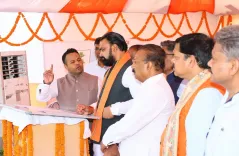
Kishan Reddy: NCDC Bill Widens Cooperative Funding Net
Synopsis
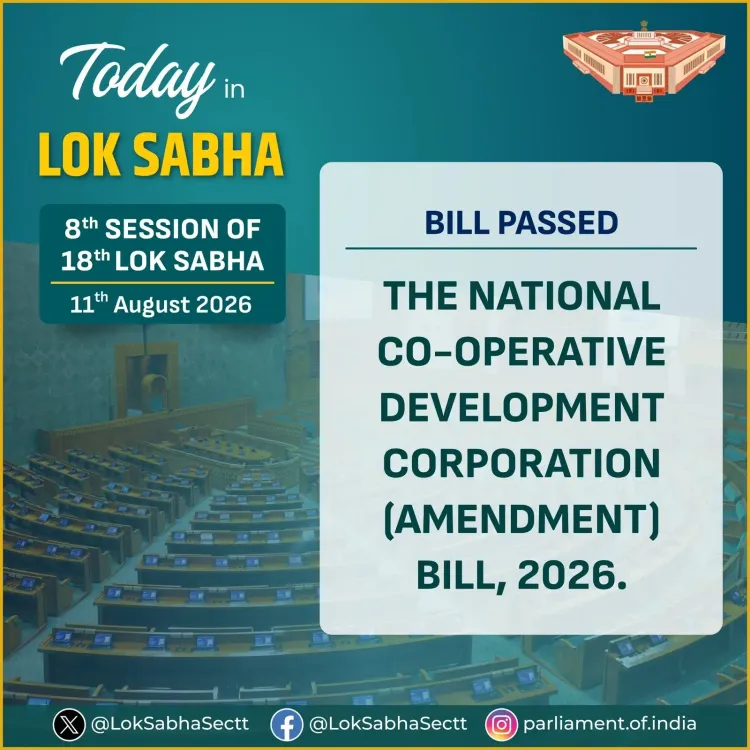
Parliament passed the NCDC (Amendment) Bill 2026 on 12 August, removing the restriction that limited NCDC financial assistance to registered cooperatives only. Union Minister G. Kishan Reddy highlighted Telangana's 60,000-plus cooperative societies and over Rs 1.16 lakh crore in past NCDC funding as proof of the reform's significance for the state's farmers.
Key Takeaways
Parliament passed the NCDC (Amendment) Bill 2026 on 12 August 2026 , allowing non-registered cooperative-sector entities to access NCDC financial assistance for the first time.
PM Narendra Modi created the Ministry of Cooperation on 6 July 2021 ; Amit Shah has held the portfolio since inception.
Telangana has received over Rs 1.16 lakh crore from NCDC over the past 12 years; Rs 37,000 crore was disbursed for the 2025-26 Kharif and Rabi seasons.
NCDC approved Rs 22,700 crore for the 2026-27 Rabi season in Telangana, with Rs 1,825 crore already released.
Telangana has over 60,000 cooperative societies , roughly 50,000 active , with more than one crore members — nearly 70 per cent in rural areas.
Paddy procurement NCDC sanctions for Telangana over the last three seasons totalled nearly Rs 60,000 crore , of which Rs 39,186 crore has been disbursed.
A legislative wall that had stood for decades came down on Wednesday, 12 August 2026, when Parliament passed the National Cooperative Development Corporation (Amendment) Bill 2026 — and Union Coal and Mines Minister G. Kishan Reddy, also the BJP Telangana state president, moved quickly to explain what it means for the state's farmers and rural economy.
Until now, only formally registered cooperative societies could access loans and financial support from the National Cooperative Development Corporation (NCDC). The amendment tears down that restriction. Organisations working within the cooperative sector but not formally registered will now be eligible for NCDC assistance — a shift that Kishan Reddy called 'a revolutionary reform' in strengthening the sector.
The 2021 foundation that made this moment possible
The bill did not arrive in a vacuum. On 6 July 2021, Prime Minister Narendra Modi created a dedicated Ministry of Cooperation — the first of its kind — to give the sector focused political and administrative attention. Union Home Minister Amit Shah has held the ministry's charge since its inception, steering a five-year push that included expanding NCDC operations, onboarding cooperative societies as buyers on the Government e-Marketplace (GeM) portal, and building a nationwide comprehensive database of cooperatives.
The 2026 amendment is the legislative capstone of that five-year arc — moving from administrative reform to statutory change that redraws who qualifies for central financial support.
What Telangana's 60,000-plus cooperatives stand to gain
Kishan Reddy anchored his post firmly in Telangana's numbers, and those numbers are striking. The state hosts over 60,000 cooperative societies, of which roughly 50,000 are actively functioning, together serving more than one crore members. Nearly 70 per cent of these societies operate in rural areas — making the cooperative network, in effect, a backbone of the agrarian economy.
The minister cited the NCDC's existing financial relationship with the state to underscore the scale of the opportunity. Over the past 12 years, Telangana has received over Rs 1.16 lakh crore from NCDC. For the combined 2025-26 Kharif and Rabi seasons, Rs 37,000 crore was sanctioned and disbursed. For the 2026-27 Rabi season, NCDC has approved Rs 22,700 crore, of which Rs 1,825 crore has already been released. Paddy procurement alone across the last three seasons drew nearly Rs 60,000 crore in NCDC sanctions, with Rs 39,186 crore already disbursed.
With the amendment now law, entities in the cooperative space that previously fell outside NCDC's eligibility boundary can access this funding pipeline — widening the circle of beneficiaries at a time when rural credit access remains a persistent challenge.
Farmers at the centre of the reform argument
Kishan Reddy's post frames the reform explicitly around agricultural welfare: stronger cooperatives mean better price realisation for farmers' produce and improved incomes. The argument is structural — when the organisations that aggregate and market farm output are better capitalised, the farmer at the end of the chain captures more value.
For Telangana, where cooperative societies are concentrated in villages and their membership runs into crores, a wider NCDC mandate is not an abstract policy win. It is a direct expansion of the financial scaffolding that rural communities depend on each season.
Parliament has voted. The rules that follow will determine how fast that scaffolding reaches those who need it most.
Point of View
Converting administrative intent into statutory entitlement for a wider class of organisations. By removing the registered-society filter, the Centre is betting that expanding the eligibility net will deepen rural credit penetration faster than incremental reforms could. For the BJP, Kishan Reddy's detailed Telangana-specific breakdown — lakh-crore figures, active society counts, farmer income framing — signals a deliberate effort to translate a national legislative win into state-level political capital ahead of any future electoral cycle. The real test will be in implementation: whether funding guidelines for newly eligible entities arrive quickly and whether state-level cooperative infrastructure can absorb and deploy the expanded mandate.
NationPress
12 Aug 2026
Frequently Asked Questions
What does the NCDC Amendment Bill 2026 change?
The amendment allows organisations working in the cooperative sector but not formally registered as cooperative societies to access financial assistance from the National Cooperative Development Corporation (NCDC), removing a long-standing eligibility restriction.
When was India's Ministry of Cooperation created and who runs it?
The Ministry of Cooperation was created on 6 July 2021 by PM Narendra Modi to give dedicated attention to the sector. Union Home Minister Amit Shah has held the portfolio since its formation.
How much NCDC funding has Telangana received?
Over the past 12 years, Telangana has received over Rs 1.16 lakh crore from NCDC. For 2025-26 Kharif and Rabi seasons combined, Rs 37,000 crore was sanctioned and disbursed.
How many cooperative societies are there in Telangana?
Telangana has over 60,000 cooperative societies , of which approximately 50,000 are actively functioning , with a combined membership of over one crore people. About 70 per cent are in rural areas.
How will the NCDC amendment benefit Telangana farmers?
By widening eligibility for NCDC financial support to non-registered cooperative-sector entities, the amendment strengthens the organisations that aggregate and market farm produce, potentially improving price realisation and incomes for Telangana's rural farmers.