Kishan Reddy: PM Modi Opens Bhogapuram Airport in AP

Synopsis
Prime Minister Modi inaugurated the Alluri Sitarama Raju International Airport at Bhogapuram, Vizianagaram on 1 August 2026. Built at ₹5,641 crore across 2,700 acres with a 3,800-metre runway and 60-lakh annual passenger capacity, the greenfield airport is set to transform the economy of North Andhra and anchor the Vizag-Chennai Industrial Corridor.
Key Takeaways
PM Narendra Modi inaugurated the Alluri Sitarama Raju International Airport at Bhogapuram, Vizianagaram on 1 August 2026 .
The airport cost ₹5,641 crore and spans 2,700 acres , with a 3,800-metre runway and annual capacity for 60 lakh passengers .
Cargo infrastructure can handle 20,000 metric tonnes per year, aided by proximity to Visakhapatnam port for international logistics.
The facility is a key node in the Vizag-Chennai Industrial Corridor , expected to boost tourism, IT, and manufacturing across Visakhapatnam, Vizianagaram, and Srikakulam districts.
The airport is named after freedom fighter Alluri Sitarama Raju and features a terminal shaped like a flying fish , engineered to withstand winds up to 275 km/h .
Over 1,000 employees will work at the facility, with thousands more indirect jobs expected in the broader North Andhra region.
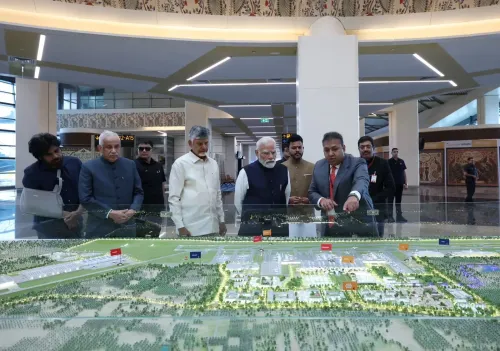
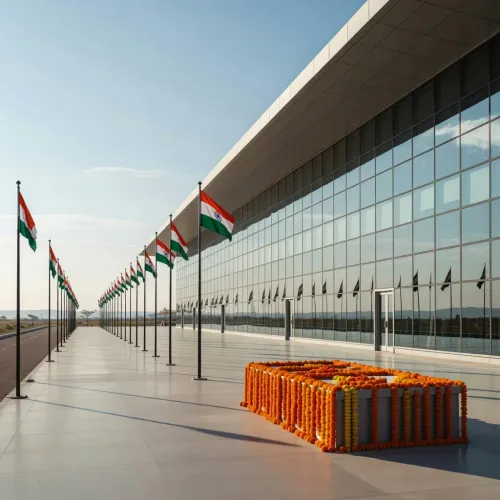
A new international airport has landed on India's eastern coast — and Union Coal and Mines Minister G. Kishan Reddy says it will redraw the economic map of North Andhra Pradesh. Prime Minister Narendra Modi on Saturday, 1 August 2026, formally inaugurated the Alluri Sitarama Raju International Airport at Bhogapuram in Vizianagaram district, marking a landmark moment for a region that has long waited for world-class air connectivity.
A Flying Fish on the Ground — What Bhogapuram Brings
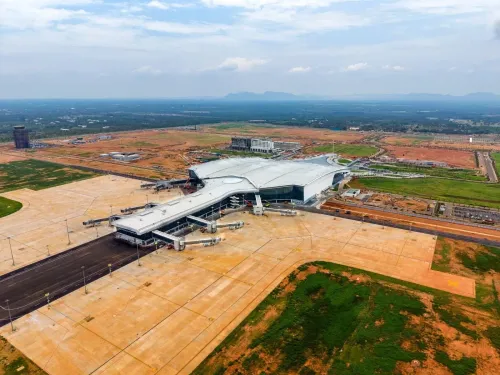
The airport's terminal is built in the shape of a flying fish — a nod to the coastal identity of the region — and is engineered to withstand winds of up to 275 km/h. Spread across 2,700 acres, the facility was built at a cost of ₹5,641 crore and features a 3,800-metre runway, capable of handling wide-body international aircraft. At full capacity, it is designed to serve 60 lakh (6 million) passengers annually.
The infrastructure goes beyond passengers. The airport is equipped to handle 20,000 metric tonnes of cargo per year, staffed by over 1,000 employees, and fitted with a modern ATC tower, advanced navigation and landing systems, self-baggage drop facilities, and automated baggage handling — a spec sheet that puts it firmly in the league of India's newer greenfield airports.
Visakhapatnam, Vizianagaram, Srikakulam — Three Districts, One Inflection Point
Kishan Reddy underscored that the airport's impact will radiate across the Uttarandhra belt — the districts of Visakhapatnam, Vizianagaram, and Srikakulam. Thousands of direct and indirect jobs for youth are expected, with tourism, IT, and manufacturing sectors flagged as primary beneficiaries. The airport's proximity to the Visakhapatnam port is particularly significant: international cargo logistics, which previously had to route through distant hubs, will now have a far shorter last-mile to the sea.
The airport is also positioned as a critical node in the Vizag-Chennai Industrial Corridor, one of India's designated eastern-coast manufacturing belts. Linking air, sea, and road freight in a single geography is precisely the multimodal logic that industrial corridor planners have pursued — and Bhogapuram slots into that design.
Named for a Freedom Fighter, Built for a Future Economy
The airport carries the name of Alluri Sitarama Raju, the early 20th-century tribal freedom fighter from Andhra Pradesh who led the Rampa Rebellion (1922–24) against British rule. Naming a major piece of national infrastructure after him is both a cultural statement and a political signal to the region's communities.
The inauguration fits into India's sustained push to build greenfield airports beyond the four or five legacy metros. From the UDAN regional connectivity scheme launched in 2016 to a string of new terminals across coastal and interior states, the pattern is consistent: airports as anchors for broader economic zones, not just transit points. Bhogapuram is the latest — and among the most ambitious — expression of that strategy.
The real test begins now: when the first scheduled international flight lifts off from that 3,800-metre runway, and whether the industrial and cargo investment the corridor promises actually follows the tarmac.
Point of View
However, will be cargo throughput and flight volumes in the next 24 months — numbers that will either validate the investment or expose it as underutilised greenfield.
NationPress
1 Aug 2026
Frequently Asked Questions
Where is Bhogapuram airport located?
Bhogapuram airport is located in Vizianagaram district , Andhra Pradesh, on the northern coastal belt of the state, roughly between Visakhapatnam and Srikakulam.
What is the cost of Bhogapuram international airport?
The airport was built at a cost of ₹5,641 crore and spreads across 2,700 acres .
Why is the Bhogapuram airport named after Alluri Sitarama Raju?
Alluri Sitarama Raju was a celebrated freedom fighter from Andhra Pradesh who led the Rampa Rebellion against British rule in the early 1920s. Naming the airport after him honours his legacy and connects a major piece of national infrastructure to the region's history.
What is the passenger capacity of Bhogapuram airport?
The airport is designed to handle up to 60 lakh (6 million) passengers per year , with a 3,800-metre runway capable of accommodating wide-body international aircraft.
How will Bhogapuram airport help the Vizag-Chennai Industrial Corridor?
The airport serves as a multimodal logistics node, combining air freight capacity of 20,000 metric tonnes annually with proximity to Visakhapatnam port , enabling seamless cargo movement along the Vizag-Chennai Industrial Corridor and attracting manufacturing and IT investment to North Andhra.