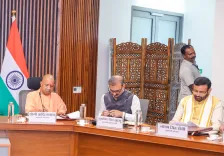
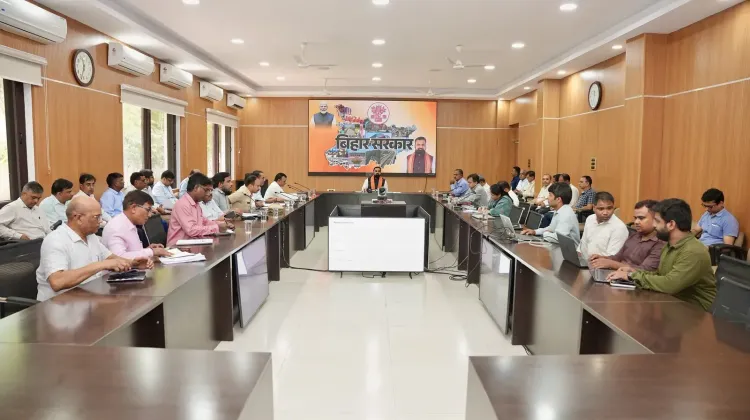
CM Nitish Orders Vending Zones on Nehru Path to Ease Traffic
Synopsis
Bihar CM Nitish Kumar has directed authorities to identify suitable vending zones on Patna's Nehru Path and improve coordination among departments to regulate traffic, invoking the framework of the Street Vendors Act, 2014.
Key Takeaways
Bihar CM Nitish Kumar directed identification of appropriate vending zones on Nehru Path , Patna, to ease traffic congestion.
The order also calls for improved coordination among relevant departments and agencies responsible for civic and traffic management.
The directive aligns with the Street Vendors (Protection of Livelihood and Regulation of Street Vending) Act, 2014 , which mandates urban local bodies to notify vending zones.
Patna Municipal Corporation is expected to follow up with specific zone notifications on the ground.
The move attempts to balance vendor livelihoods with commuter rights on one of Patna's most congested arterial roads.
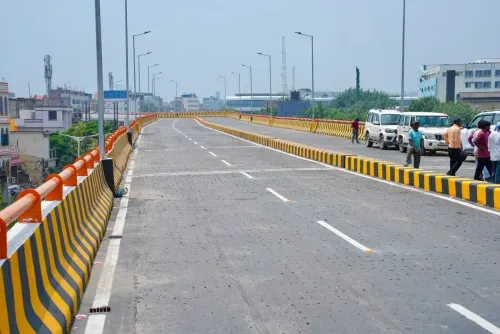
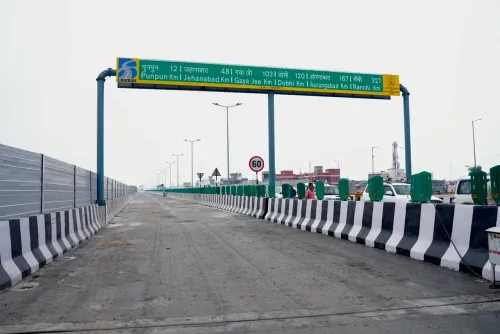
Patna's busiest arterial road is getting a civic intervention. Bihar Chief Minister Nitish Kumar has directed authorities to identify suitable vending zones along Nehru Path in Patna and strengthen coordination among relevant departments and agencies to keep traffic on the corridor moving smoothly.
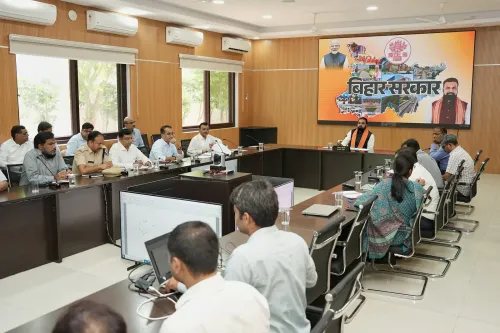
The Chief Minister's Office shared the directive on 1 August 2026, stating that Nitish Kumar issued instructions to demarcate appropriate vending spaces on Nehru Path — a major road in Patna long associated with congestion caused by roadside hawkers — while also calling for better inter-departmental coordination among the agencies responsible for enforcement and civic management.
The 2014 Law Bihar Must Now Follow Through On
The directive lands squarely within the framework of the Street Vendors (Protection of Livelihood and Regulation of Street Vending) Act, 2014, a central law that obligates urban local bodies to survey their jurisdictions, identify vending zones, and issue certificates to eligible vendors. The law was designed to end the cycle of arbitrary evictions while simultaneously clearing encroachments from public roads. Compliance across Indian cities has been uneven.
Patna Municipal Corporation will now be expected to follow up with specific zone notifications. The CM's instruction to improve coordination signals an acknowledgement that the bottleneck on Nehru Path is not just a traffic problem — it is a governance problem requiring multiple agencies, from traffic police to the municipal body, to act in concert rather than in silos.
Nehru Path's Chronic Congestion Problem
Nehru Path has featured repeatedly in Patna's civic discourse as a flashpoint for vendor-related encroachment and peak-hour gridlock. The road's commercial character makes it a natural draw for street vendors, but without designated zones, hawking spills onto carriageways and footpaths alike. Commuters and vendors have long coexisted in an uneasy, unregulated standoff.
By ordering the identification of 'appropriate' vending zones — rather than a blanket crackdown — the CM's directive attempts to balance the livelihoods of street vendors with the movement rights of the city's commuters. That balance is precisely what the 2014 Act was legislated to achieve.
Whether this directive translates into notified zones on the ground, or joins a long list of civic instructions that stall in inter-departmental limbo, is the real test ahead for Patna's urban administration.
Point of View
Yet most cities have failed to fully demarcate and notify vending zones, leaving enforcement agencies to improvise. By naming a specific road and calling for inter-departmental coordination, CM Nitish Kumar is applying administrative pressure to a compliance gap that has persisted for over a decade. For Bihar, where Nitish Kumar has built his political brand around law-order and infrastructure, visible action on Patna's civic disorder serves both a governance and an electoral optic. The real measure of success will be whether Patna Municipal Corporation produces notified zones — or whether this remains a directive without a deadline.
NationPress
15 Sept 2026
Frequently Asked Questions
Why is CM Nitish Kumar ordering vending zones on Nehru Path?
CM Nitish Kumar ordered the identification of suitable vending zones on Nehru Path in Patna to regulate roadside vending, reduce traffic congestion, and ensure better coordination among departments responsible for civic and traffic management.
What is the Street Vendors Act 2014 and how does it apply here?
The Street Vendors (Protection of Livelihood and Regulation of Street Vending) Act, 2014 is a central law that requires urban local bodies to survey their areas, identify vending zones, and issue certificates to eligible vendors. Bihar's directive aligns with this legal obligation for Patna Municipal Corporation.
What is Nehru Path in Patna?
Nehru Path is a major arterial road in Patna, Bihar, that has long been associated with traffic congestion linked to roadside vending and encroachment on carriageways and footpaths.
What happens after the CM's directive on vending zones?
Following the directive, Patna Municipal Corporation and related departments are expected to survey Nehru Path, identify appropriate vending zones, and issue formal notifications — steps required under the 2014 Street Vendors Act.
How does this affect street vendors in Patna?
Rather than ordering a crackdown, the directive aims to designate legal vending spaces, which would protect vendors' livelihoods under the 2014 Act while also clearing encroachments that disrupt traffic flow on Nehru Path.