Kishan Reddy pushes timely execution of Telangana tourism infra
Synopsis
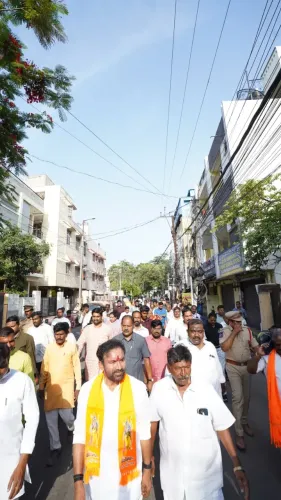
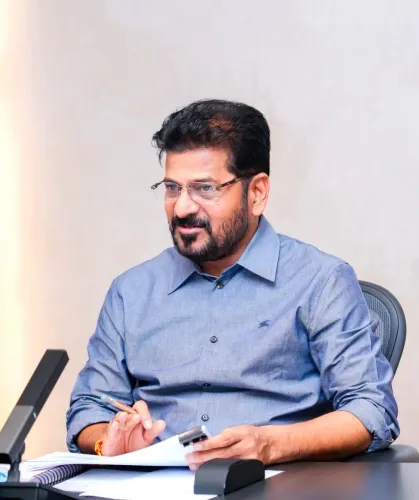
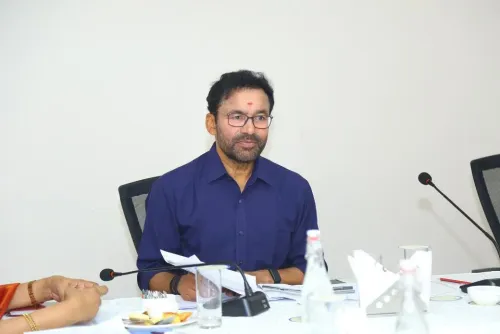
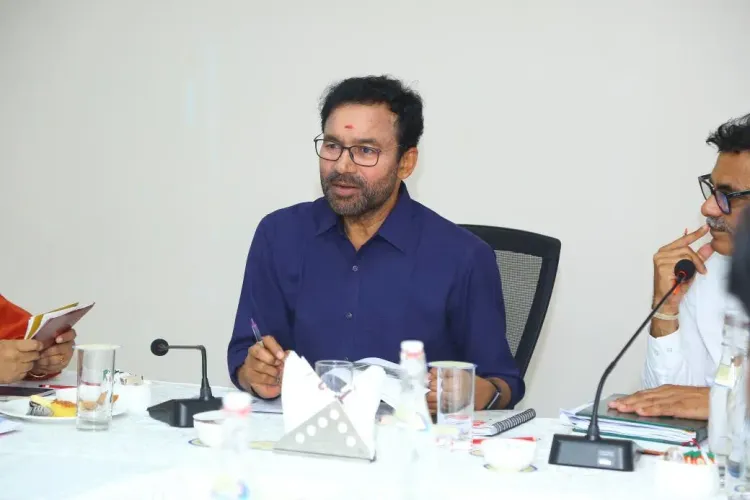
Union Minister G. Kishan Reddy chaired a review meeting on 4 July 2026, stressing timely execution of Telangana's spiritual, heritage, and eco-tourism infrastructure projects, with MP K. Vishweshwar Reddy and officials from ASI and the Ministry of Tourism in attendance.
Key Takeaways
Kishan Reddy held a review meeting on 4 July 2026 focused on Telangana's tourism infrastructure.
Vishweshwar Reddy joined the meeting, reflecting parliamentary-level engagement in project oversight.
The meeting involved central agencies including the Archaeological Survey of India and the Ministry of Tourism .
The minister stressed 'timely execution and coordinated efforts' across spiritual, heritage, and eco-tourism sectors.
Projects fall under the Swadesh Darshan 2.0 and PRASAD schemes, both launched in 2014-15 .
Telangana's tourism assets — including a UNESCO World Heritage Site — remain central to the state's economic diversification agenda.
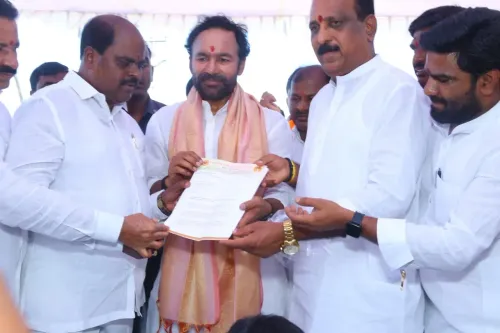
Union Coal and Mines Minister G. Kishan Reddy on Saturday, 4 July 2026, emphasised timely execution and coordinated efforts to strengthen Telangana's spiritual, heritage, and eco-tourism infrastructure, sharing details of a review meeting that also included Member of Parliament K. Vishweshwar Reddy. The meeting brought together stakeholders from central tourism and heritage bodies to assess the state of ongoing projects.
Context
Kishan Reddy, who also serves as BJP Telangana state president, has been actively involved in coordinating central government support for the state's infrastructure and tourism sectors. His post tagged the Archaeological Survey of India (ASI), the Ministry of Tourism, and the state's official tourism handle @TravelTelangana, signalling a multi-agency approach to the review. MP K. Vishweshwar Reddy, representing a Telangana constituency, joined the deliberations, underlining the parliamentary interest in accelerating project delivery.
The minister's emphasis on 'timely execution' points to a broader push to move tourism infrastructure projects from planning to ground-level implementation. Coordination between the ASI, which manages heritage monument conservation, and the Ministry of Tourism, which funds tourist circuit development, is central to unlocking Telangana's cultural and ecological assets for visitors.
Policy Backdrop
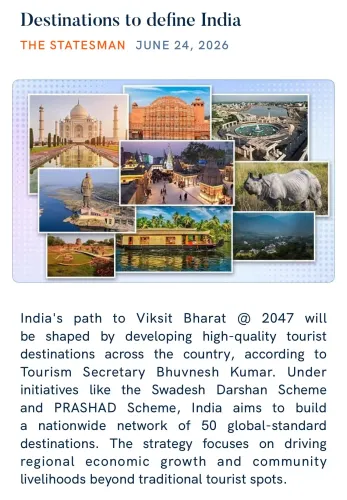
The meeting sits within the framework of two flagship central schemes. The Swadesh Darshan scheme, launched in 2014-15, funds theme-based tourist circuits covering heritage and eco-tourism destinations. Its successor, Swadesh Darshan 2.0, has shifted focus toward sustainable and responsible tourism, with an emphasis on local community integration and destination management.
The PRASAD scheme, also introduced in 2014-15, targets the integrated development of pilgrimage and heritage destinations — a direct fit for Telangana's network of temples, step-wells, and Qutb Shahi-era monuments. Together, these schemes provide the financial and institutional scaffolding within which state governments and central agencies are expected to co-execute projects.
Stakeholders and Impact
The tourism industry, local communities near heritage sites, and state-level hospitality businesses stand to benefit from improved infrastructure. Telangana has a diverse portfolio of tourism assets — from the Ramappa Temple (a UNESCO World Heritage Site) to forest eco-tourism corridors in Adilabad and Khammam districts — that remain underdeveloped relative to their potential.
Central ministries have increasingly used coordinated review meetings involving MPs and state tourism bodies as a monitoring mechanism to track scheme implementation. The inclusion of the ASI in this outreach is significant, as heritage conservation timelines often determine when a site can be formally opened or upgraded for tourist access.
What's Next
Attention will now turn to whether project-wise progress reports under Swadesh Darshan 2.0 reflect accelerated timelines for Telangana's identified circuits. Any fresh tourism outlays in the next Union Budget or in the Telangana state assembly session will be closely watched as a signal of how seriously the coordination discussed in this meeting translates into funding commitments. The minister's public post, tagging all key agencies, also functions as an accountability marker — placing the onus on each body to align its execution calendar.
Point of View
The Ministry of Tourism, and the state tourism body in a single post is a deliberate coordination signal — placing all three agencies on notice for delivery. As BJP's Telangana state president, he has a dual incentive: demonstrating central government responsiveness ahead of any electoral cycle, and building a visible record of infrastructure follow-through in a state the party is keen to consolidate. The emphasis on 'timely execution' rather than fresh announcements suggests the bottleneck is implementation, not funding. This fits a national pattern where scheme approvals outpace ground-level completion, and senior political figures are increasingly used as pressure valves to unblock stalled projects.
NationPress
3 Oct 2026
Frequently Asked Questions
What did G. Kishan Reddy say about Telangana tourism?
Kishan Reddy emphasised timely execution and coordinated efforts to strengthen Telangana's spiritual, heritage, and eco-tourism infrastructure at a review meeting held on 4 July 2026.
Which MP attended the Telangana tourism meeting with Kishan Reddy?
MP K. Vishweshwar Reddy, representing a Telangana constituency, joined the review meeting alongside Union Minister G. Kishan Reddy.
What central schemes cover Telangana's heritage and eco-tourism projects?
The Swadesh Darshan scheme and the PRASAD scheme, both launched in 2014-15, are the primary central frameworks funding heritage and pilgrimage tourism infrastructure in Telangana.
What is the role of ASI in Telangana's tourism development?
The Archaeological Survey of India is responsible for conservation of heritage monuments in Telangana, and its timelines directly affect when sites can be upgraded and opened for tourism.
What should we watch for after Kishan Reddy's tourism review meeting?
Project-wise progress reports under Swadesh Darshan 2.0 for Telangana circuits and any new tourism allocations in the Union Budget or state assembly session will indicate whether the review translates into accelerated delivery.