Kishan Reddy Shares Modi's Words on India's Innovation Legacy
Synopsis
Union Coal and Mines Minister G. Kishan Reddy shared a statement by Prime Minister Modi on X, highlighting India's millennia-old contributions to mathematics, astronomy, medicine and yoga as the bedrock of global human progress — a theme that underpins key education and cultural diplomacy policies.
Key Takeaways
Kishan Reddy , Union Coal and Mines Minister and BJP Telangana president, shared the post on Sunday, June 14, 2026 .
Prime Minister Modi is quoted as saying 'Innovation is in India's DNA,' citing contributions spanning mathematics, astronomy, medicine and yoga.
The National Education Policy 2020 mandates inclusion of Indian Knowledge Systems in school and higher-education curricula.
The International Day of Yoga was established by the United Nations in 2014 following India's initiative.
The narrative connects ancient Indian intellectual heritage to contemporary goals of self-reliance and global soft power.
Students, researchers and cultural diplomacy practitioners are the primary stakeholders of this policy framing.
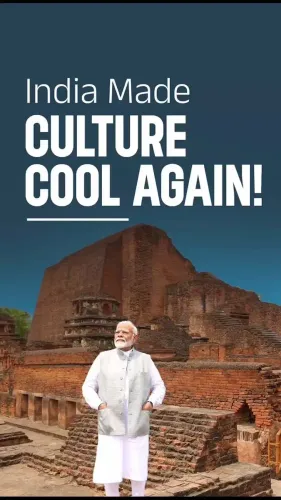
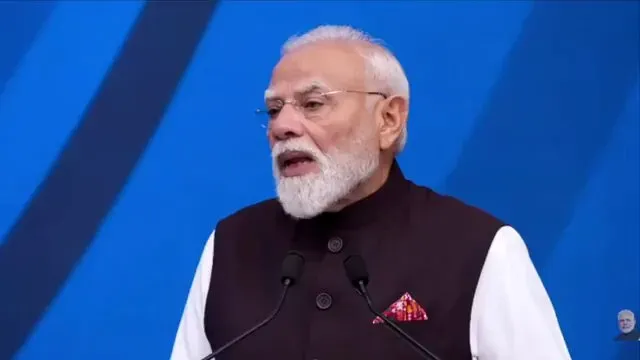
Union Coal and Mines Minister G. Kishan Reddy on Sunday, June 14, 2026 shared a statement by Prime Minister Narendra Modi on X, amplifying the Prime Minister's view that innovation is deeply embedded in India's civilisational identity and has guided global progress for millennia.
Context
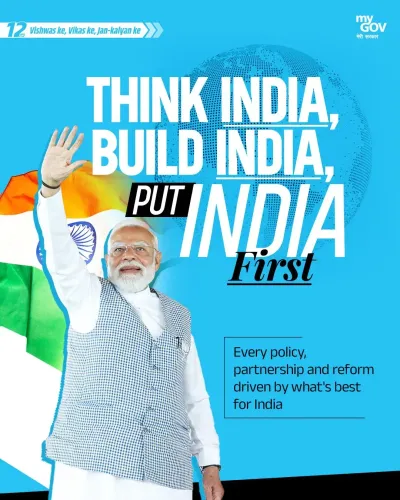
The post quotes Prime Minister Modi as saying, 'Innovation is in India's DNA. For thousands of years, India has guided the world through its knowledge and innovation. From mathematics to astronomy, from medicine to yoga, India's contributions have formed the foundation of humanity's progress and development.' Kishan Reddy, who also serves as BJP Telangana state president, shared the statement accompanied by a video, lending it wider reach among his followers.
The remarks draw on a well-established theme in Prime Minister Modi's public communication — positioning India's ancient intellectual heritage not as historical artefact but as an active resource for the nation's contemporary ambitions. The specific occasion or audience for the original remarks has not been officially confirmed.
Policy Backdrop
The cultural narrative echoed in the post has a clear policy footprint. The National Education Policy 2020 explicitly directed the inclusion of Indian Knowledge Systems in school and higher-education curricula, treating disciplines such as Ayurveda, classical mathematics and yogic studies as academically legitimate alongside modern science.
On the global stage, India's proposal to establish the International Day of Yoga was adopted by the United Nations in 2014, institutionalising one of the country's most recognised traditional practices as a worldwide wellness observance. These policy moves collectively reflect a deliberate effort to translate cultural heritage into soft power and domestic self-reliance.
Successive governments have framed ancient Indian advances — including the conceptualisation of zero, early algebra, astronomical calculations, and Ayurvedic medicine — as foundational contributions to humanity that position India as a knowledge civilisation rather than merely a developing economy.
Stakeholders and Impact
The primary audiences for this messaging are students and researchers, who stand to benefit most directly from curriculum reforms and funding directed toward Indian Knowledge Systems. Educators integrating traditional disciplines into modern research frameworks are at the frontline of translating this narrative into practice.
Cultural diplomacy practitioners and policymakers working on India's international image also have a stake in how this framing lands globally. By linking ancient achievements to present-day innovation goals, the government seeks to reinforce India's credentials as both a historic knowledge hub and an emerging technology power.
What's Next
Observers will watch for further ministerial statements connecting traditional knowledge to sector-specific research and development priorities. Upcoming international events such as the International Day of Yoga and heritage summits are likely occasions where this theme will be amplified further at both domestic and diplomatic levels.
The broader question is whether cultural messaging of this kind translates into measurable policy outcomes — increased research funding for traditional sciences, expanded university programmes, or formal international knowledge-sharing agreements — or remains primarily a vehicle for cultural diplomacy and national identity reinforcement.
Point of View
Kishan Reddy aligns his public profile with the Prime Minister's broader cultural diplomacy agenda. The recurring nature of this messaging suggests it is less a spontaneous reflection and more a coordinated effort to embed a particular reading of Indian history into mainstream policy discourse.
NationPress
20 Sept 2026
Frequently Asked Questions
What did PM Modi say about India's innovation heritage?
Prime Minister Modi stated that 'Innovation is in India's DNA,' citing India's ancient contributions to mathematics, astronomy, medicine and yoga as foundational to humanity's progress. The statement was shared on X by Union Minister G. Kishan Reddy on June 14, 2026.
Why did G. Kishan Reddy share PM Modi's statement on X?
As Union Coal and Mines Minister and BJP Telangana president, Kishan Reddy regularly amplifies Prime Minister Modi's messaging on social media. Sharing the statement extends its reach to his follower base and aligns his public communication with the party's cultural diplomacy narrative.
What is the National Education Policy 2020's link to Indian Knowledge Systems?
The National Education Policy 2020 directed that Indian Knowledge Systems — including classical mathematics, Ayurveda and yogic traditions — be integrated into school and higher-education curricula, giving institutional backing to the cultural narrative PM Modi articulated.
When was the International Day of Yoga established and why?
The United Nations established the International Day of Yoga in 2014 following an initiative by India to promote traditional wellness practices globally. It is observed every year on June 21 and is one of the most visible outcomes of India's cultural diplomacy efforts.
What are India's ancient contributions to global knowledge?
India's historically cited contributions include the conceptualisation of zero and early algebra in mathematics, advanced astronomical calculations, Ayurvedic medicine, and the philosophical and physical practices of yoga — all of which are referenced in official Indian government discourse as foundational to global civilisation.