Kishan Reddy Calls for Unity Against Divisive Forces
Synopsis
Union Coal and Mines Minister and BJP Telangana chief G. Kishan Reddy posted a strong call for national unity on October 20, 2026, urging citizens to stand together against forces threatening India's integrity, social cohesion, and cultural fabric.
Key Takeaways
Kishan Reddy , Union Minister of Coal and Mines and BJP Telangana state president, posted the message on October 20, 2026 .
He identified three distinct threats: forces weakening national unity and integrity, ideologies that create social divisions, and a mentality hostile to Indian culture.
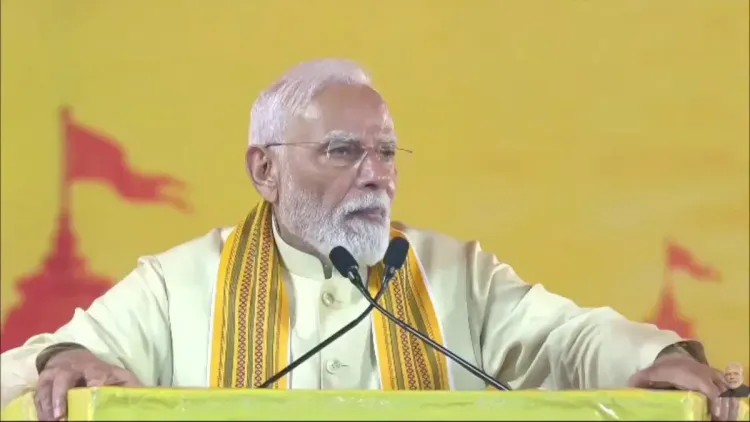
The post was written in Hindi and accompanied by a video, broadening its intended reach.
Reddy declared national interest 'paramount' and called unity among every citizen essential for the country's strength.
The statement reflects a recurring pattern in BJP political messaging, particularly relevant in Telangana where the party is in active competition with regional forces.
Forces that weaken national unity must be confronted — together. Union Coal and Mines Minister G. Kishan Reddy, who also serves as BJP Telangana state president, posted a sharp call to arms on X on Tuesday, October 20, 2026, urging every Indian citizen to stand united against ideologies that divide society and harbour hostility toward India's cultural heritage.
What Kishan Reddy Said — and Why It Lands Hard
Posting in Hindi, Reddy wrote: 'देश की एकता और अखंडता को कमजोर करने वाली ताकतों, समाज में विभाजन पैदा करने वाली सोच और हमारी संस्कृति से नफरत करने वाली मानसिकता के खिलाफ हमें एकजुट होकर खड़ा होना होगा।' — 'We must stand united against forces that weaken the unity and integrity of the country, against the thinking that creates divisions in society, and against the mentality that hates our culture.' He concluded: 'National interest is paramount, and it is essential for every citizen to remain united for the strength of the country.'
The statement identifies three distinct threats: structural forces targeting national integrity, ideological currents that deepen social fractures, and what Reddy calls a cultural hostility. By naming all three in a single breath, the message frames unity not as a sentiment but as an active, defensive posture.
Reddy's Dual Role — Minister and Telangana Party Chief
G. Kishan Reddy holds a uniquely layered political position. As a Union Cabinet minister overseeing Coal and Mines, his statements carry governmental weight. Simultaneously, as BJP Telangana state president, he is the party's point-person in a state where the BJP is locked in competition with the ruling BRS and a resurgent Congress — making calls to unity politically resonant at both national and regional levels.
Unity messaging of this kind is a well-established register in Indian political discourse, deployed across party lines to signal strength, consolidate a base, and draw a contrast with adversaries without naming them directly. The sharpness here lies in the specificity: Reddy does not speak in vague patriotic terms but calls out three distinct categories of threat — structural, ideological, and cultural — giving the statement more rhetorical edge than a routine call for harmony.
A Familiar Frequency, but the Volume Matters
Such messaging tends to intensify in periods of political contestation or ahead of significant electoral cycles. Without a confirmed trigger from the day's events, the post reads as both a statement of values and a mobilising signal — the kind of framing that parties deploy to keep their support base alert and cohesive.
What to watch: whether Reddy follows up with a speech, rally, or organisational event in Telangana that gives this post its concrete context, and whether opposition parties respond in kind.
Every generation of Indian political leaders has invoked national unity. The question is always the same: who gets to define the threat — and who answers the call.
Point of View
Ideological, cultural) gives it more analytical edge than routine patriotism. As Telangana party chief, Reddy is simultaneously speaking to a national audience and to a state-level base that the BJP is actively trying to consolidate against entrenched regional rivals. The absence of a named adversary is deliberate: broad framing maximises the coalition of those who feel addressed while minimising the political cost of specificity. Watch for whether this post precedes an organisational push or a rally that anchors it to a concrete moment.
NationPress
20 Oct 2026
Frequently Asked Questions
What did G. Kishan Reddy say in his October 2026 X post?
Kishan Reddy called on all Indians to stand united against forces that weaken national unity and integrity, against divisive ideological thinking, and against cultural hostility, stating that national interest is paramount.
Who is G. Kishan Reddy?
G. Kishan Reddy is the Union Minister of Coal and Mines in the Indian Cabinet and serves as the BJP's Telangana state president.
Why is Kishan Reddy calling for national unity?
His post does not cite a specific event, but frames the call as a response to forces threatening national integrity, social cohesion, and cultural identity — a recurring theme in his party's political messaging.
What is the significance of Kishan Reddy's role as BJP Telangana president?
As BJP Telangana state president, Reddy leads the party's efforts to expand in a state where it competes with the ruling BRS and Congress, making unity messaging politically strategic at both national and regional levels.
Is this a common type of statement from Indian political leaders?
Yes. Calls for national unity against divisive forces form a well-established pattern in Indian political discourse, often deployed by multiple parties to consolidate their support base and draw contrasts with opponents.