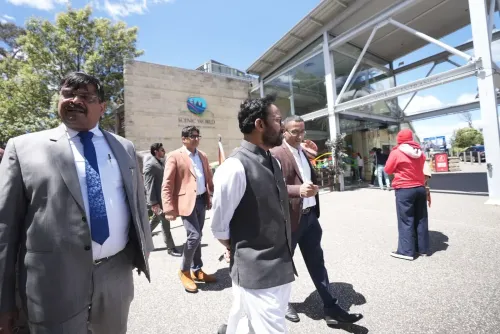
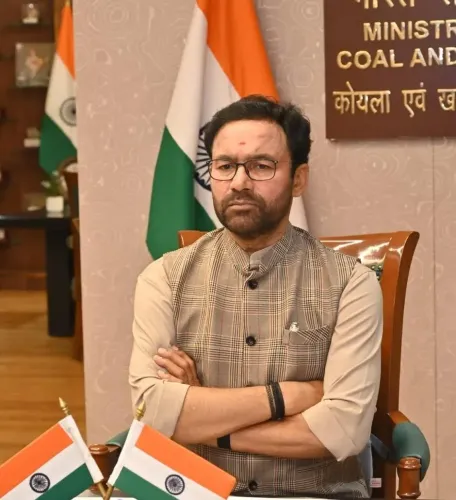
Kishan Reddy visits Scenic World, sees mines-to-tourism model
Synopsis
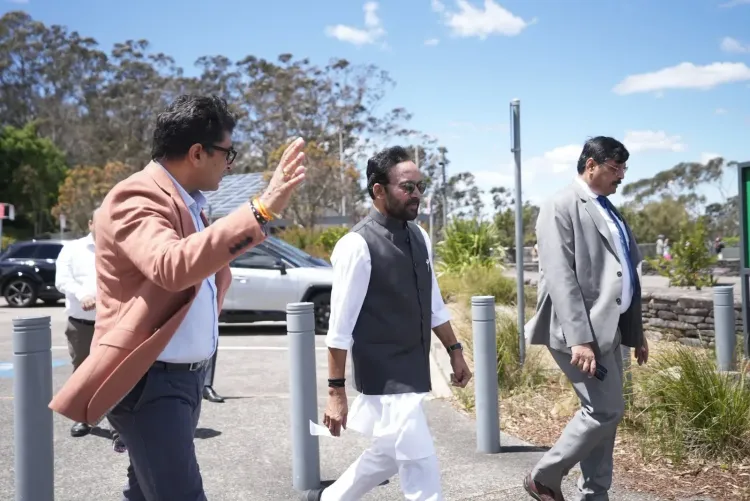
Union Coal and Mines Minister G. Kishan Reddy visited Scenic World in New South Wales, Australia — a former mining site converted into a world-class tourism destination — drawing a visible parallel to India's own mine-closure and rehabilitation challenges under the National Mineral Policy 2019.
Key Takeaways
Kishan Reddy visited Scenic World , New South Wales, Australia on October 28, 2026 , praising its post-mining tourism model.
Scenic World's signature incline railway was originally built for coal and shale workers before being repurposed for tourism.
Australia's New South Wales is one of the world's most documented examples of mine-closure followed by successful tourism redevelopment.
India's National Mineral Policy 2019 mandates mine closure planning and rehabilitation, though implementation remains uneven across major coal-belt states.
Indian policy discussions on just transition have previously referenced Australian rehabilitation models as international benchmarks.
Any follow-up announcement on Indian mine-site redevelopment inspired by the visit would be a significant policy signal.
A coal mine that once hummed with industrial life now draws visitors from across the world — and Union Coal and Mines Minister G. Kishan Reddy saw that transformation up close on Wednesday, October 28, when he visited Scenic World in New South Wales, Australia, calling the post-mining tourism redevelopment 'wonderful.'
In a post in Telugu, the minister wrote: 'ఇవాళ ఆస్ట్రేలియాలోని న్యూ సౌత్ వేల్స్ లోని సీనిక్ వరల్డ్ సందర్శించడం ఆనందాన్నిచింది' — 'Visiting Scenic World in New South Wales, Australia today was a joy. The way that region has been transformed into a world-class tourism destination after the mines closed is wonderful.'
What Scenic World represents for post-mining economies
Scenic World, perched above the Blue Mountains in New South Wales, is among the most documented examples of industrial-to-tourism conversion in the Southern Hemisphere. The site's famous incline railway was originally built to transport coal and shale workers deep into the mountainside; it now carries millions of tourists annually. The surrounding region, once defined by extraction, today earns its livelihood from visitors drawn to rainforest walks and canyon views.
Australia's experience is not accidental — it reflects decades of deliberate mine-closure planning, land rehabilitation, and investment in alternative economic anchors for communities left behind when pits shut. New South Wales in particular has tracked several such transitions, offering a living case study in what 'just transition' looks like on the ground.
India's own mine-closure challenge — and the international benchmark
The visit carries visible policy resonance. India's National Mineral Policy 2019 explicitly mandates mine closure planning and rehabilitation of affected areas — a framework that remains unevenly implemented across the country's vast coal belt. Hundreds of legacy mine sites, particularly in states like Jharkhand, Odisha, and Chhattisgarh, sit in various stages of closure or abandonment, with local communities bearing the economic fallout.
International 'just transition' discussions — including those within G20 frameworks that India has hosted and participated in — regularly cite Australian rehabilitation models as benchmarks worth replicating. A Coal and Mines minister witnessing that model firsthand puts concrete imagery behind what has largely remained a policy document.
What to watch from this visit
The key question is whether the Scenic World visit remains a personal observation or seeds a formal exchange. Any follow-up — a bilateral dialogue on mine rehabilitation, a pilot project announcement, or even a directional statement on repurposing India's closed collieries — would mark a meaningful policy signal. For now, the minister has registered the idea publicly and unmistakably: mines can close, and a region does not have to die with them.
Point of View
Lending political weight to a cause that has stalled at the policy-document level in India. With hundreds of legacy collieries awaiting credible closure plans, the optics of the minister witnessing a working alternative matters. The sharper question is whether this translates into an actionable India-Australia exchange on mine rehabilitation or remains a carefully framed social media moment with no downstream policy movement.
NationPress
28 Oct 2026
Frequently Asked Questions
What is Scenic World in New South Wales, Australia?
Scenic World is a major tourist attraction in the Blue Mountains region of New South Wales, Australia , built on land and infrastructure originally used for coal and shale mining. Its iconic incline railway, once used to transport mine workers, now carries tourists through a rainforest canyon, making it one of the best-known examples of post-mining tourism redevelopment in the world.
Why did Union Minister Kishan Reddy visit Scenic World?
G. Kishan Reddy , India's Union Coal and Mines Minister , visited Scenic World during a trip to New South Wales, Australia . He expressed admiration for the way the region was transformed into a world-class tourism destination after mines closed, a model relevant to India's own mine closure and rehabilitation challenges.
What does India's National Mineral Policy 2019 say about mine closure?
India's National Mineral Policy 2019 explicitly requires mine closure planning and the rehabilitation of areas affected by mining activity. However, implementation has been uneven, and many legacy mine sites — particularly in coal-rich states like Jharkhand , Odisha , and Chhattisgarh — remain in various stages of closure or abandonment.
Which Indian states have large numbers of closed or abandoned coal mines?
States including Jharkhand , Odisha , and Chhattisgarh host a significant number of legacy and closed coal mine sites in India. These areas face economic challenges when extraction ends, making mine rehabilitation and alternative livelihood creation a pressing policy priority.
What is 'just transition' in the context of Indian coal mining?
' Just transition ' refers to a managed shift away from coal-dependent economies in a way that protects workers and communities. India has engaged with this concept in international forums, including the G20 , and Australian mine rehabilitation models — like those in New South Wales — are frequently cited as benchmarks for what a successful transition can look like.