Kishtwar AWS station operational: Real-time weather data for J&K's Machail
Synopsis
A new automatic weather monitoring station in J&K's remote Machail region of Kishtwar went live on 17 June, feeding real-time data on temperature, rainfall, and wind speed into the regional forecasting grid. In a terrain where sudden weather shifts trigger landslides and strand communities, this is less a routine infrastructure upgrade and more a frontline safety tool.
Key Takeaways
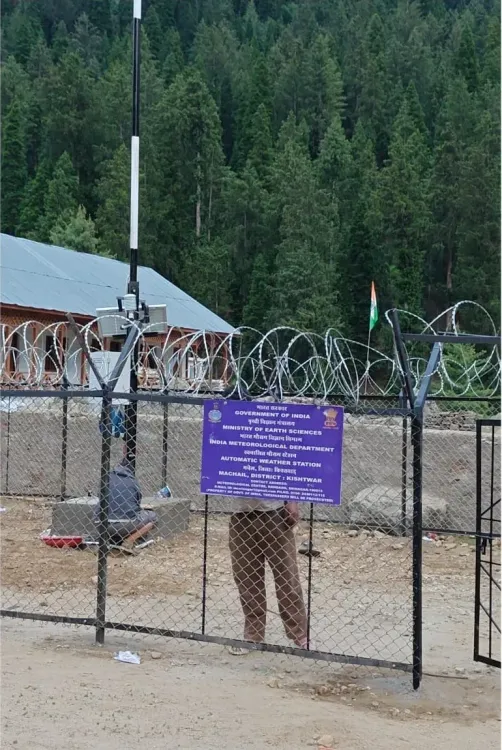
An automatic weather monitoring station (AWS) in Machail, Kishtwar district , Jammu and Kashmir became operational on 17 June .
The station records temperature, rainfall, humidity, wind speed , and other key meteorological parameters in real time.
The facility is expected to strengthen early warning mechanisms in a region vulnerable to rapid, extreme weather changes.
The Kashmir Valley is primarily influenced by Western Disturbances rather than the southwest monsoon.
The installation is part of a broader government push to expand meteorological infrastructure across remote and strategically important parts of J&K .
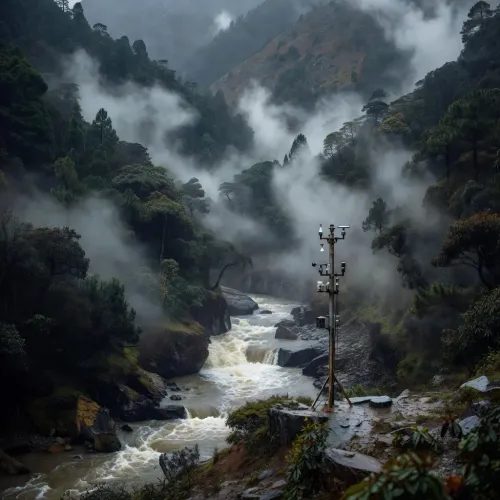
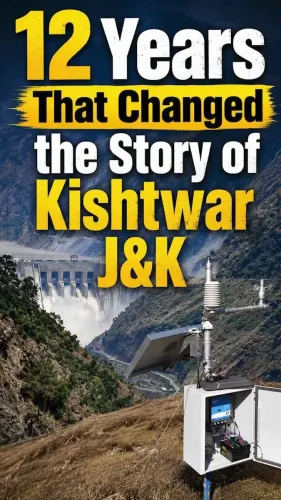
An automatic weather monitoring station (AWS) in the remote Machail region of Kishtwar district, Jammu and Kashmir, became operational on Wednesday, 17 June, marking a significant upgrade to the region's meteorological infrastructure, according to Met Department officials. The facility is now providing real-time atmospheric data expected to sharpen weather forecasting, climate observation, and early warning systems across this high-altitude, geographically challenging terrain.
Why Machail Was Chosen
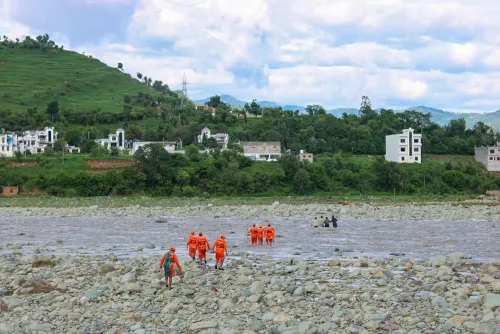
The Machail region presents one of the most demanding meteorological environments in Jammu and Kashmir — rugged topography, sudden weather shifts, and limited connectivity have historically made reliable forecasting difficult. Officials noted that the installation directly addresses these vulnerabilities, giving authorities the ability to monitor atmospheric conditions and issue timely advisories. This is particularly critical for residents, pilgrims visiting the Machail Mata shrine, and disaster response teams operating in the area.
What the Station Measures
The AWS continuously records a comprehensive set of meteorological parameters — temperature, rainfall, humidity, wind speed, and other key indicators. The continuous data feed is designed to feed into the broader regional forecasting network, reducing the lag between weather events and public advisories. Officials described the station as part of a wider push to augment meteorological infrastructure across remote and strategically important parts of Jammu and Kashmir.
The Role of Western Disturbances in the Region
Unlike peninsular India, the Kashmir Valley is not significantly affected by the southwest monsoon. Instead, Western Disturbances — extra-tropical storm systems originating over the Mediterranean, Caspian, and Black Seas — are the primary drivers of winter and pre-monsoon precipitation in Northwest India and snowfall across the Himalayas.
These systems are steered eastward by high-altitude westerly jet streams. As they traverse Iran, Afghanistan, and Pakistan, they absorb moisture from the Persian Gulf and Arabian Sea. Upon reaching the Indian subcontinent, the Himalayas act as a barrier, forcing moisture upward — producing heavy snowfall at higher elevations and widespread rain across the plains.
Why Accurate Data Matters Here
Winter precipitation driven by Western Disturbances is vital for rabi crops such as wheat and mustard. Himalayan snowpack also functions as a natural reservoir, sustaining perennial river systems including the Ganges and the Indus through the summer months. At the same time, intense weather systems bring risks — dense fog, temperature drops, hailstorms, and landslides — making real-time monitoring a public safety imperative, not merely a scientific one.
With the Kishtwar AWS now feeding live data into the forecasting grid, authorities are better positioned to issue advance warnings ahead of extreme weather events in one of Jammu and Kashmir's most isolated districts.
Point of View
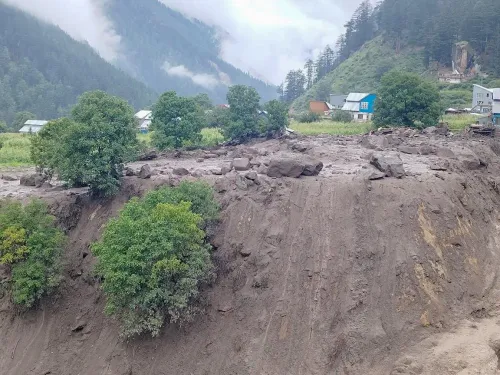
But it signals something more significant: an acknowledgement that India's meteorological blind spots are disproportionately concentrated in its most disaster-prone regions. Kishtwar's terrain has historically been a graveyard for early warning systems — cloudbursts and landslides have repeatedly caught authorities off guard. The real measure of this upgrade will not be the station going live, but whether the data it generates is actually integrated into district-level disaster response protocols in time to save lives. Infrastructure without institutional uptake is just hardware.
NationPress
17 Sept 2026
Frequently Asked Questions
What is the automatic weather monitoring station set up in Kishtwar?
It is a real-time meteorological facility installed in the Machail region of Kishtwar district, Jammu and Kashmir, that became operational on 17 June. It continuously records temperature, rainfall, humidity, wind speed, and other atmospheric parameters to support weather forecasting and early warning systems.
Why is the Machail region significant for weather monitoring?
Machail lies in a remote, high-altitude part of Kishtwar with rugged topography and rapidly changing weather conditions. The area's vulnerability to extreme weather events — including landslides and sudden temperature drops — makes real-time meteorological data critical for both public safety and disaster response.
How does Western Disturbance affect Jammu and Kashmir?
Western Disturbances are extra-tropical storm systems originating over the Mediterranean, Caspian, and Black Seas that bring winter and pre-monsoon rain to Northwest India and snowfall to the Himalayas. Unlike the rest of India, the Kashmir Valley is not significantly influenced by the southwest monsoon, making Western Disturbances its primary source of precipitation.
What parameters does the new Kishtwar AWS measure?
The station records temperature, rainfall, humidity, wind speed, and other key meteorological indicators on a continuous basis. This data feeds into the regional forecasting network to enable timely advisories.
Is this part of a larger infrastructure push in J&K?
Yes. Met Department officials confirmed the Kishtwar station is part of broader efforts to expand meteorological infrastructure across remote and strategically important regions of Jammu and Kashmir, with the goal of reducing forecasting gaps in difficult terrain.