Jitendra Singh hails Kishtwar as North India's emerging power hub
Synopsis
Union Science and Technology Minister Dr. Jitendra Singh said remote Kishtwar in Jammu and Kashmir is emerging as North India's power hub, with more than 4,000 MW expected from hydro projects launched or revived since 2014, alongside new roads, schools, weather stations and upgraded facilities on the Machhail Yatra route.
Key Takeaways
Jitendra Singh said Kishtwar is emerging as North India's power hub after twelve years of central focus.
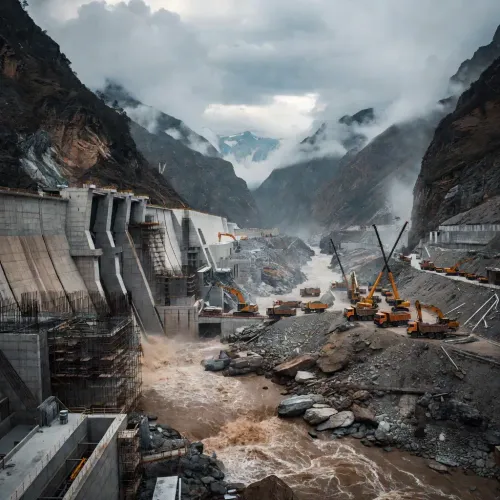
He projected over 4,000 MW from hydro projects in the region once all are completed.
The post listed new roads, Kendriya Vidyalayas, colleges and public services in the district.
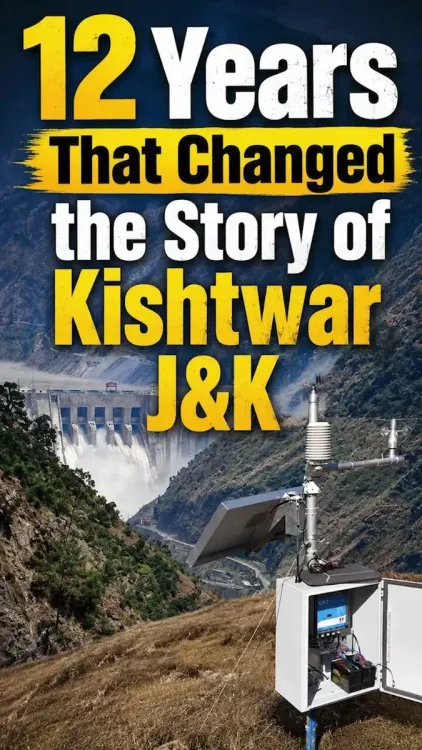
Automatic Weather Stations and seismology observatories have been added in vulnerable areas, including Chasoti.
Machhail Yatra infrastructure now includes toilet complexes, a solar power station and mobile towers.
The messaging is part of the government's #12YearsOfSeva outreach on Jammu and Kashmir development.
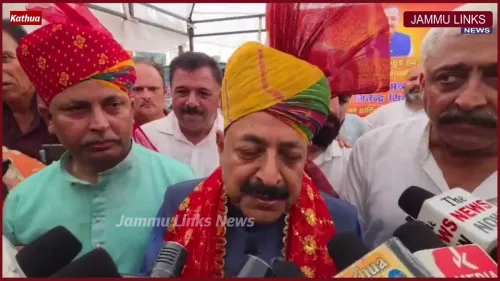
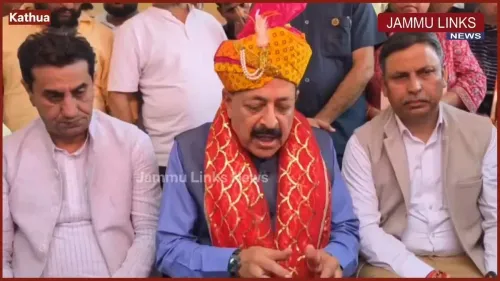
Union Science and Technology Minister Dr. Jitendra Singh on 3 June 2026 described the remote Himalayan district of Kishtwar in Jammu and Kashmir as an emerging power hub of North India, crediting twelve years of central-government focus on hydropower, connectivity and disaster preparedness. In a post on X tagged #12YearsOfSeva, the minister said projects launched or revived since 2014 are expected to generate more than 4,000 MW once fully commissioned.
Context
In the post, Dr. Singh wrote that the past '12 Years that saw far flung Kishtwar emerging as North India's Power Hub', adding that the cumulative output is anticipated 'after completion of all the projects in the region, that were either launched or revived during the Modi regime'.
He listed a basket of interventions beyond power generation: enhanced road connectivity, upgraded public services, new educational institutions including Kendriya Vidyalayas and colleges, and disaster-management assets such as Automatic Weather Stations and seismology observatories in vulnerable pockets. He specifically referenced Chasoti, the site of a tragedy last year, and improvements to the annual Machhail Yatra route including toilet complexes, a solar power station and mobile towers.
Policy backdrop
Kishtwar sits along the Chenab basin, long identified as one of India's largest untapped hydroelectric corridors. Several of the projects under execution in the district trace back to the Prime Minister's Development Package for Jammu and Kashmir announced in 2015, which earmarked a string of hydro schemes for revival and fast-tracking.
The pace of execution picked up after the August 2019 reorganisation of Jammu and Kashmir into a Union Territory, which shifted clearance responsibilities for large infrastructure works from the state to central agencies. The Chenab valley is home to projects such as Pakal Dul, Kiru, Kwar and Ratle, all of which fall in or around the Kishtwar belt.
Stakeholders and impact
The minister framed the development push as a marker of Prime Minister Narendra Modi's 'high priority for remote hilly regions of Jammu and Kashmir'. For local residents, the immediate dividends cited are road access, schooling and health services that were historically thin on the ground in the upper reaches of the district.
For the wider northern grid, the eventual addition of multi-thousand-megawatt hydropower capacity from the Chenab basin would deepen India's renewable baseload and reduce seasonal stress on thermal generation. Pilgrims on the Machhail Mata Yatra, which draws thousands each summer to a shrine deep in the Paddar sub-division, are positioned as direct beneficiaries of the new wayside facilities.
Disaster-preparedness upgrades carry particular weight in Kishtwar, a district repeatedly hit by cloudbursts, landslides and flash floods. The reference to Chasoti underscores official acknowledgement of last year's casualties and an attempt to deploy denser weather and seismic monitoring in slide-prone zones.
What's next
Attention will turn to the commissioning calendar of the remaining Chenab hydro projects and their actual energy contribution to the northern grid, as well as the operational rollout of the new weather stations before the next Machhail Yatra season. The political messaging, packaged under the #12YearsOfSeva banner, suggests that the central government intends to keep Jammu and Kashmir's hill districts at the centre of its infrastructure narrative as it marks twelve years in office.
For a district that long sat at the edge of India's development map, the test will lie in whether the headline megawatt figure translates into sustained local employment, lower outage rates downstream and a measurably safer pilgrimage and monsoon season.
Point of View
Dr. Singh is reinforcing the post-2019 narrative that Union Territory status unlocked execution speed in Jammu and Kashmir. The pivot to disaster preparedness, with the explicit mention of Chasoti, signals political sensitivity to last year's losses. The real political test will be whether the headline 4,000 MW figure converts into commissioned capacity within a credible timeframe.
NationPress
21 Oct 2026
Frequently Asked Questions
What did Jitendra Singh say about Kishtwar?
He said Kishtwar is emerging as North India's power hub, with more than 4,000 MW expected from hydro projects in the district that were launched or revived under the Modi government over the past twelve years.
How much power will Kishtwar generate?
According to the minister's post, more than 4,000 MW of power is expected to be generated once all the projects in the Kishtwar region are completed.
Which hydropower projects are coming up in the Chenab basin?
The Chenab basin hosts several large hydro projects in and around Kishtwar, including Pakal Dul, Kiru, Kwar and Ratle, many of which were revived or fast-tracked under the 2015 Prime Minister's Development Package for Jammu and Kashmir.
What is the Machhail Yatra?
The Machhail Yatra is an annual pilgrimage to the Machhail Mata shrine in the Paddar sub-division of Kishtwar district. The minister said the route has been upgraded with toilet complexes, a solar power station and mobile towers.
What happened at Chasoti in Kishtwar?
Chasoti in Kishtwar witnessed a tragedy last year, which the minister referenced while highlighting new Automatic Weather Stations and seismology observatories being deployed in vulnerable parts of the district.