Kolkata godown collapse: Eastern Railway's 70-member team joins rescue, 15 dead
Synopsis
Fifteen people are dead and rescuers are still cutting through steel and concrete at a collapsed Kolkata godown built on port-owned land. Eastern Railway's 70-member team — armed with plasma cutters and cold cutters — joined the Army, NDRF, and SDRF on 26 June in what has become a round-the-clock race to find survivors. Five arrests have been made, and the political blame game has already begun.
Key Takeaways
The Kolkata godown collapse has killed 15 people , with 18 more under treatment at SSKM Hospital as of 26 June .
Eastern Railway deployed a 70-member team from Howrah, Sealdah, and Liluah Workshop, equipped with 10 oxy-cutter sets , 6 abrasive cutters , and 3 plasma cutting units .
The Army is using ground-penetrating radar; the NDRF is deploying sniffer dogs and infra-red equipment.
The collapsed godown was under construction on land owned by Syama Prasad Mookerjee Port , leased to a private company in 2024 , near Taratala .
Five persons have been arrested on charges of negligence.
West Bengal CM Suvendu Adhikari blamed the previous state government for approving a faulty construction plan.
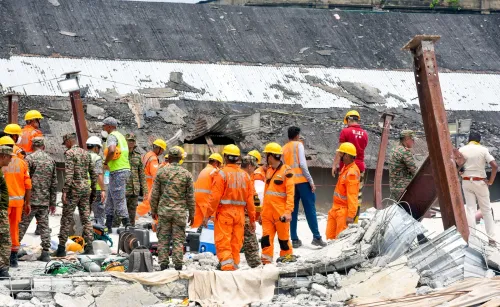
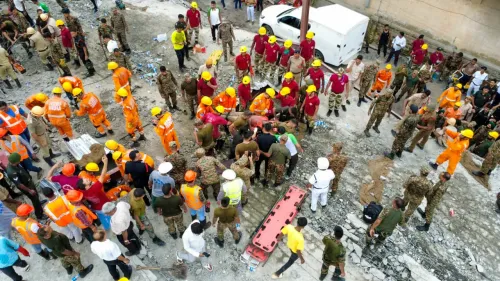
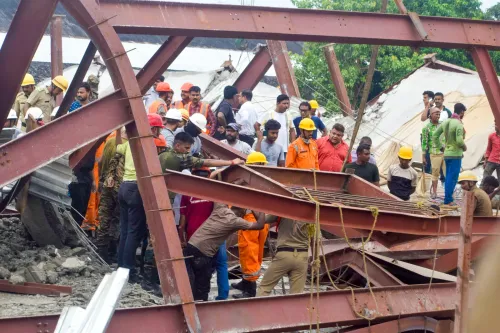
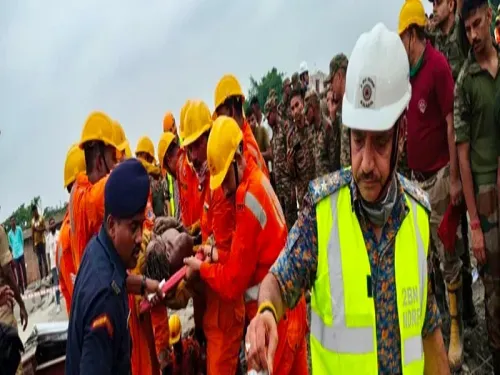
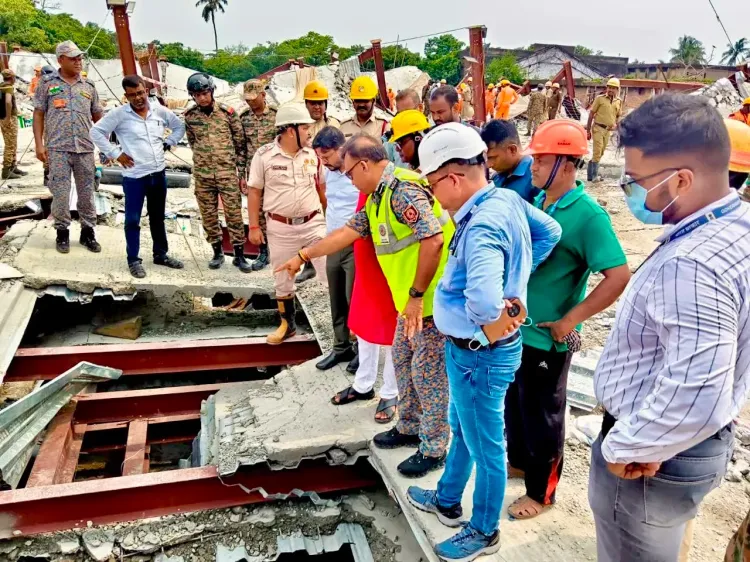
Eastern Railway (ER) deployed a 70-member rescue team with specialised cutting equipment at the site of the Kolkata godown collapse on 26 June, as the death toll climbed to 15 and 18 injured continued to receive treatment at the state-run SSKM Hospital. The multi-agency rescue operation, now involving the Army, National Disaster Response Force (NDRF), State Disaster Response Force (SDRF), and Kolkata Police, is racing against time to locate survivors buried under tonnes of twisted steel and concrete.
Eastern Railway's Role on the Ground
Personnel drawn from the Howrah and Sealdah Divisions and the Liluah Workshop breached the rubble at 5 pm on 26 June, deploying cold cutters that generate minimal heat — a critical advantage when survivors may still be trapped beneath debris. The team's arsenal includes 10 oxy-cutter sets, six abrasive cutters, and three plasma cutting units.
'ER's 70-member heroic crew is battling time and despair. Armed with state-of-the-art technology — including 10 oxy-cutter sets, six abrasive cutters, and three plasma cutting units — these brave railway personnel are cutting through twisted steel and heavy debris, their hands guided by a singular, fierce determination to save every trapped heartbeat,' an ER spokesperson said. Rescuers at the site have stated the operation will continue until every person is accounted for, regardless of condition.
Technology Deployed Across Agencies
The NDRF is using sniffer dogs and infra-red equipment to detect signs of life beneath the wreckage. The Army has put ground-penetrating radar into operation — technology capable of locating human presence through thick layers of debris. This coordinated multi-agency response mirrors protocols used in major structural collapses elsewhere in India, where overlapping capabilities have proven essential in the critical first 72 hours.
The Collapsed Structure and Its Background
The godown that gave way was under construction by a private company on land owned by Syama Prasad Mookerjee Port (SMP), Kolkata, near Taratala. The land had been taken on a 35-year lease by the company in 2024. Authorities have arrested five persons on charges of negligence in connection with the collapse.
Political Response and Accountability
West Bengal Chief Minister Suvendu Adhikari blamed the previous state government for approving what he described as a faulty construction plan. The political dimension of the tragedy is likely to intensify as investigations proceed, with questions mounting over the structural approvals granted for the project on port-owned land.
What Comes Next
Rescue teams have pledged to continue operations around the clock. With ground-penetrating radar and infra-red detection still active, officials have not ruled out finding survivors. The focus will shift to a formal inquiry into the construction approvals once the immediate rescue phase concludes.
Point of View
But arrests at the contractor level rarely reach the approving authorities. Chief Minister Adhikari's pivot to blaming the previous government is politically convenient but deflects from the immediate question of which officials cleared the plan under the current administration. If the structural flaw was in the approved design, the accountability trail leads upward, not just to the site supervisors now in custody.
NationPress
26 Jun 2026
Frequently Asked Questions
How many people have died in the Kolkata godown collapse?
The Kolkata godown collapse has killed at least 15 people as of 26 June, with 18 more receiving treatment at the state-run SSKM Hospital. Rescue operations are ongoing and the toll may change as teams clear the debris.
Where did the Kolkata godown collapse occur?
The godown collapsed near Taratala in Kolkata, on land owned by Syama Prasad Mookerjee Port (SMP). The site was leased to a private construction company in 2024 on a 35-year lease.
What equipment is Eastern Railway using in the rescue?
Eastern Railway's 70-member team is using cold cutters, 10 oxy-cutter sets, six abrasive cutters, and three plasma cutting units. Cold cutters are preferred in such operations because they generate little or no heat, reducing risk to anyone still trapped.
Who has been arrested in connection with the collapse?
Five persons have been arrested on charges of negligence. Investigations into the structural approvals and construction oversight are expected to continue after the rescue phase concludes.
What did West Bengal CM Suvendu Adhikari say about the collapse?
Chief Minister Suvendu Adhikari blamed the previous state government for clearing what he described as a faulty construction plan. His remarks have added a political dimension to the tragedy as accountability questions mount.