CM Majhi Launches Waterfront Yojana for Odisha Urban Revival

Synopsis
Odisha Chief Minister Mohan Charan Majhi has announced the Waterfront Yojana, a scheme to restore and beautify urban water bodies and riverbanks. The initiative targets cleaner cities, tourism growth, local livelihood support, and environmental protection as part of the BJP government's two-year urban development agenda.
Key Takeaways
Mohan Charan Majhi announced the Waterfront Yojana on 26 June 2026 , marking two years of BJP governance in Odisha.
The scheme focuses on restoration and beautification of urban water bodies and riverbanks across Odisha's cities.
Key goals include tourism development , promotion of local livelihoods , and environmental protection .
The announcement aligns with national frameworks such as AMRUT and the Smart Cities Mission , both launched in 2015 .
Specific cities, budget figures, and implementation timelines are yet to be officially disclosed.
The initiative is framed as a step toward 'balanced and sustainable urban development' and a 'prosperous Odisha.'
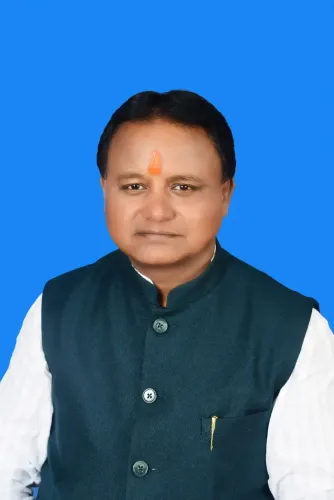
Odisha Chief Minister Mohan Charan Majhi on Friday, 26 June 2026 announced a new direction for the restoration and beautification of urban water bodies and riverbanks across the state, framing it as a milestone under his government's two-year tenure. The initiative, branded the 'Waterfront Yojana', aims to make Odisha's cities cleaner and more attractive while simultaneously promoting tourism, supporting local livelihoods, and strengthening environmental protection.
Context
Posting on X under the hashtags #2YearsofLokankaSarakar (Two Years of the People's Government) and #BikasharaDharaOdishaSara (Development for All of Odisha), CM Majhi described the scheme as a 'visionary decision' of his administration. In his own words: 'Through the Waterfront Yojana, cities will become cleaner and more attractive, and tourism development, promotion of local livelihoods, and environmental protection will get a new direction.' He called it 'another important step in building a prosperous Odisha through balanced and sustainable urban development.'
Policy Backdrop
The announcement fits within a broader national pattern of urban water-body rejuvenation that gained momentum after the Atal Mission for Rejuvenation and Urban Transformation (AMRUT) was launched in 2015, which included components for restoring urban water bodies. The Smart Cities Mission, also initiated in 2015, selected Bhubaneswar for integrated urban renewal — laying early groundwork for the kind of waterfront infrastructure now being prioritised at the state level.
Odisha transitioned to BJP governance in June 2024 after more than two decades under the Biju Janata Dal. The current administration has consistently positioned sustainable urban infrastructure as a centrepiece of its development agenda, and the Waterfront Yojana appears to be a consolidation of those priorities as the government marks its second year in office.
Stakeholders and Impact
Urban residents across Odisha's cities stand to benefit most directly from cleaner and restored waterfronts, with improved public spaces and reduced pollution near rivers and water bodies. The tourism sector is an explicit beneficiary named in the announcement — well-developed riverbank zones have historically drawn domestic and international visitors in comparable projects across other Indian states.
Local communities and small vendors operating near water bodies could see livelihood opportunities created or formalised under the scheme. Environmental groups will likely watch the restoration component closely, given the dual challenge of reviving ecologically stressed urban water bodies while accommodating tourism infrastructure.
What's Next
Specific details — including the list of cities and water bodies to be covered, budget allocations, and implementation timelines — are yet to be made public. The next state budget session and official government notifications are expected to provide clarity on the scheme's rollout. Pilot implementations in major urban centres such as Bhubaneswar, Cuttack, and Puri will be closely watched as indicators of the government's execution capacity and commitment to the stated environmental and livelihood goals.
As Odisha's urban population grows, the success of the Waterfront Yojana could set a template for how the state balances ecological restoration with economic development — and serve as a defining infrastructure legacy of the Majhi administration's early years.
Point of View
Signalling an effort to consolidate a visible urban-development identity distinct from the previous BJD era. By combining environmental restoration with tourism and livelihood goals, the scheme mirrors a well-established playbook used by several state governments to generate both ecological and economic dividends from neglected water bodies. However, the absence of specific budget figures and city-level details at the time of announcement means the scheme's ambition remains to be tested against execution. The real political and policy test will come when project-level timelines are published and ground-level implementation begins in Odisha's major urban centres.
NationPress
26 Jun 2026
Frequently Asked Questions
What is the Waterfront Yojana announced by Odisha CM Majhi?
The Waterfront Yojana is a scheme announced by Odisha Chief Minister Mohan Charan Majhi on 26 June 2026 to restore and beautify urban water bodies and riverbanks across Odisha, with goals of boosting tourism, supporting local livelihoods, and protecting the environment.
Which cities will benefit from Odisha's Waterfront Yojana?
Specific cities have not yet been officially named. Urban centres such as Bhubaneswar, Cuttack, and Puri are expected to be among the primary beneficiaries, but the government is yet to release a formal city-wise list.
What is the budget for the Odisha Waterfront Yojana?
Budget allocations for the Waterfront Yojana have not been publicly disclosed as of the announcement on 26 June 2026. Details are expected to emerge in the next state budget session or through official government notifications.
How does the Waterfront Yojana relate to central government schemes like AMRUT?
The Waterfront Yojana builds on the policy direction established by the central government's AMRUT scheme launched in 2015, which included urban water-body rejuvenation components. Bhubaneswar was also selected under the Smart Cities Mission in 2015 for integrated urban renewal.
Why did CM Majhi announce the Waterfront Yojana now?
The announcement coincides with the second anniversary of the BJP government in Odisha, marked by the hashtag '2YearsofLokankaSarakar.' CM Majhi described it as part of a broader vision for balanced and sustainable urban development under his administration.