K'taka Governor warns Shivakumar over Vande Mataram order
Synopsis
Karnataka's Vande Mataram row has escalated sharply — the Governor has now formally warned CM Shivakumar that the state's order restricting the National Song to two stanzas may conflict with Union protocol, a 2026 parliamentary amendment, and Articles 162, 256, and 257(1) of the Constitution. With a PIL already in the Karnataka High Court, the state government faces pressure from both the Raj Bhavan and the judiciary.
Key Takeaways
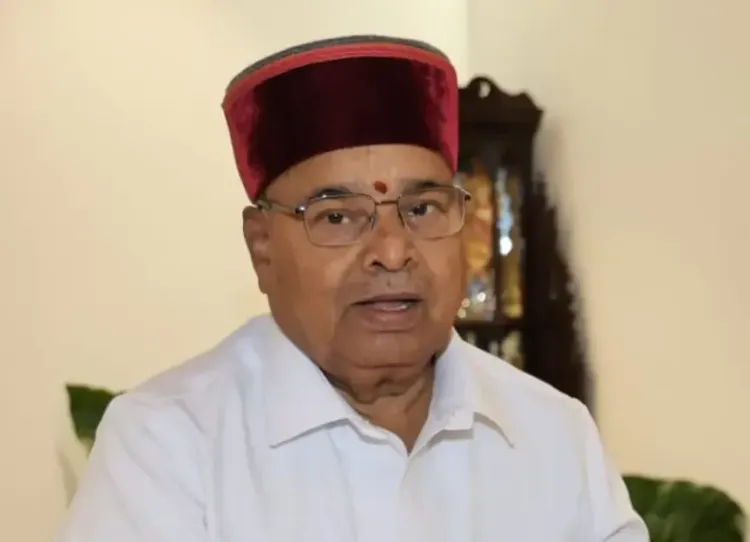
Karnataka Governor Thaawarchand Gehlot wrote a four-page letter to Chief Minister D.K.
Shivakumar on 22 September 2026 over the Vande Mataram row.
The state's September 8, 2026 order restricted the National Song to its first two stanzas at official functions.
The Governor cited Articles 162, 256, and 257(1) of the Constitution, arguing the order may violate the Union-state division of executive powers.
Gehlot also invoked the Prevention of Insults to National Honour (Amendment) Act, 2026 , which extended statutory protection to the National Song.
The Karnataka High Court is already hearing a PIL challenging the state order.
The Governor has formally advised the state government to reconsider the order and align with Union Home Ministry instructions.
Karnataka Governor Thaawarchand Gehlot has written a strongly worded four-page letter to Chief Minister D.K. Shivakumar, objecting to the state government's September 8, 2026 order restricting the rendition of the National Song Vande Mataram to its first two stanzas at official functions. The Governor warned that the move could raise constitutional concerns and places the state at odds with the Union government's nationally prescribed protocol.
What the Governor's Letter Says
In his communication, Gehlot urged the state government to reconsider the order and align with the Union Home Ministry's prevailing instructions on the rendition of the National Song. He argued that restricting Vande Mataram to two stanzas runs contrary to the Government of India's guidelines, which mandate that the official version be recited in full during mass singing at official occasions.
The Governor stated that the Central instructions on the National Song and National Anthem form part of national protocol and have been circulated to all states for compliance. 'Of particular relevance is the instruction that, on occasions when the National Song is sung in mass singing, the official version is to be recited,' Gehlot said in the letter.
The Constitutional Argument
Gehlot grounded his objection in the constitutional distribution of powers between the Union and states, citing Articles 162, 256, and 257(1) of the Constitution. He noted that Article 162 limits state executive power to matters within its legislative competence, while Articles 256 and 257(1) require state executive action to comply with parliamentary laws and not impede Union executive authority.
According to the Governor, because the Union government had already exercised its executive authority by issuing specific orders on the National Song, the Karnataka government's decision to prescribe a divergent version could raise an 'avoidable constitutional question' about the respective spheres of Union and state executive power.
The 2026 Amendment Factor
Gehlot also cited the Prevention of Insults to National Honour (Amendment) Act, 2026, noting that Parliament had extended statutory protection under Section 3 of the Prevention of Insults to National Honour Act, 1971 to the National Song. He said the amended provision covers the intentional prevention of the singing of the National Song and disturbance of assemblies engaged in such singing.
In his view, this statutory protection makes it constitutionally and administratively inappropriate for the state government to prescribe a truncated rendition without reconciling its decision with the Central framework.
Political and Legal Context
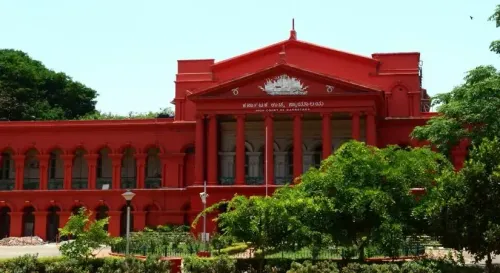
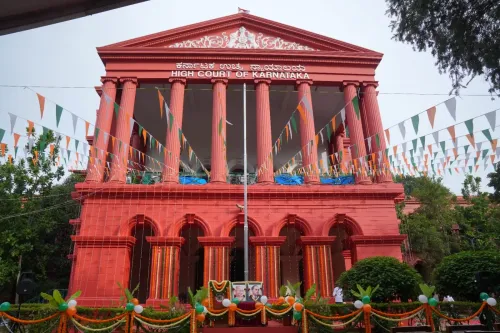
The controversy over the September 8, 2026 government order is already under judicial scrutiny. The Karnataka High Court is hearing a Public Interest Litigation challenging the directive. The Governor's letter adds fresh political pressure on the Shivakumar-led government, which has not yet publicly responded to the communication.
The dispute reflects a broader pattern of friction between the Karnataka government and the Raj Bhavan, as well as ongoing tensions between the Centre and Congress-governed states over protocol and administrative compliance. Gehlot warned that failure to reconsider the order could result in 'unnecessary conflict' between state administrative instructions and Union protocol, and risk 'avoidable constitutional litigation over executive powers.'
What Happens Next
The Governor has formally advised Chief Minister Shivakumar to examine whether the two-stanza restriction can be sustained consistently with the 2026 Amendment, the Ministry of Home Affairs' instructions, and the constitutional division of powers. All eyes are now on whether the state government will revoke, revise, or defend the order — both in court and in response to the Raj Bhavan's intervention.
Point of View
Not merely a constitutional advisory. By invoking Articles 162, 256, and 257(1) alongside the 2026 Amendment, Gehlot has essentially laid the groundwork for a Centre-state confrontation that could reach the Supreme Court. What mainstream coverage misses is that this is the latest front in a broader pattern: Raj Bhavan interventions in Congress-governed states have increasingly moved from ceremonial to adversarial, raising questions about the constitutional role of governors as neutral arbiters versus instruments of Centre-state politics. The Shivakumar government's real test is not whether it defends the order legally, but whether it can sustain the political cost of a prolonged fight over a national symbol.
NationPress
22 Sept 2026
Frequently Asked Questions
What is the Vande Mataram order that Karnataka Governor objected to?
The Karnataka government issued an order on September 8, 2026, restricting the rendition of the National Song Vande Mataram to its first two stanzas at official state functions. Governor Thaawarchand Gehlot has written to Chief Minister D.K. Shivakumar warning that the restriction conflicts with Union government protocol and may raise constitutional concerns.
What constitutional provisions did the Governor cite?
Governor Gehlot cited Articles 162, 256, and 257(1) of the Constitution. He argued that Article 162 limits state executive power to matters within its legislative competence, while Articles 256 and 257(1) require state action to comply with parliamentary laws and not impede Union executive authority.
How does the Prevention of Insults to National Honour (Amendment) Act, 2026 factor in?
Parliament extended statutory protection under Section 3 of the Prevention of Insults to National Honour Act, 1971, to the National Song through the 2026 Amendment. The Governor argued this makes it constitutionally inappropriate for Karnataka to prescribe a truncated version without aligning with the Central statutory framework.
Is the Karnataka Vande Mataram order also under legal challenge?
Yes, the Karnataka High Court is currently hearing a Public Interest Litigation challenging the September 8, 2026 government order. The Governor's four-page letter adds political pressure alongside the ongoing judicial scrutiny.
What has the Governor asked the Karnataka government to do?
Governor Gehlot has formally advised Chief Minister D.K. Shivakumar to reconsider the September 8, 2026 order and follow the Union Home Ministry's prevailing instructions on the rendition of Vande Mataram at official functions. He warned that failing to do so could result in avoidable constitutional litigation over the division of executive powers.