KTR hails Constitution, links Telangana to Article 3
Synopsis
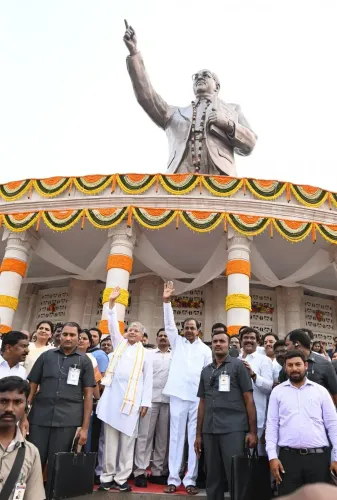
On Constitution Day, BRS working president K. T. Rama Rao paid tribute to Dr. B.R. Ambedkar and the Constituent Assembly, saying Telangana exists because of Article 3. He said the Constitution still frames India's evolving democracy and urged those in public life to place citizens' dignity at the centre of governance.
Key Takeaways
BRS working president K.
Rama Rao marked Constitution Day on 26 November 2026 with a tribute to Dr.
Ambedkar and the Constituent Assembly.
He said Telangana owes its existence to Article 3, which provides for the formation of new states.
Telangana was created as India's 29th state on 2 June 2014 via the Andhra Pradesh Reorganisation Act under Article 3.
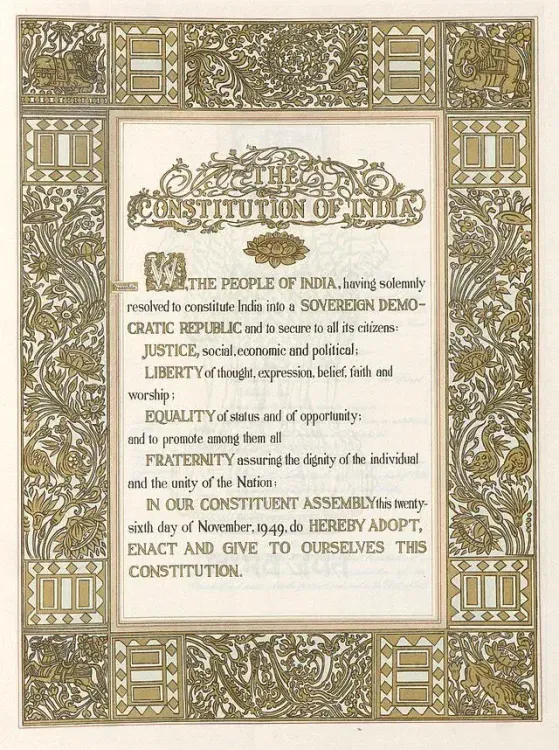
The Constitution was adopted on 26 November 1949 and came into force on 26 January 1950.
Rama Rao said those in public life must strengthen institutions, respect rights, widen opportunities and place citizens' dignity at the centre of governance.
BRS working president K. T. Rama Rao used Constitution Day on 26 November 2026 to pin Telangana's very existence to a single clause of the Indian Constitution, paying tribute to Dr. B.R. Ambedkar and the Constituent Assembly. In a message from the state, he called the document the foundation of the Republic and a living framework for justice, liberty, equality and fraternity.
Rama Rao wrote that the Constitution is 'the foundation of our Republic and the embodiment of our shared commitment to justice, liberty, equality and fraternity.' He paid tribute to Ambedkar and the members of the Constituent Assembly, who, he said, 'gave India a democratic framework designed to uphold the rights and dignity of every citizen.'
Telangana's birth and Article 3
The political core of the message was federal. 'Telangana owes its very existence to Article 3 of the Indian Constitution, which provides for the formation of new states,' he wrote. Article 3 empowers Parliament to form new states by separating territory from existing ones.
Telangana became India's 29th state on 2 June 2014 under the Andhra Pradesh Reorganisation Act, a statute passed through that Article 3 route. The state's creation remains among the most consequential territorial adjustments since the Constitution came into force in 1950.
Seventy-seven years after 26 November 1949
India adopted its Constitution on 26 November 1949. It came into force on 26 January 1950. Rama Rao noted that seventy-seven years after adoption, the text 'continues to provide the framework within which our democracy evolves.'
For those in public life, he said, that fact carries a responsibility: 'to strengthen institutions, respect rights, widen opportunities and always place the dignity of citizens at the centre of governance.' He closed by reaffirming faith in the democratic principles that guide the nation, ending with 'Jai Hind'.
Ambedkar, the Assembly and a federal safety valve
Dr. B.R. Ambedkar chaired the Drafting Committee and remains the architect most closely tied to the Constitution's guarantees of rights and equality. The Constituent Assembly debated and adopted the text between 1946 and 1949. Article 3 has been invoked multiple times since 1950 for state reorganisations, a built-in mechanism for changing maps without dismantling the basic structure of rights and democracy.
Regional leaders across parties mark this day by linking those federal provisions to the statehood demands their regions once made. The same framework that created Telangana is the one Rama Rao said still binds public office: institutions, rights, opportunity, and the dignity of citizens.
Seventy-seven years on, the test he set is not whether the parchment survives. It is whether those who govern still put the citizen at its centre.
Point of View
A reminder that the same clause still governs any future map. The sharper claim is institutional: seventy-seven years after adoption, the document's survival is not the question, whether public office still treats citizen dignity as the centre of governance is.
NationPress
26 Nov 2026
Frequently Asked Questions
When is Constitution Day observed in India?
Constitution Day is observed on 26 November each year, the date in 1949 when the Constituent Assembly adopted the Constitution of India. It came into force on 26 January 1950, which is celebrated as Republic Day.
What is Article 3 of the Indian Constitution?
Article 3 empowers Parliament to form new states and alter the areas, boundaries or names of existing states. K. T. Rama Rao cited it as the clause that made Telangana's creation possible.
How was the state of Telangana formed?
Telangana was established as India's 29th state on 2 June 2014 through the Andhra Pradesh Reorganisation Act, passed under Article 3 of the Constitution.
Who was Dr. B.R. Ambedkar in the making of the Constitution?
Dr. B.R. Ambedkar was Chairman of the Drafting Committee of the Constituent Assembly and is widely regarded as the principal architect of the Constitution's provisions on rights and equality.
What did KTR say about the duty of those in public life?
He said they have a profound responsibility to strengthen institutions, respect rights, widen opportunities and always place the dignity of citizens at the centre of governance.