KTR Slams Musi Project, BRS Leaders Arrested at Hearing
Synopsis
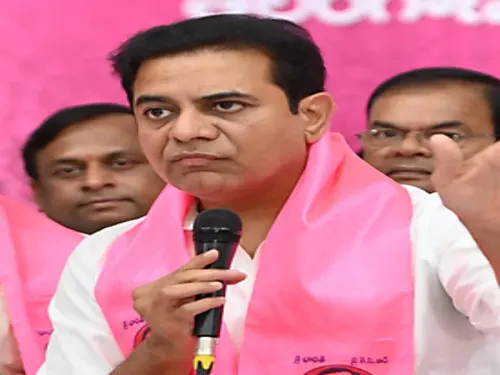
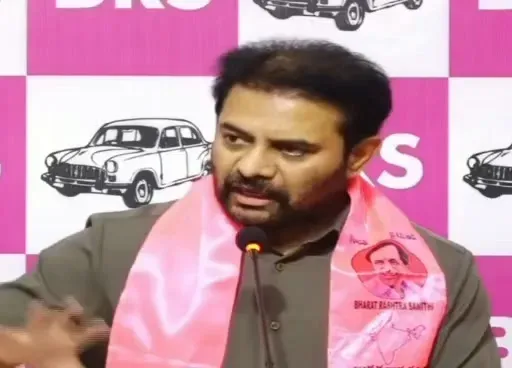
BRS working president K. T. Rama Rao accused the Telangana Congress government of running a sham public hearing for the Rs. 1.5 lakh crore Musi Beautification Project, alleging no DPR exists and that four BRS leaders were arrested while attempting to attend the consultation.
Key Takeaways
BRS working president K.
Rama Rao called the Musi Beautification Project a 'lootification' of Rs.
1.5 lakh crore at public expense.
KTR alleged the public hearing was conducted without genuine public participation and without a finalised Detailed Project Report (DPR) .
Four BRS leaders — Sabitha Indra Reddy , MLA D.
Sudheer Reddy , MLC Sravana Dasoju , and Karthik Indra — were reportedly arrested before they could attend the hearing.
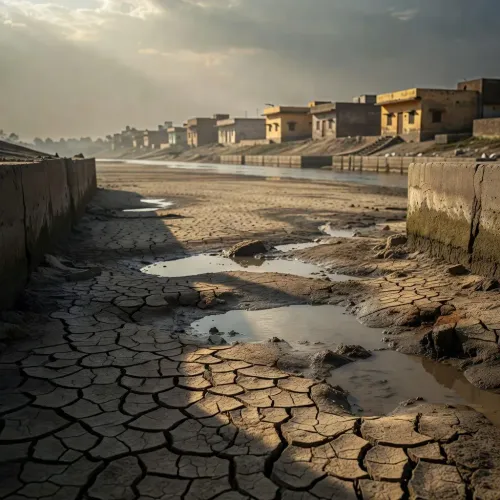
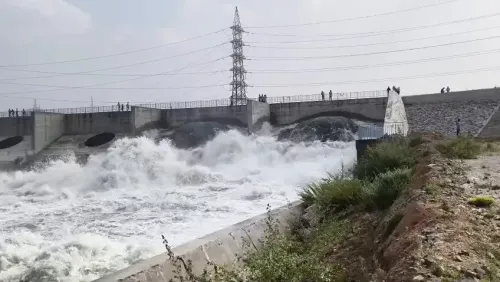
KTR drew a sharp contrast between drought conditions in parts of Telangana and the government's focus on an expensive urban riverfront project in Hyderabad .
The Musi River project is one of the most expensive urban infrastructure proposals in recent Indian history at its stated cost.
BRS has been opposing the project since moving into opposition following its December 2023 Telangana election defeat.
A public hearing with no public, a project with no DPR — BRS working president K. T. Rama Rao turned that two-line indictment into a full-throated assault on the Telangana Congress government on Thursday, 29 October 2026, escalating his party's campaign against the Musi River Beautification Project after several of its leaders were arrested en route to the very hearing they sought to attend.
KTR's post, written in Telugu, pulled no punches: 'పబ్లిక్ లేకుండా పబ్లిక్ హియరింగ్. డీపీఆర్ లేకుండా ప్రాజెక్ట్. ఇదీ కాంగ్రెస్ పాలనా తీరు.' — 'A public hearing without the public. A project without a DPR. This is how Congress governs.' He alleged that what was being dressed up as beautification was in reality a Rs. 1.5 lakh crore 'lootification', a portmanteau he coined deliberately to frame the cost as plunder rather than development.
BRS Leaders Blocked, Then Detained
The confrontation came to a head on Wednesday, 28 October 2026, when a group of senior BRS figures attempted to participate in the public hearing for the Musi Beautification Project. According to KTR's account, they were stopped and arrested before they could reach the venue. Those detained included former minister Sabitha Indra Reddy, MLA D. Sudheer Reddy, MLC Sravana Dasoju, and Rajendranagar constituency in-charge Karthik Indra. The specific circumstances of the detentions — the legal provisions invoked or the duration — could not be independently confirmed, but the arrests immediately sharpened BRS's political messaging.
The act of detaining opposition leaders at the gates of a public hearing is itself a charged visual in Indian democratic politics. BRS moved quickly to use it as evidence of what KTR called procedural high-handedness: a project of this scale, his post argued, should have a completed Detailed Project Report (DPR) before any hearing is convened, not after protests force one.
Rs. 1.5 Lakh Crore Project Under the Microscope
The Musi River cuts through the heart of Hyderabad, and the Congress-led state government has positioned its beautification as a flagship urban renewal scheme — drawing parallels with riverfront developments in Ahmedabad and other Indian cities. But those comparisons carry their own baggage. Riverfront projects across India have a recurring pattern: ambitious cost estimates, prolonged environmental clearance battles, land acquisition disputes, and significant gaps between the announced vision and ground-level execution.
At Rs. 1.5 lakh crore, the Musi project is among the most expensive urban infrastructure proposals in the country's recent history. BRS has questioned whether a DPR justifying that figure even exists in a final, public form — a foundational requirement under Indian infrastructure governance norms before public consultations are held.
Drought in the Districts, Riverfront in the Capital
KTR's sharpest rhetorical weapon was not procedural — it was political contrast. 'On one side, the state has a drought,' he wrote. 'On the other, you launch Musi beautification. What kind of perverse thinking is this?' The juxtaposition of drought-stricken rural Telangana against a Rs. 1.5 lakh crore urban showcase project is a line BRS has been sharpening since it moved into opposition after its December 2023 election defeat — and in dry years, it lands.
Whether the state government responds with data on water allocation, DPR timelines, or a fresh hearing date will determine whether this controversy dissipates or deepens. BRS, for its part, has signalled it will keep fighting — and Thursday's arrests have given it a considerably louder megaphone to do so.
Point of View
And an opposition that has found its most durable footing in procedural and fiscal accountability critiques. Arresting opposition leaders at a public hearing — regardless of the legal basis — is precisely the kind of optic that sustains rather than deflates that narrative. The drought-versus-riverfront contrast KTR deploys is not new in Indian politics, but in a state where agrarian distress and urban capital investment regularly pull in opposite directions, it retains genuine resonance. The real test will be whether BRS can convert street-level confrontations into legislative scrutiny or court challenges that force the government to publish a credible DPR.
NationPress
29 Oct 2026
Frequently Asked Questions
What is the Musi River Beautification Project in Hyderabad?
The Musi River Beautification Project is a large-scale urban riverfront development proposed by the Telangana state government along the Musi River in Hyderabad , with an estimated cost of Rs. 1.5 lakh crore . It aims to clean and redevelop the riverfront, though critics have raised concerns about the cost, land acquisition, and procedural compliance.
Why were BRS leaders arrested at the Musi Beautification public hearing?
According to BRS working president K. T. Rama Rao , four party leaders — including former minister Sabitha Indra Reddy — were stopped and arrested by authorities on 28 October 2026 while on their way to attend the official public hearing for the Musi project. The specific legal grounds for the arrests were not confirmed independently.
What does KTR mean by 'lootification' of the Musi project?
K. T. Rama Rao coined the word 'lootification' as a play on 'beautification' to allege that the Rs. 1.5 lakh crore project is not a genuine development initiative but a vehicle for financial misappropriation at public expense under the Telangana Congress government .
What is a DPR and why is BRS demanding one for the Musi project?
A Detailed Project Report (DPR) is a comprehensive technical and financial document required before major infrastructure projects proceed to public consultation or implementation. BRS has alleged that no credible DPR exists for the Musi project, arguing this makes the public hearing procedurally invalid.
How does the Musi project controversy connect to Telangana's drought situation?
KTR highlighted that while parts of Telangana are facing drought conditions, the Congress state government is simultaneously prioritising a costly urban beautification project, framing it as a misallocation of resources and political attention away from agrarian distress.