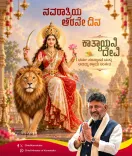
Lalan Singh offers Navratri prayers to Maa Katyayani
Synopsis
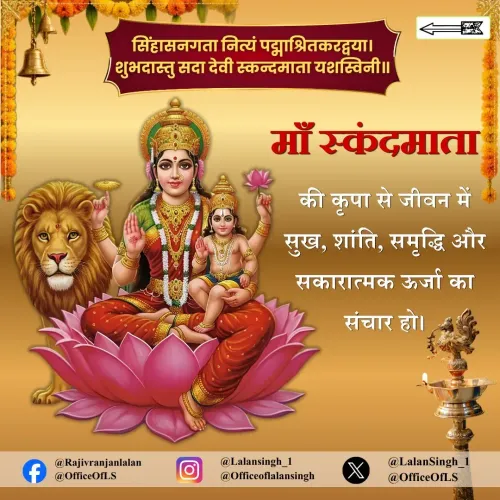
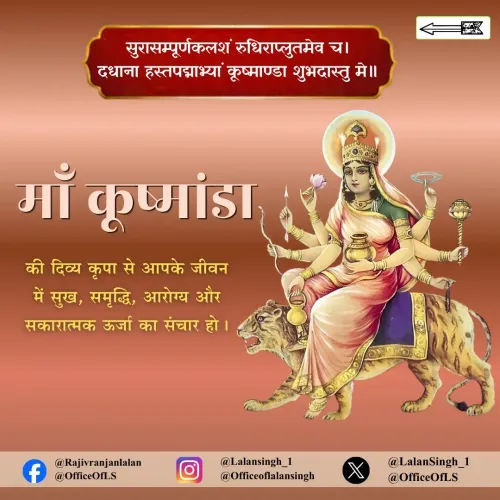
Union Minister Rajiv Ranjan Singh (Lalan Singh) marks Navratri's sixth day with a Sanskrit shloka dedicated to Maa Katyayani, praying for the removal of obstacles and blessings of peace and happiness for all. Jai Mata Di.
Key Takeaways
Union Minister Rajiv Ranjan Singh (Lalan Singh) posted a Navratri greeting on Friday, 16 October 2026 — the sixth day of the festival.
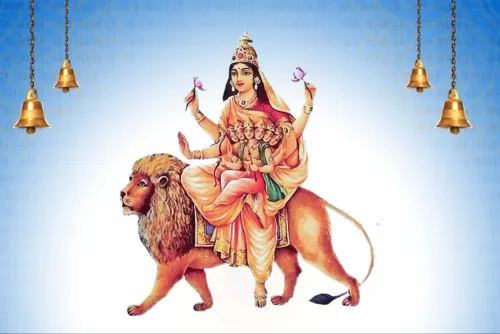
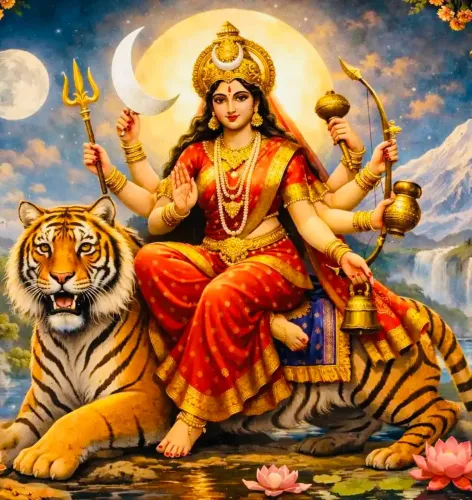
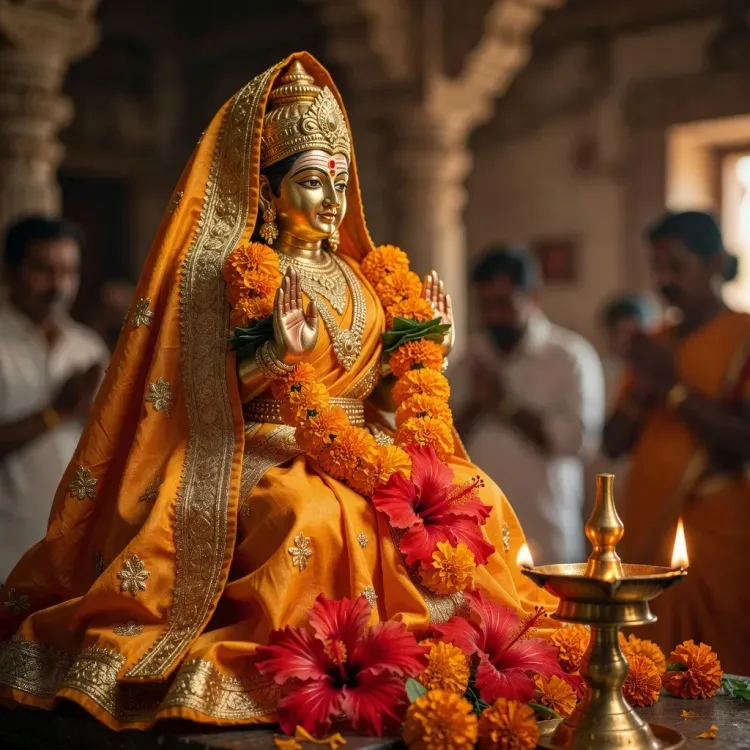
He shared a classical Sanskrit shloka honouring Maa Katyayani , the sixth form of Goddess Durga, who is depicted riding a lion and wielding a sword.
His prayer called for fulfilment of devotees' wishes, removal of life's obstacles, and blessings of happiness and peace.
Such devotional social-media posts during Navratri are a common practice among Indian political leaders across all parties.
Lalan Singh is a senior Janata Dal (United) leader and Union Cabinet Minister holding the Panchayati Raj, Fisheries, Animal Husbandry and Dairying portfolios.
On the sixth day of Navratri, Union Panchayati Raj and Fisheries Minister Rajiv Ranjan Singh — widely known as Lalan Singh — invoked Maa Katyayani with a Sanskrit shloka and a prayer for the well-being of all, posted on Friday, 16 October 2026.
The minister shared the classical verse: 'Chandrahasojjvalakara shardulavaravahana, Katyayani shubham dadyad devi danavaghatini' — 'May the goddess who wields the gleaming sword, rides the mighty lion, and slays the demons, Katyayani, bestow auspiciousness upon all.' He followed it with a direct prayer that the goddess fulfil everyone's wishes, remove the obstacles in their lives, and bless them with happiness and peace, closing with the devotional salutation 'Jai Mata Di.'
Katyayani: the sixth form, the warrior's grace
Maa Katyayani is the sixth of the nine forms of Goddess Durga venerated during Navratri. She is depicted riding a lion, bearing a gleaming sword, and is celebrated in Hindu tradition as the slayer of the demon Mahishasura. Her worship on the sixth day is believed to remove hardships and grant courage to devotees seeking fulfilment of long-held desires.
A political tradition written in devotion
Lalan Singh's post is part of a well-established pattern of cultural engagement by Indian political leaders during the nine nights of Navratri. Across party lines, ministers and chief ministers post daily tributes to each form of the goddess, signalling shared cultural identity with their constituents. The senior Janata Dal (United) leader and cabinet minister holds charge of the Panchayati Raj, Fisheries, Animal Husbandry and Dairying portfolios — and like many of his colleagues, he uses social media during major festivals to connect with the broader public beyond policy announcements.
With Dussehra approaching at the close of Navratri, the volume of such devotional messages from the political class is only expected to grow — each one a small thread in the fabric of India's festival season.
Point of View
Such visible piety during Navratri is soft political currency. It also reflects the broader NDA ecosystem's consistent use of religious festivals as a platform for soft-power communication. There is no policy implication, but the pattern itself is the story — festivals have become a structured part of the Indian political communications calendar.
NationPress
16 Oct 2026
Frequently Asked Questions
Why did Lalan Singh post about Navratri today?
16 October 2026 is the sixth day of Navratri, dedicated to Maa Katyayani. Union Minister Lalan Singh marked the occasion with a Sanskrit shloka and a prayer for public well-being, as is customary among Indian political leaders during the festival.
Who is Maa Katyayani and why is she worshipped on the sixth day of Navratri?
Maa Katyayani is the sixth of the nine forms of Goddess Durga. She rides a lion, wields a gleaming sword, and is celebrated as the destroyer of evil. Devotees worship her on Navratri's sixth day seeking courage, the fulfilment of wishes, and removal of life's obstacles.
What does the Katyayani shloka in Lalan Singh's post mean?
The shloka translates as: 'May the goddess who wields the gleaming sword, rides the mighty lion, and slays the demons — Katyayani — bestow auspiciousness upon all.' It is a traditional devotional verse from Hindu scripture honouring this form of Durga.
When does Navratri end in 2026?
Navratri is a nine-night festival; with the sixth day falling on 16 October 2026 , the festival concludes after the ninth night, followed by Dussehra (Vijayadashami) .