Lok Sabha adjourned amid Opposition demand for Amit Shah's presence
Synopsis
Lok Sabha could not complete even its opening Question Hour on Tuesday before being adjourned — the latest in a string of washouts during the Monsoon Session. With the opposition unrelenting on its demand for Amit Shah's appearance over the Jantar Mantar crackdown, and the NEET paper leak still unresolved, Parliament's accountability machinery is effectively stalled.
Key Takeaways
Lok Sabha was adjourned till 2 pm on 4 August , minutes after reconvening, due to opposition sloganeering.
Opposition MPs demanded that Home Minister Amit Shah appear in the House over the Jantar Mantar police action of 20 July .
Speaker Om Birla urged members to allow Question Hour to proceed, calling it 'crucial', but disruptions continued.
The Supreme Court (Number of Judges) Amendment Ordinance, 2026 was passed by voice vote on Monday amid protests.
The Bill raises the Supreme Court's sanctioned judge strength from 33 to 37 (excluding the CJI), taking total bench strength to 38 .
The Monsoon Session has faced repeated disruptions over both the NEET paper leak and the Jantar Mantar police action.
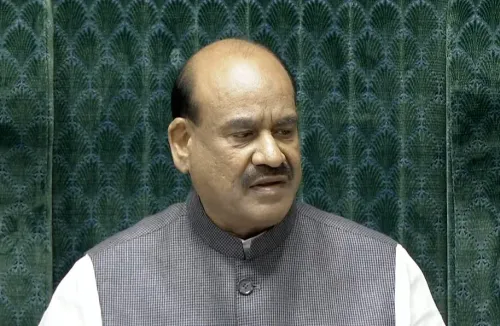
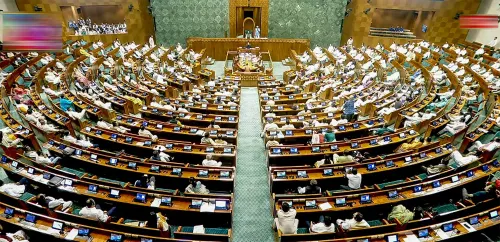
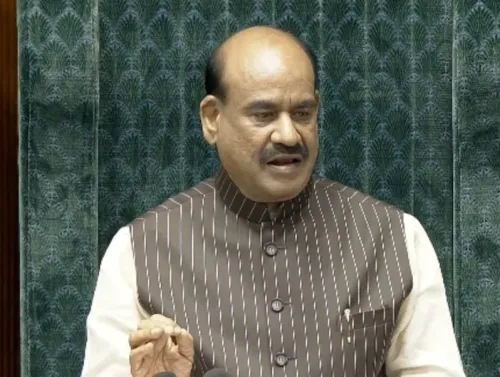
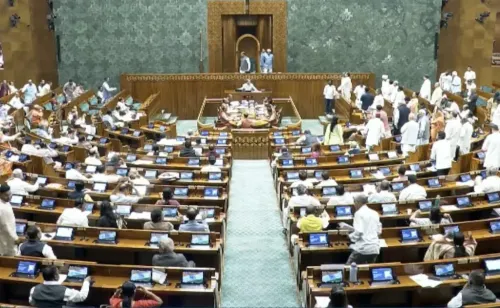
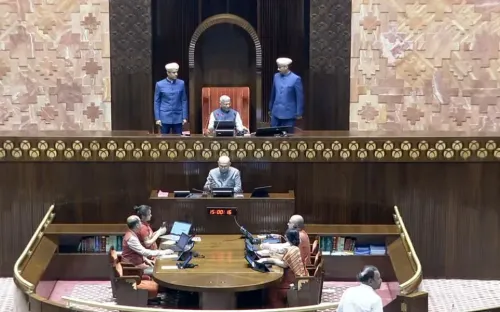
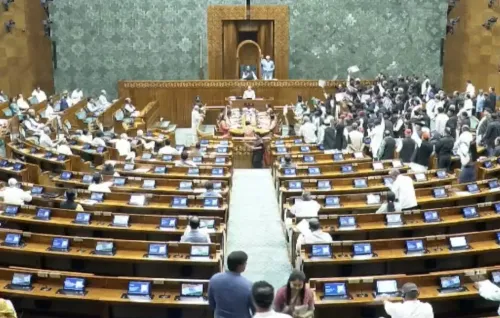
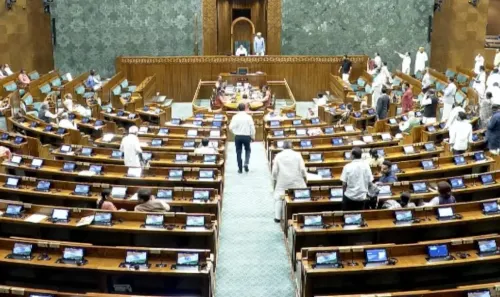
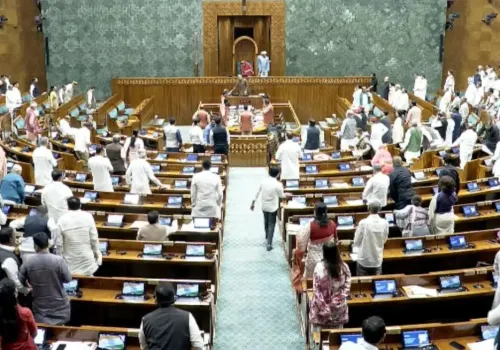
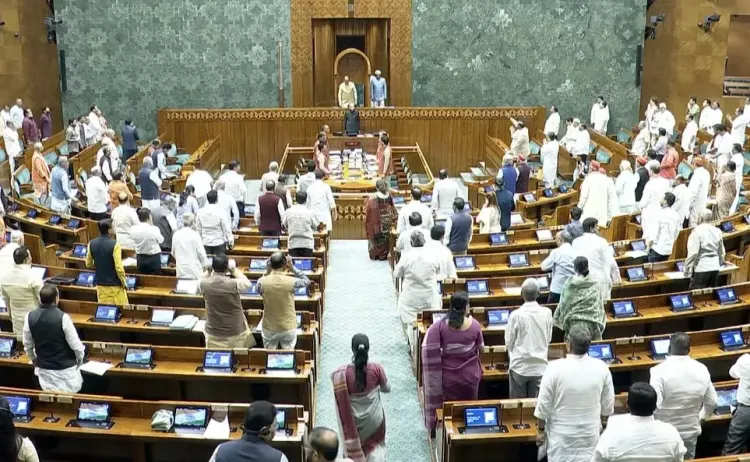
Lok Sabha was adjourned till 2 pm on Tuesday, 4 August, just minutes after reconvening, as opposition MPs raised slogans demanding that Home Minister Amit Shah appear before the House to answer questions over the police action at Jantar Mantar. Speaker Om Birla urged members to take their seats and allow the Question Hour to proceed, calling the session 'crucial', but the disruptions did not subside.
Background to the Disruptions
The Monsoon Session of Parliament has seen repeated adjournments and protests over two core issues: the alleged NEET paper leak and the police action against demonstrators at Jantar Mantar on 20 July. Opposition parties have consistently demanded that Shah address the House on what they have described as 'firing' on protesters — a characterisation that the government has not formally accepted.
Supreme Court Judges Bill Passed Amid Uproar
On Monday, 3 August, even as protests raged on the opposition benches, the Supreme Court (Number of Judges) Amendment Ordinance, 2026, was passed in the Lok Sabha through a voice vote. Union Law and Justice Minister Arjun Ram Meghwal tabled the legislation amid loud sloganeering, with Krishna Prasad Tenneti, who was presiding over the proceedings, making repeated appeals for order — all of which went unheeded.
What the Supreme Court Bill Proposes
The legislation seeks to replace an ordinance promulgated in May 2026 and is aimed at addressing the growing pendency of cases before the apex court. Under the proposed law, the sanctioned strength of judges in the Supreme Court would rise from 33 to 37, excluding the Chief Justice of India, taking the court's total bench strength from 34 to 38 judges.
What Comes Next
With the opposition showing no signs of relenting on its demand for Shah's appearance, further disruptions to parliamentary business remain likely for the remainder of the Monsoon Session. The repeated loss of Question Hour — the primary mechanism through which MPs hold the executive accountable — is drawing criticism from political observers across the spectrum.
Point of View
The one constitutional mechanism that allows elected MPs to extract real-time accountability from the executive. Passing the Supreme Court judges Bill through a voice vote amid pandemonium sets a troubling precedent: significant legislation is being enacted without scrutiny, while the opposition's noise achieves neither accountability nor debate. Both sides bear responsibility. The opposition's tactic of blanket disruption forfeits the very platform it claims to need, while the government's reluctance to have Shah address the House on Jantar Mantar feeds the perception that it has something to hide. The losers, as always, are the citizens whose parliamentary time is being consumed by this standoff.
NationPress
4 Aug 2026
Frequently Asked Questions
Why was Lok Sabha adjourned on 4 August 2026?
Lok Sabha was adjourned till 2 pm on 4 August 2026 because opposition MPs raised slogans demanding Home Minister Amit Shah's appearance in the House over the police action against Jantar Mantar protesters on 20 July. Speaker Om Birla's appeals for order went unheeded, forcing the adjournment.
What is the opposition demanding from Amit Shah?
Opposition parties are demanding that Home Minister Amit Shah address Parliament over the police action taken against protesters at Jantar Mantar on 20 July, which they have described as 'firing' on demonstrators. The government has not formally responded to this characterisation.
What is the Supreme Court (Number of Judges) Amendment Ordinance, 2026?
It is a legislation passed by Lok Sabha on 3 August 2026 that proposes increasing the sanctioned strength of Supreme Court judges from 33 to 37, excluding the Chief Justice of India, raising the total bench strength from 34 to 38. It replaces an ordinance promulgated in May 2026 to address the court's growing case backlog.
What other issues are disrupting the Monsoon Session?
Beyond the Jantar Mantar police action, the Monsoon Session has been repeatedly disrupted over the alleged NEET paper leak, with opposition members demanding government accountability on both fronts. The combination of the two issues has made sustained parliamentary business difficult.
Was any legislation passed despite the disruptions?
Yes. The Supreme Court (Number of Judges) Amendment Ordinance, 2026, was passed through a voice vote in Lok Sabha on Monday, 3 August, even as opposition MPs continued sloganeering. Law Minister Arjun Ram Meghwal tabled the Bill amid the uproar.