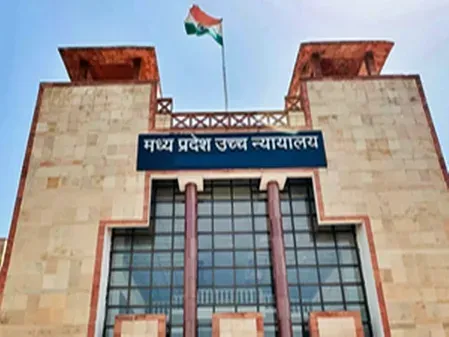
MP High Court dismisses PIL seeking new Governor appointment
Synopsis
The Madhya Pradesh High Court has shut down a PIL demanding a new Governor be appointed, invoking the constitutional safety net of Article 156(3) — which keeps a Governor in office until a successor arrives, regardless of how long the five-year term has been exceeded. The ruling reinforces that gubernatorial appointments are a presidential prerogative, not a matter for judicial direction.
Key Takeaways
The Madhya Pradesh High Court dismissed a PIL on 17 September 2026 seeking appointment of a new state Governor.
Petitioner MA Khan , a retired professor, argued the Governor's five-year term expired on 7 July 2026 .
The court ruled the petition misconceived, citing the proviso to Article 156(3) , which mandates a Governor continue until a successor takes charge.
The bench also cited the Supreme Court's ruling in Krishna Ballabh Sahay v.
Commission of Inquiry to confirm no constitutional vacuum arises in the Governor's office.
The petition additionally failed the MP High Court Rules, 2008 bona fide requirement for PIL filing.
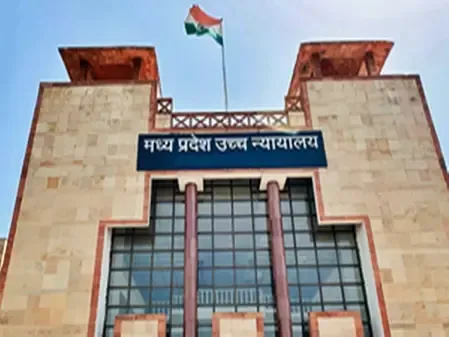
The Madhya Pradesh High Court on 17 September 2026 dismissed a public interest litigation that sought a court direction compelling the appointment of a new Governor for the state, ruling the petition misconceived in light of clear constitutional provisions governing gubernatorial tenure.
Background and What Was Sought
The writ petition was filed by MA Khan, a retired professor of Jawaharlal Nehru Krishi Vishwa Vidyalaya, Jabalpur. Khan contended that the sitting Governor of Madhya Pradesh had completed more than five years in office and that his term had expired on 7 July 2026. Relying on Articles 153, 154, 155, 156 and 160 of the Constitution, the petitioner argued that the Governor — who also serves as Chancellor of state universities and as an appellate authority for certain government orders — needed to be replaced. He went further, urging that the incumbent be removed and the Chief Justice of the Madhya Pradesh High Court be appointed as Governor in the interim.
What the Court Found
A division bench comprising Justice Anand Pathak and Justice BP Sharma rejected the petition on two distinct grounds. First, the bench noted that Khan had failed to establish his bona fides as a public-spirited citizen — a prerequisite under the High Court of Madhya Pradesh Rules, 2008 for filing a PIL. Second, and more fundamentally, the court held that the petition was misconceived on its merits.
The Constitutional Position
The bench placed heavy reliance on the proviso to Article 156(3) of the Constitution, which states that a Governor shall, 'notwithstanding the expiration of his term, continue to hold office until his successor enters upon his office.' The court reinforced this position by citing the Supreme Court's ruling in Krishna Ballabh Sahay and Others v. Commission of Inquiry and Others, which had clarified that the proviso forecloses any challenge to the legality of a Governor continuing beyond five years and ensures there is never a constitutional vacuum in the office.
Government's Stand
Counsel for the Union of India and the State of Madhya Pradesh had opposed the petition, arguing it was both premature and not maintainable. They submitted that the proviso to Article 156(3) permits a sitting Governor to hold charge until a successor is formally appointed and assumes office — a position the court ultimately upheld in full.
Implications of the Ruling
The High Court's ruling reaffirms an established constitutional principle: the office of Governor does not fall vacant merely because a five-year term has elapsed. The judgment effectively bars similar PILs from seeking judicial intervention in what the Constitution treats as an executive prerogative — the appointment of Governors rests exclusively with the President of India on the advice of the Union Cabinet. As the matter now stands, the incumbent Governor of Madhya Pradesh continues to hold office validly until a successor is designated.
Point of View
And the Constitution's holdover provision means there is no deadline pressure on the Centre to fill the post. That can suit the ruling dispensation's interests, but it also leaves universities and appellate processes technically in the hands of an unrenewed incumbent. The court did the constitutionally correct thing; whether the Centre should fill vacancies more promptly is a separate, and legitimate, policy question.
NationPress
18 Sept 2026
Frequently Asked Questions
Why did the Madhya Pradesh High Court dismiss the PIL on the Governor's appointment?
The court dismissed the PIL because it was misconceived under Article 156(3) of the Constitution, which mandates that a Governor continues to hold office until a successor is appointed and assumes charge, regardless of the five-year term having elapsed. The petitioner also failed to establish the bona fides required for filing a PIL under MP High Court Rules, 2008.
What does Article 156(3) of the Constitution say about Governors?
Article 156(3) provides that a Governor holds office for a term of five years, but its proviso states that a Governor shall continue in office even after the term expires until a successor enters upon the office. This ensures there is no constitutional vacuum in the gubernatorial post.
Who filed the PIL and what was specifically sought?
The PIL was filed by MA Khan, a retired professor of Jawaharlal Nehru Krishi Vishwa Vidyalaya, Jabalpur. He sought a court direction to the President's office to appoint a new Governor for Madhya Pradesh, arguing the incumbent's term had expired on 7 July 2026, and also suggested the Chief Justice of the MP High Court be appointed in the interim.
Which Supreme Court ruling did the High Court rely on?
The High Court relied on the Supreme Court's decision in Krishna Ballabh Sahay and Others v. Commission of Inquiry and Others, which had clarified that the holdover proviso to Article 156(3) forecloses any legal challenge to a Governor continuing beyond five years and ensures there is no constitutional gap in the office.
Who has the authority to appoint a Governor in India?
The appointment of a Governor is an executive prerogative vested in the President of India, acting on the advice of the Union Cabinet. Courts cannot direct the Centre to make such an appointment, as the High Court's ruling in this case reaffirms.