Maharashtra Cabinet clears admin restructure, 12 new depts planned
Synopsis
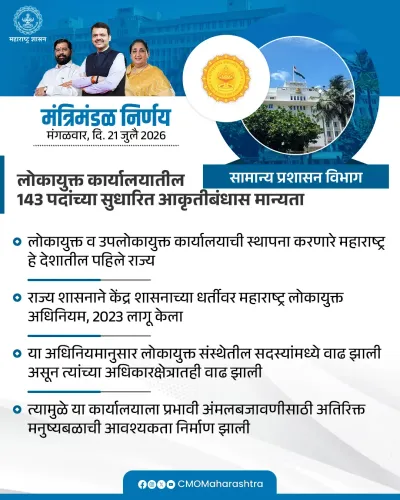
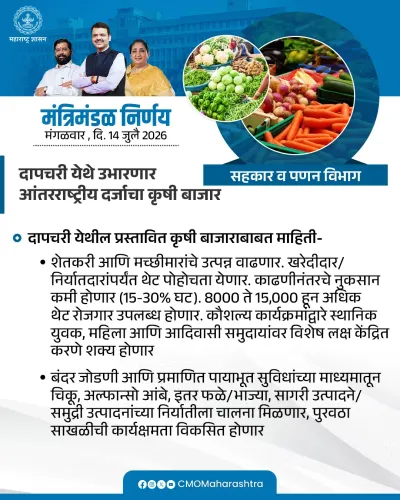
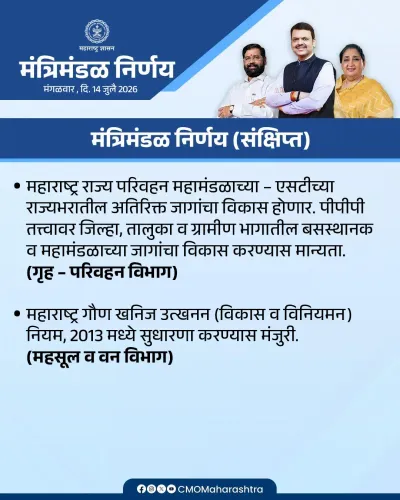
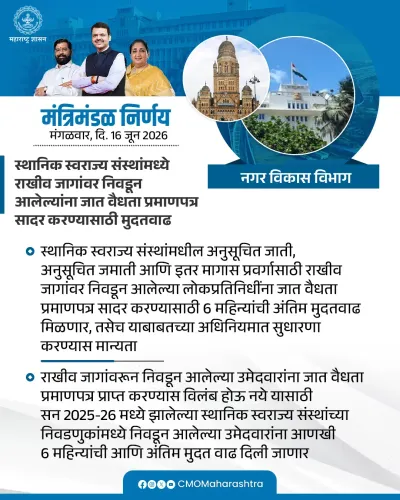
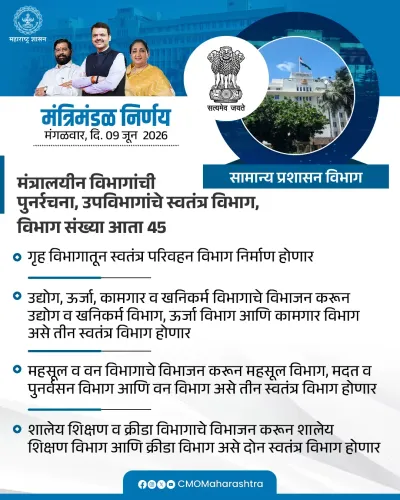
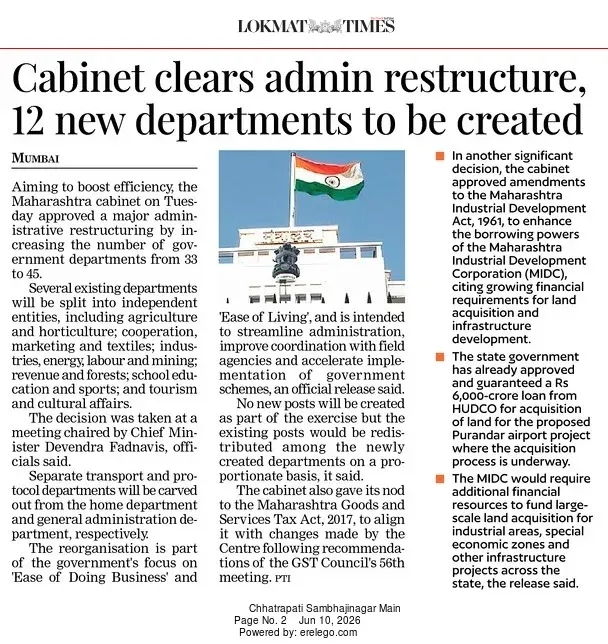
The Maharashtra cabinet has approved the creation of 12 new departments in a significant administrative restructuring announced by the Chief Minister's Office on June 10, 2026. The move, under Chief Minister Devendra Fadnavis, is aimed at improving governance efficiency and policy coordination across the state.
Key Takeaways
The Maharashtra cabinet cleared a major administrative restructuring on June 10, 2026 .
12 new departments are to be created as part of the overhaul.
The decision was announced by the Chief Minister's Office of Maharashtra , tagging CM Devendra Fadnavis .
The restructuring follows a pattern established during Fadnavis's 2014–2019 term , when similar departmental mergers and splits were undertaken.
Official gazette notifications detailing each department's mandate and cadre changes are expected to follow.
The state bureaucracy and IAS/IPS cadre are the most immediately affected stakeholders.
The Chief Minister's Office of Maharashtra announced on Wednesday, June 10, 2026 that the state cabinet has cleared a significant administrative restructuring, with 12 new departments set to be created. The decision was taken under the leadership of Chief Minister Devendra Fadnavis and signals a major overhaul of the state's secretariat structure.
Context
The cabinet approval marks one of the more sweeping reorganisations of Maharashtra's administrative machinery in recent years. Creating 12 new departments would substantially expand the existing departmental framework, with the stated aim of improving coordination and faster policy delivery. The official announcement was made through the Chief Minister's Office's verified account on X, tagging Chief Minister Devendra Fadnavis directly.
Policy Backdrop
Maharashtra has a documented history of secretariat restructuring across successive administrations. During Fadnavis's first term as Chief Minister from 2014 to 2019, the state undertook multiple exercises to merge or split departments, citing goals of reducing administrative overlap and sharpening policy focus. Indian state governments periodically revisit their departmental architecture, particularly early in a government's term or ahead of major legislative and budgetary pushes. Such restructuring typically involves reassigning cadres, revising budget heads, and issuing fresh gazette notifications that define the mandate of each new department.
The current move fits a broader national pattern: large states with diverse economic and social portfolios — such as Maharashtra, which manages everything from Mumbai's financial infrastructure to expansive agrarian districts — often find that legacy departmental divisions no longer reflect contemporary governance priorities. The creation of new departments can help align bureaucratic units with emerging sectors such as climate resilience, urban infrastructure, or digital services.
Stakeholders and Impact
The most immediate impact will be felt across the state bureaucracy and government employees, including IAS and IPS cadre officers whose postings and reporting lines may be redrawn. Departmental reorganisations of this scale typically trigger a cascade of personnel transfers, changes to budget allocations, and revisions to inter-departmental coordination protocols. Officers currently heading departments that are split or merged will need fresh designations, and new secretaries will need to be appointed to lead each of the 12 incoming departments.
For citizens and industry, the restructuring could mean more specialised points of contact within the government for sector-specific grievances and approvals — though the practical benefit depends on how clearly mandates are defined in the gazette notifications that follow cabinet approval.
What's Next
The key documents to watch are the official gazette notifications that will specify each new department's name, mandate, reporting structure, and budgetary allocation. Changes to cadre strength — particularly the number of IAS officers assigned to the new departments — will also be closely tracked by the state's administrative establishment. Observers will assess whether the restructuring is accompanied by a fresh policy agenda that justifies the new departmental boundaries, or whether it remains primarily an organisational exercise. The fiscal implications will come into sharper focus when the state presents its next budget, where new department heads will reflect in expenditure heads for the first time.
Point of View
Suggesting an intent to reshape Maharashtra's administrative architecture before major policy and budgetary cycles kick in. Restructuring the secretariat at this stage gives the government room to align departments with its legislative agenda without mid-term disruption. However, the true test will be in implementation: departmental proliferation can improve specialisation or simply add bureaucratic layers, depending on how clearly mandates are drawn. Gazette notifications and subsequent budget allocations will reveal whether this is a substantive reform or a largely cosmetic reorganisation.
NationPress
21 Sept 2026
Frequently Asked Questions
What did the Maharashtra cabinet decide on June 10 2026?
The Maharashtra cabinet approved a major administrative restructuring that will create 12 new departments within the state government, as announced by the Chief Minister's Office.
How many new departments will Maharashtra create?
According to the announcement by the Chief Minister's Office, 12 new departments are to be created as part of the restructuring cleared by the cabinet.
Who is the Chief Minister of Maharashtra in 2026?
Devendra Fadnavis is the Chief Minister of Maharashtra. He is a BJP leader who previously served as Chief Minister from 2014 to 2019 and returned to the role thereafter.
Why is Maharashtra restructuring its government departments?
The restructuring is aimed at improving administrative efficiency, reducing departmental overlap, and aligning the state's bureaucratic units with current governance priorities — a pattern seen in Maharashtra across multiple administrations.
What happens after the Maharashtra cabinet approves new departments?
Following cabinet approval, official gazette notifications are issued specifying each new department's name, mandate, budget head, and cadre assignments. IAS officer postings and reporting structures are then revised accordingly.