Maharashtra CM Fadnavis backs communication skills drive for officials
Synopsis
The Chief Minister's Office of Maharashtra spotlights an initiative to sharpen communication skills among government officials, with CM Devendra Fadnavis credited for championing continuous upskilling as a governance priority in a rapidly changing era.
Key Takeaways
Maharashtra CMO on October 28, 2026 posted about a communication-skills capacity-building initiative for state officials.
The post credits Chief Minister Devendra Fadnavis for providing 'visionary leadership' that encourages innovative upskilling programmes.
Effective communication is framed as a continuous, evolving necessity — not a one-time training exercise.
The post tags @DGPMaharashtra , signalling possible involvement of the state police establishment in the initiative.
The push aligns with a broader Maharashtra and India-wide pattern of investing in administrative capacity building for public-facing governance.
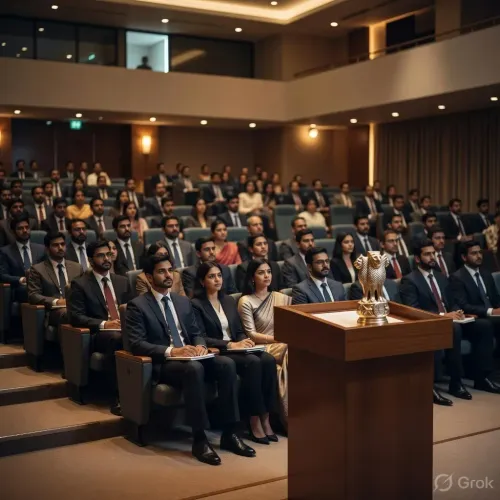
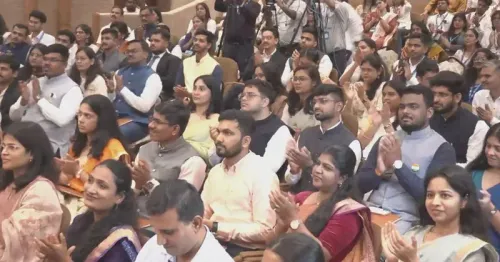
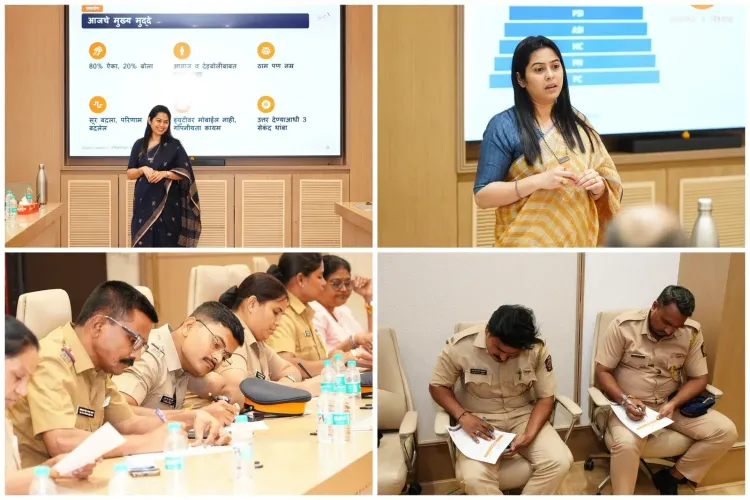
Effective communication is no longer a soft skill — it is a survival skill for governance. The Chief Minister's Office of Maharashtra on Wednesday, October 28, 2026, highlighted a capacity-building initiative aimed at sharpening communication skills among government employees, underlining that adapting to a changing era demands continuous upskilling.
The post, written in Marathi, opens with a crisp declaration: 'बदलत्या काळासोबत बदलता संवाद, नव्या विचारांसोबत नवी कौशल्ये!' — 'Evolving communication with changing times, new skills with new ideas!' It frames effective communication as the need of the hour, arguing that its continuous updating and enhancement has become indispensable.
Chief Minister Devendra Fadnavis is credited in the post as providing 'visionary leadership' that encourages such unique, innovative, and imaginative initiatives — framing the effort not as routine training but as a deliberate push to modernise how the state's administration thinks and speaks.
Why communication training is back on Maharashtra's agenda
Maharashtra administrations have periodically invested in capacity building for officials, but the current emphasis on communication specifically signals a sharper focus on public-facing governance. As digital platforms multiply the channels through which the state interacts with citizens, the ability to convey policy clearly and convincingly has taken on new strategic weight.
The post tags @DGPMaharashtra — the Director General of Police, Maharashtra — alongside @SanikaKulkarni3, suggesting the initiative may have a law-enforcement or public-outreach dimension, though specific programme details were not disclosed in the post.
Fadnavis and the skill-building push in Maharashtra
Devendra Fadnavis, a senior BJP leader who has served as Chief Minister of Maharashtra across multiple tenures, has consistently positioned skill development — both for citizens and state machinery — as a governance priority. Aligning administrative communication training with that broader arc reinforces an image of a data-aware, reform-minded administration that views human capital inside government as worthy of the same investment it demands from the private sector.
The programme, whatever its precise format, feeds into a wider pattern visible across Indian states: recognising that policy intent only travels as far as its delivery, and delivery lives or dies on communication.
Point of View
Not just policy design. Tagging the DGP broadens the implied audience well beyond bureaucrats, hinting at a state-wide training sweep. Across India, state governments that have linked internal communication training to citizen-satisfaction outcomes tend to use such exercises as soft political capital — proof of a 'modern, reform-minded' administration. The real test will be whether a structured, measurable programme follows the announcement.
NationPress
28 Oct 2026
Frequently Asked Questions
What communication-skills initiative did Maharashtra announce in October 2026?
The Chief Minister's Office of Maharashtra highlighted a capacity-building initiative focused on continuously updating and enhancing effective communication skills among government employees, endorsed under CM Devendra Fadnavis's leadership.
Who is Devendra Fadnavis and what is his role in Maharashtra?
Devendra Fadnavis is a senior BJP leader serving as Chief Minister of Maharashtra, with a record of prioritising skill development and administrative modernisation across his tenures.
Why is communication skill training important for government officials?
As governance increasingly plays out across digital and public-facing platforms, officials need to convey policy clearly and convincingly; the Maharashtra CMO post argues that continuous updating of communication skills has become indispensable in a rapidly changing era.
Which departments are involved in this Maharashtra skills initiative?
The post tags @DGPMaharashtra (Director General of Police, Maharashtra), suggesting the police establishment is among the stakeholders, though the full scope of the programme was not disclosed.
How does this fit into Maharashtra's broader capacity-building efforts?
Maharashtra administrations have periodically run capacity-building programmes for officials; this initiative continues that pattern with a specific focus on communication as a strategic governance tool in the modern era.