Maharashtra CMO Backs Women Farmer Empowerment Drive
Synopsis
The Chief Minister's Office of Maharashtra on 2 July 2026 spotlighted women farmer empowerment through the hashtag MahilaShetkariSakshamikaran, signalling a state push to align with central schemes like MKSP and NRLM to improve land rights, credit access and market linkages for rural women cultivators.
Key Takeaways
The Chief Minister's Office of Maharashtra posted on 2 July 2026 under the hashtag #MahilaShetkariSakshamikaran (Women Farmer Empowerment).
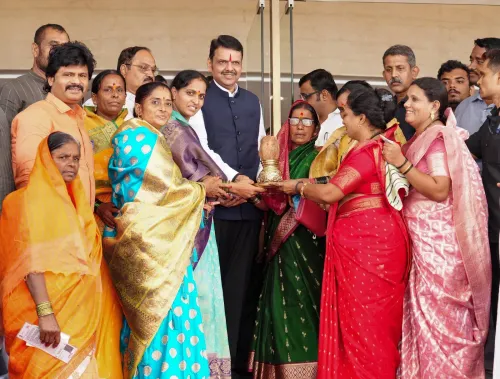
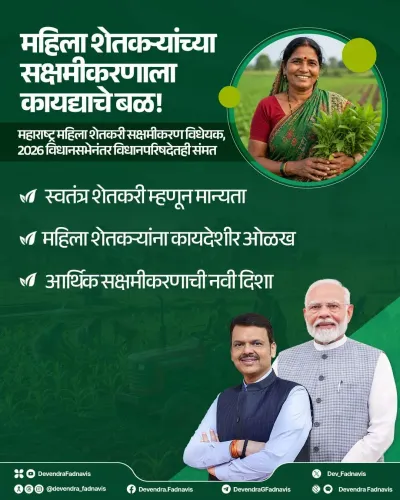
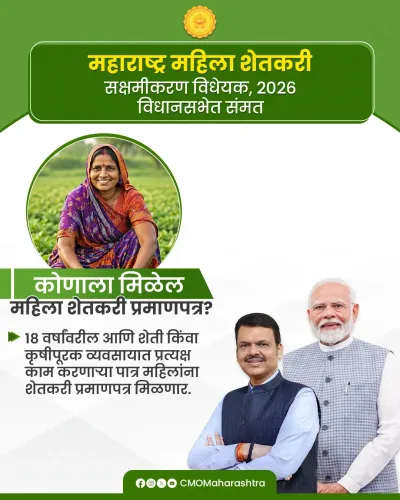
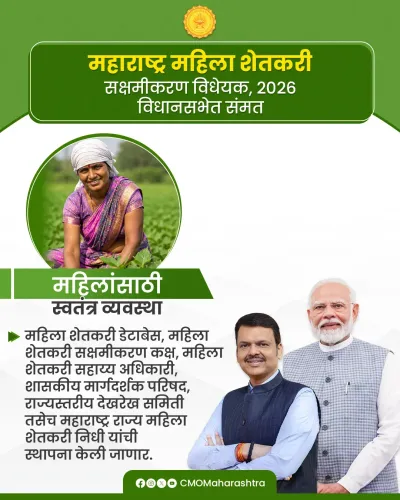
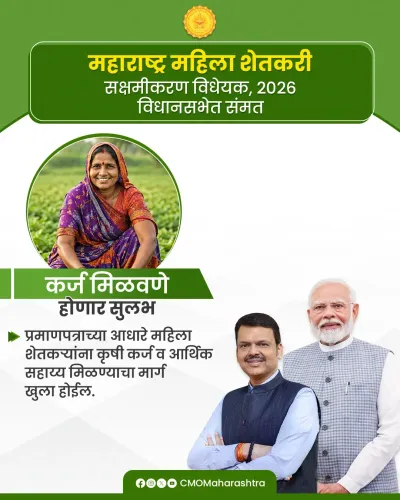
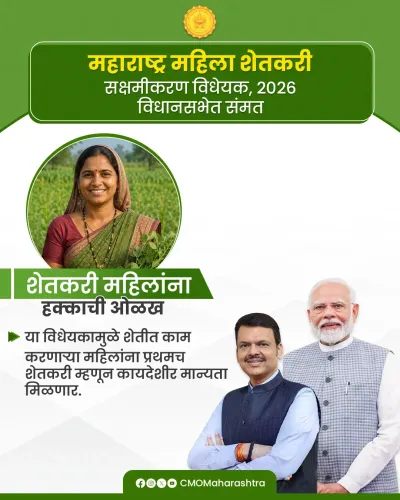
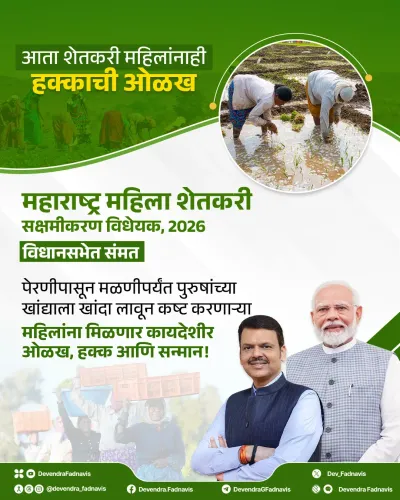
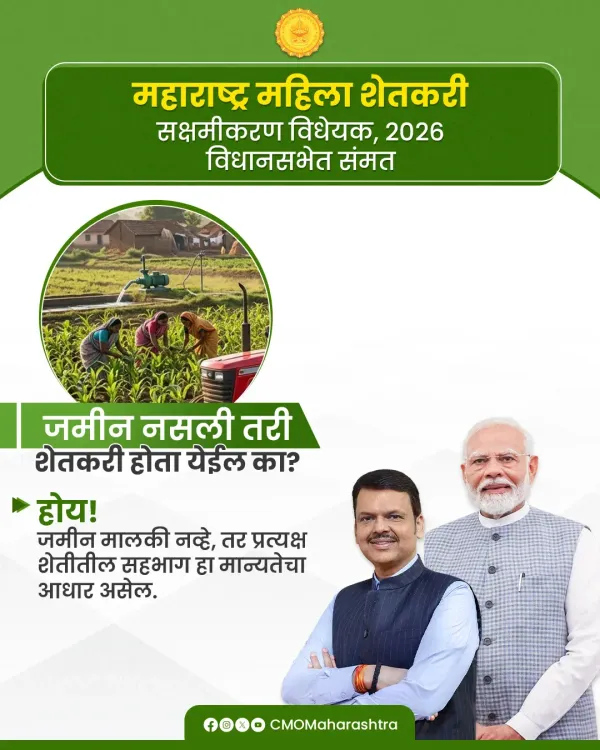
The post was accompanied by two images , indicating a visual outreach campaign targeting women cultivators.
The initiative aligns with the Mahila Kisan Sashaktikaran Pariyojana (MKSP) , a central scheme launched in 2011 to support women farmers via SHG linkages and skill development.
Women farmers in Maharashtra face structural barriers in land rights, institutional credit and agricultural extension services.
State programmes typically converge with NRLM and MKSP to deliver training, market linkages and financial inclusion at scale.
Follow-up policy circulars or budget announcements from the agriculture and rural development departments will indicate the concrete scope of this push.
The Chief Minister's Office of Maharashtra posted on X (formerly Twitter) on 2 July 2026 highlighting the state's focus on women farmer empowerment under the hashtag #महिला_शेतकरी_सक्षमीकरण ('Mahila Shetkari Sakshamikaran' — Women Farmer Empowerment), signalling renewed official attention to gender-responsive agricultural policy in the state.
Context
The post, carrying the hashtag #MahilaShetkariSakshamikaran, was shared with two images, underlining a visual, outreach-oriented communication push by the Government of Maharashtra. While the post text is sparse, the hashtag itself — a Marathi-English combination — points directly to women cultivators as the intended beneficiaries of whatever initiative is being highlighted. Women constitute a significant share of Maharashtra's agricultural workforce, yet historically face structural barriers in land ownership, access to institutional credit and agricultural extension services.
Policy Backdrop
The initiative appears to converge with the Mahila Kisan Sashaktikaran Pariyojana (MKSP), a central scheme launched in 2011 under the Ministry of Rural Development that supports women farmers through skill development, resource access and linkages with Self-Help Groups (SHGs). Maharashtra has periodically aligned state-level measures with MKSP and the National Rural Livelihoods Mission (NRLM) to expand training, market linkages and financial inclusion for rural women. This convergence model allows the state to leverage central funding while tailoring implementation to local agricultural conditions.
The broader national policy direction over the past decade has increasingly recognised women as primary agricultural producers rather than auxiliary labour, prompting states with high female labour-force participation in farming — Maharashtra among them — to design gender-specific interventions in crop planning, input access and cooperative structures.
Stakeholders and Impact
The primary beneficiaries of programmes under this banner are women farmers across Maharashtra, particularly in rain-fed and drought-prone districts where female labour contribution to agriculture is highest. SHG networks act as the principal delivery mechanism, channelling training and credit to women who may otherwise remain outside formal agricultural support systems. Market linkage components — connecting women cultivators to mandis, FPOs and agri-processing units — are among the most impactful elements of such schemes when implemented at scale.
Secondary stakeholders include district agricultural officers, rural development agencies and cooperative banks tasked with on-ground implementation. The state's agriculture and women and child development departments typically co-own such programmes, requiring inter-departmental coordination for effective delivery.
What's Next
Observers will watch for follow-up communications from the Maharashtra agriculture or rural development departments detailing specific targets, funding allocations or new scheme components tied to this announcement. State budget circulars and agriculture department orders will be key documents to track. The emphasis on a dedicated hashtag suggests a sustained social-media campaign, which may be accompanied by on-ground events, beneficiary enrolment drives or policy circulars in the coming weeks.
If the state formalises new components under the #MahilaShetkariSakshamikaran banner — such as enhanced credit guarantees, expanded training cohorts or land-title facilitation — it would mark a meaningful step in Maharashtra's gender-responsive agricultural agenda and could serve as a model for other states with comparable female agricultural workforce profiles.
Point of View
With parties keen to demonstrate tangible outreach to women cultivators who form a large but underserved constituency. Maharashtra's periodic alignment with central schemes like MKSP allows it to claim credit for outcomes funded partly by New Delhi, a pattern common in states where agriculture and rural development are electorally sensitive. The real test will be whether this social-media moment translates into measurable targets — enrolment numbers, credit disbursals or land-title grants — in formal government orders.
NationPress
1 Oct 2026
Frequently Asked Questions
What is the Mahila Shetkari Sakshamikaran scheme in Maharashtra?
Mahila Shetkari Sakshamikaran refers to women farmer empowerment initiatives in Maharashtra that aim to improve land rights, credit access and market linkages for rural women cultivators, often converging with the central Mahila Kisan Sashaktikaran Pariyojana (MKSP) launched in 2011.
What is the Mahila Kisan Sashaktikaran Pariyojana (MKSP)?
MKSP is a central government scheme under the Ministry of Rural Development, launched in 2011, that supports women farmers through skill development, resource access and linkages with Self-Help Groups (SHGs) to strengthen their role in agriculture.
Why does Maharashtra focus on women farmers specifically?
Women constitute a significant share of Maharashtra's agricultural workforce but face barriers in land ownership, institutional credit and extension services. Targeted schemes aim to address these gaps and integrate women cultivators into formal agricultural support systems.
How do SHGs help women farmers in Maharashtra?
Self-Help Groups (SHGs) act as the primary delivery channel for government schemes, enabling women farmers to access training, collective credit, input procurement and market linkages that would otherwise be difficult to reach individually.
What should I watch for after the Maharashtra CMO's women farmer post?
Look for follow-up agriculture or rural development department circulars, state budget announcements and enrolment drives that will clarify the specific targets, funding and new components tied to the MahilaShetkariSakshamikaran initiative.